What’s the point of reading?
This was a question I recently asked a group of A Level Literature students as they joined me for our weekly Friday Lunchtime Literature club, one of my highlights of the Spring term. I was reminded of how, when asked a similar question by my own English teacher at a similar age as we started out on our sixth form studies in Literature, one slightly less enthusiastic (but rather brave, given the formidable reputation of our teacher) member of the class said that they didn’t really see the point of literature, and in fact, didn’t really like reading at all, as it happened. Not a great start to the course, nor indeed, perhaps, a particularly wise choice of subject!
At the time, it seemed quite shocking – particularly in an English Literature classroom – but I wonder how shocking that would be today? After all, the stats tell their own story. In 2022, A Level English – once the most popular subject, topping the lists year after year – fell out of the top 10 for the first time. I am heartened that at Oswestry School, at least, that trend is being bucked with the subject remaining popular, but nationally it is no exaggeration to say that there is a reading crisis. Indeed, following the National Literary Trust’s most recent survey that recorded the lowest ever results in the reading habits of young people in a decade, NLT CEO Jonathan Douglas commented:
“We are witnessing the lowest levels of reading enjoyment and daily reading in a generation – a critical challenge for literacy, wellbeing and life chances. Children’s futures are being put at risk and joining forces across sectors to address the reading for pleasure crisis is essential.”
It’s a stark warning, but it’s a very real crisis. In the age of AI, technological advances and ever-shorter attention spans, reading – and the love of reading – has almost become an anachronism.
So what, you might ask? What’s the point of reading in any case? Well, if you agree with the NLT (as I do), then it’s not just important but essential to our understanding of the world, essential to our ability to communicate and comprehend, and essential to our wellbeing and life prospects. Never has reading been more important.
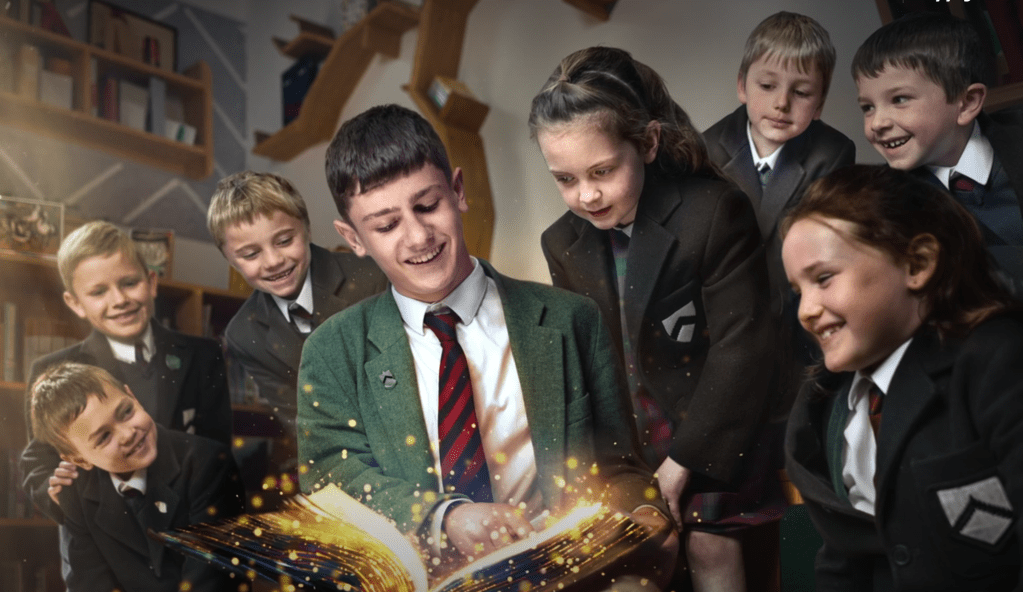
Read ‘Em and Weep
It happened – in the end – on Ryanair Flight 2071 returning from Alicante to Manchester. I was surrounded on all sides by a feverishly high-spirited Hen Party, whose relentless stamina – and impressively resilient livers – appeared to know no bounds, even in the final hours of their henning as they returned home.
I should add that I hadn’t been visiting the ‘Manhattan of the Mediterranean’ – Benidorm – nor had I been on said hen party (just to be clear…). No, I had been on a family holiday with friends. Calm. Relaxing. Chilled.
The plane was anything but chilled with a perpetual soundtrack of bawdy songs and raucous laughter echoing down the cabin. I was, however, oblivious to it all, hemmed in (or should that be henned?) in seat 35B between two Benidormed Mancunians. Lost – quite completely – in my own world. Or rather, Shakespeare’s world.
I was immersed – practically submerged – in a book. A quite brilliant book. The best book I’d read all year: Maggie O’Farrell’s Hamnet, her bestselling historical novel that retells the story of the tragic death of the young son of William Shakespeare and Anne Hathaway (or Agnes, as she is referred to in the novel).
For those who’ve not read the novel (or indeed seen the critically-acclaimed film, now out in the cinemas), my revealing that the 11 year old Hamnet dies is not a spoiler – it’s on the blurb in the back of the book and is, of course, historical fact (albeit little known), not to mention the well-documented phenomenon of cinema audiences around the world weeping uncontrollably as they watch the tragedy unfold on screen, popcorn sodden with salty-sad tears.
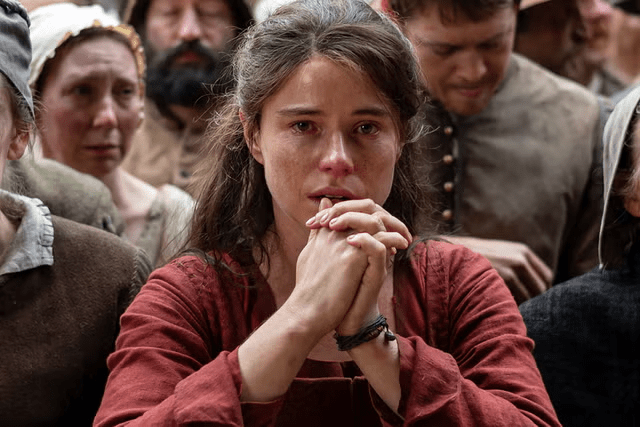
O’Farrell’s 2020 novel is a brilliantly-crafted story, evocatively and quite wonderfully bringing to life both Tudor England and the domestic setting of Shakespeare’s home . Yet, it’s in the bringing to death that O’Farrell’s story carries greatest weight, with the young Hamnet’s death from the bubonic plague an agonising electric charge that pulls the reader from the first page to that devastating moment of his death.
It takes 190 pages to get there. And you know it’s going to happen. But when it happens, it is no less devastating, no less harrowing.
For me, it happened – in the end – on that flight from Alicante. Surrounded by the sound of prosecco-fuelled anecdotes from the streets of Benidorm, I sat in my seat lost in the 16th century streets of Stratford. As I reached that fateful moment, the beginning of a teardrop formed (ok, that’s a lie, I might as well say it… I wept) as I was transported to that dark, shrouded room in the Shakespeare family home where the devastating, aching tragedy is finally reached:
“And there, by the fire, held in the arms of his mother, in the room in which he learnt to crawl, to eat, to walk, to speak, Hamnet takes his last breath. He draws it in, he lets it out. Then there is silence, stillness. Nothing more.”
Great books stay with you, move you, inspire you, sometimes even change you. They help shape our understanding of the world and what it is that makes us human. They are essential to our understanding of ourselves. As the novelist Margaret Atwood once put it, “storytelling is not a luxury to humanity; it’s almost as necessary as bread. We cannot imagine ourselves without it, because the self is a story.”
Cease to read, and we cease to truly live.
Long Live the Library
2026 is a national Year of reading here in the UK, and hurray, I hear you cry! After all, you’ve read this blog thus far, so your attention span is practically at a superhuman level…You are that rare and refined thing – a reader!
The Year of Reading is certainly a welcome celebration of the joys of reading, and is a much-needed resourcing to tackle the current reading crisis amongst young people in the UK.
Three years ago I published a blog – A New Leaf of Life for the Library – articulating the reasons why, when hundreds of libraries around the country were closing and fewer and fewer people were reading, we had decided to resurrect a library at the heart of Oswestry School. I quoted Neil Gaiman and Chris Riddell’s illustrated essay ‘Why We Need Libraries’ where they declared their hope that “we can give our children a world in which they will read, and be read to, and imagine, and understand.”
If books – and literature – are essential to our understanding of the world, then they deserve a home that is fitting to that higher purpose. The library should be at the beating heart of every school – and every community – that places learning and discovery and curiosity as its highest goal, and that’s certainly the case here.
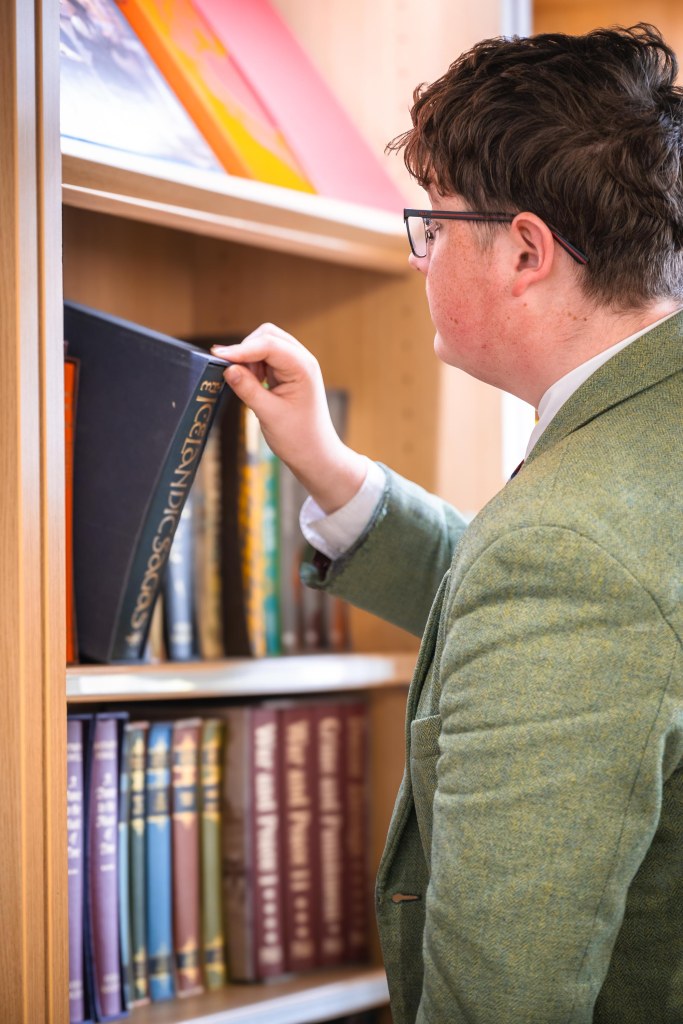
The Oswestry School library is one of my favourite places on campus. Granted, I’m an English teacher by background so of course I’d say that. Yet anyone who walks in there will encounter a refuge and sanctuary from the fast pace of everyday life, a friendly welcome and enthusiasm from our wonderful librarian Ms Davies, and a wide, wonderful world to discover and explore in the vast array of books on the shelves.
Our pupils (mostly) love to read, and long may that continue. But what about you? Will you make 2026 a year of reading – for yourself, and for your children?
Find something that interests you, or get a recommendation from a friend. Put down the phone. And lose yourself in that unrivalled joy of reading a good – or even truly great – book. You won’t regret it. And, who knows, it might bring your year truly alive.
 Peter Middleton