In Praise of the Faithful

Are you a traitor…or are you a faithful?

This will be a familiar refrain to avid fans of the TV phenomenon Traitors and its latest incarnation Celebratory Traitors. It’s TV as we used to know it – a proper ‘water cooler’ show with episodes released nightly not viewed in epic binge sessions, and cliffhangers left hanging for as long as a full week between episodes. The tension is almost unbearable, but it’s compulsive viewing (with over 12 million tuning in to the recent final) full of fascinating psychological game play and increasingly tense Round Table speculation and accusation, all set to the soundtrack of chaos, confusion, and Celia Emery’s flatulent fanfare.

Alan Carr on his way to the castle turret for another murderous meeting with his fellow traitors in the TV series Celebrity Traitors

The traitors take great delight in their two-faced treachery and deception, and seem to relish the role. Indeed, the majority of the contestants when asked at the outset of the programme whether they’d want to be a traitor or a faithful gleefully declare they’d love nothing more than to be a traitor.

But who would want to be a traitor? Ok, it’s only a game show and there’s no harm in it, but in real life, who would want to be a traitor and live a life of lying? Deception? Betrayal?

There’s Daggers in Men’s Smiles

History is, of course, full of those who’ve chosen the traitor’s path, from Judas Iscariot – who famously betrayed Jesus for thirty silver coins – to Marcus Brutus, the Roman senator who plotted with his co-conspirators to assassinate the Roman general and statesman Julius Caesar whose dramatic, bloody death is immortalised in Shakespeare’s eponymous play with his dying words, “Et tu, Brute?” Shakespeare’s play Macbeth likewise opens a dramatic door into the dark corridors of deception and the treacherous, blood-thirsty lust for power. “There’s daggers in men’s smiles,” the great bard warns, and well he might.

The Italian Renaissance philosopher and diplomat Niccolo Machiavelli’s most famous work – The Prince – controversially provided a treatise for leaders that promoted the so-called virtues of ruthlessness, cruelty, deception and betrayal in manipulating others for self-gain. “The ends justify the means” is often (mis) attributed to Machiavelli, who advised leaders to “be the fox to avoid the snares, and a lion to overwhelm the wolves.” The study of history reveals to us time and time again a cast of manically despotic, power-hungry rulers who have sadly taken the Machiavellian approach, casting aside all others in pursuit of ultimate – and absolute – power. In their wake – destruction, devastation, despair.

Remember, Remember

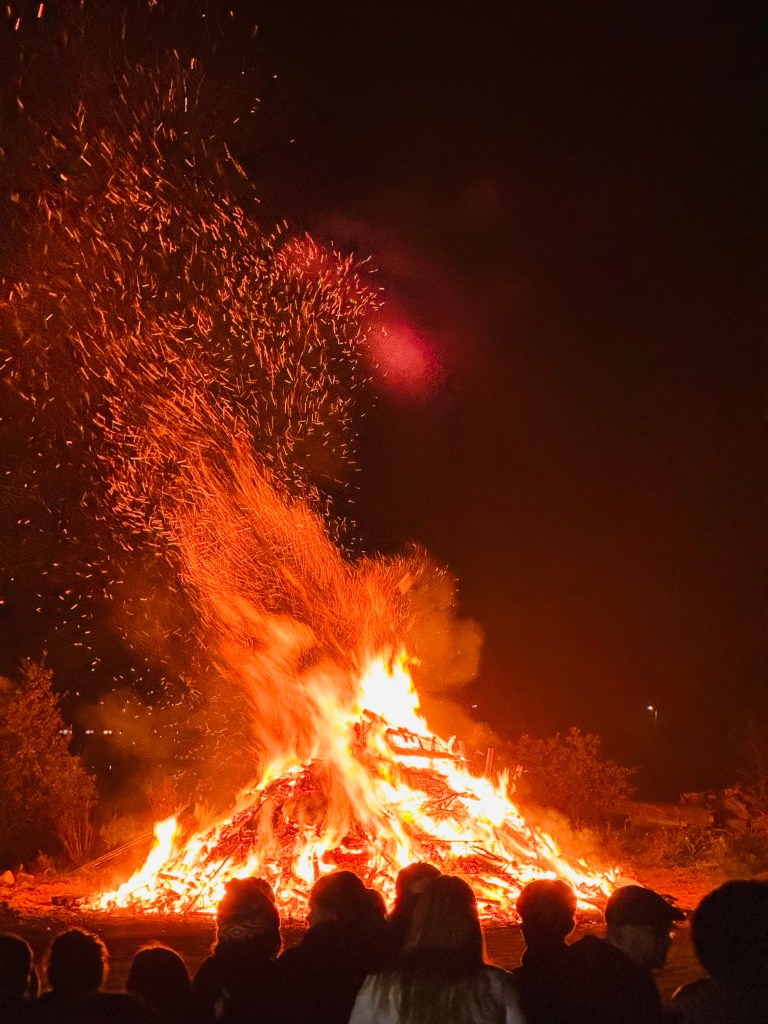
The recent Bonfire Nights around the country are a reminder of perhaps the most famous act of treachery in this country when on the 5th November 1605, Guy Fawkes and his co-conspirators of the Gunpowder Plot planted explosives beneath the House of Lords with a plan to assassinate the protestant King James I and his parliament. The plans were foiled at the eleventh hour following a tip-off and the gunpowder never went off. Celebrating the King’s survival of the assassination attempt, Londoners took to the streets and lit bonfires in defiance of the traitors, a tradition that has continued down the centuries where in towns and villages throughout the land we light bonfires and fireworks to celebrate the triumph of loyalty over treachery.

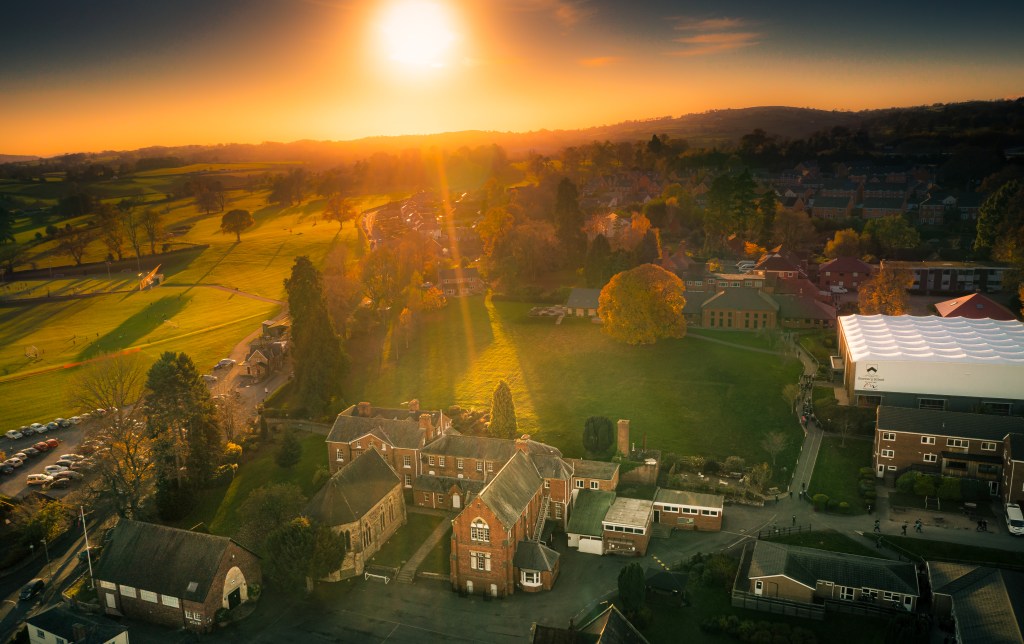
Bonfire Night at Oswestry School on the Maes-y-Llan playing fields

Faithful to the Call

As the embers die down on Bonfire Night, we turn to another act of remembrance as we join together as a nation to remember those who fought, fell and died in the two world wars and in more recent conflicts. I have always found it a deeply poignant and emotive moment as the surnames are read out of the fallen from our school; young men – just boys really – who exchanged the sports fields of the Maes-y-Llan for the battlefields of France and Belgium, shedding their blazers for army fatigues, swapping school books for guns.

They were, in many senses, the ultimate faithfuls: faithful to the calling of King and country; faithful to the belief in the preciousness of freedom; faithful to the pursuit of peace.  When I think of them I’m reminded of the words of the old hymn: “Be faithful, Oh, be faithful,/Soon ends the battle strife; Oh, be thou faithful unto death,/And win the crown of Life.”

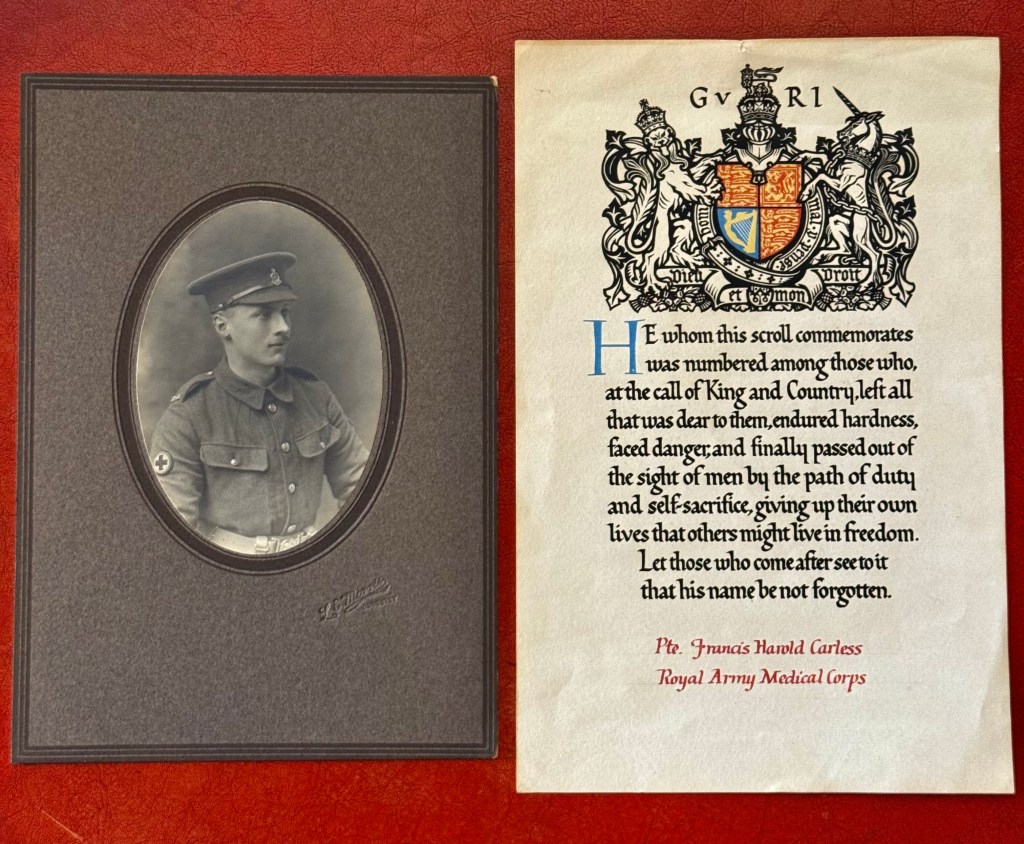
They did not die in vain. And we remember them by name so that “those who come after see to it that his name be not forgotten,” as King George V implores in the commemorative scroll that was sent to the next of kin of every soldier killed in the First World War. We will remember them; lest we forget.

Pte. Francis Harold Carless (OO) one of fifty former pupils from Oswestry School who died during the two world wars. Carless was killed on the 22nd October 1917 aged 25 years old having twice previously been wounded. He is buried in the Tyne Cot Memorial in Belgium.

Steadfast and Strong

As the Headmaster of a school with a history stretching back over 600 years, I am very conscious of the weighty responsibility (and privilege) of standing at the helm of this ancient and precious vessel. Whilst the school has evolved and adapted over the centuries – and necessarily so – one of the reasons for its longevity is the ways the school has remained steadfastly faithful to its founding vision. Rooted in our local community, grounded in strong values, this is a kind-hearted, close-knit family school that believes in the potential of each and every child, and believes in the transformational impact of an outstanding education.

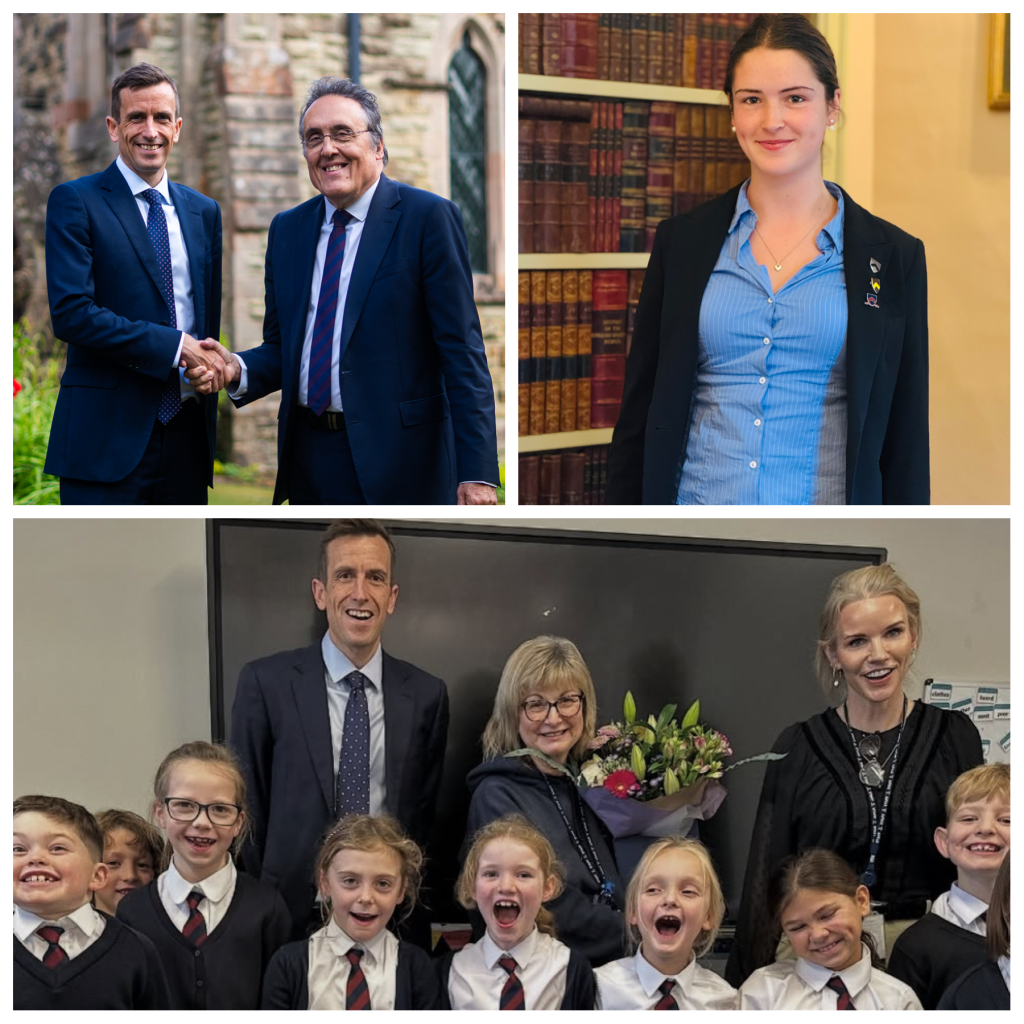
Over the decades and centuries, the community has been strengthened by the loyal and faithful service to the school by so many. As we closed out the last academic year, we marked the milestone moment of the 25th year in post for our Chair of Governors Peter Wilcox-Jones, an almost unheard of tenure for such a position in the independent sector and testimony to his passionate loyalty and faithfulness to a school that he loves dearly and continues to serve so faithfully. I was likewise able to recently celebrate the long service of Sue Davies, one of our much-loved Prep School teaching assistants, who this year embarked upon her 41st year at Oswestry; an extraordinary example of faithful service to the school!

Just such loyalty and faithfulness to the school lies at the core of our community, where so many of our pupils are the sons and daughters of fathers and mothers who were themselves pupils at this school. My Head Girl this year – Ffion – is in fact the fourth generation of her family to attend Oswestry School. Now that’s what I call a faithful family!

Peter Wilcox-Jones celebrating 25 years as Chair of Governors at Oswestry School; fourth generation Oswestrian Head Girl Ffion; Sue Davies – a faithful servant of Oswestry School for over 40 years.

So who would want to be a traitor? Not me. And not us. Whilst perhaps from time to time we’re all guilty of betrayal in one form of another – breaking confidences; going behind people’s backs; putting ourselves first – as individuals, as a school, as a nation, we stand for loyalty. We stand for Belonging. We stand for trustworthiness. We stand for faithfulness.

If those are the values we live by, then my hope and my prayer is that we all can stand at the end and say proudly and boldly, I am, and have been from the start…a faithful.

Every Little Helps

I wonder what you could do with just a single penny? Not a lot you might think. In fact, so worthless do most people think that the humble penny is that an incredible 2 million coins are thrown away in the UK every year, many of which are deliberately tossed aside into bins. That pails into comparison to the staggering $68 million thrown away in America every year. We are literally throwing money away!

Photograph: Zen Rial/Getty Images

Look After the Pennies

Back in 1987, a teenager in America called Mike Hayes had a bold and ambitious plan to fund his college career entirely through crowdfunding, even if that term hadn’t yet been coined (as it were…).

A college education doesn’t – and didn’t – come cheap. For a four year degree programme at the University of Illinois, Mike Hayes knew he’d have to raise $28,000. His parents couldn’t afford that, and Mike didn’t fancy being shackled with the burden of huge student loan debts for the rest of his life. So he came up with what was a pretty wacky – but quite brilliant – idea: he would ask 2.8 million people to each send him one penny.

Now this was the 1980s – we’d practically only just come out of the Ice Age. The world wide web was still two years away; social media was the stuff of science fiction. Mike Hayes likewise had the small problem of not actually knowing 2.8 million people. Undeterred, he decided to write to the well-known journalist Bob Greene at The Chicago Tribune newspaper with his simple and uniquely original plea and, having captured the imagination of the maverick reporter – who held a loyal readership nationwide of many millions – Greene ran the story publishing Mike Hayes’s short appeal letter in full which the journalist simply signed off in bold with the message: QUIT READING: GO PUT A PENNY IN AN ENVELOPE!

Incredibly, the appeal worked. As we would say now, it ‘blew up’, it ‘went viral’. People loved the idea, and were inspired by the concept that by just sending a penny to a stranger they could help change a life. In the end, close to 3 million pennies – or $30,000 – were posted to Hayes, many accompanied by impassioned letters of support and encouragement from those who’d been moved and inspired to act.

Little Things; Big Impact

At our start of year assembly, I shared Mike Hayes’s story as a wonderful example of how creative thinking and collective goodwill can combine to truly make a difference. As a UK supermarket’s motto puts it – every little helps.

In schools, too, the small things really do matter. Where each and every day, as students and staff we have the opportunity to invest in ourselves, the chance to do the little things that add up, in the end, to something altogether more valuable. Small pennies of effort that, little by little, stack up.

But we also have the opportunity to invest in others, and invest in our community. Because the small things really do matter when it comes to who we are and how we are as individuals and as a community.

The little things, in my view, are hugely valuable. Greeting one another with a smile. Saying hello. Asking people how they are. Picking up the piece of litter on the ground and putting in the bin. Saying thank you to the member of catering staff who serves you your lunch; asking them how their day has been. Staying behind after sports practice and helping the coach to gather in the equipment. Holding a door open for someone. Helping someone who’s struggling with their work.

These are all little things. Tiny little pennies of effort that cost us so little, but are so, so valuable.

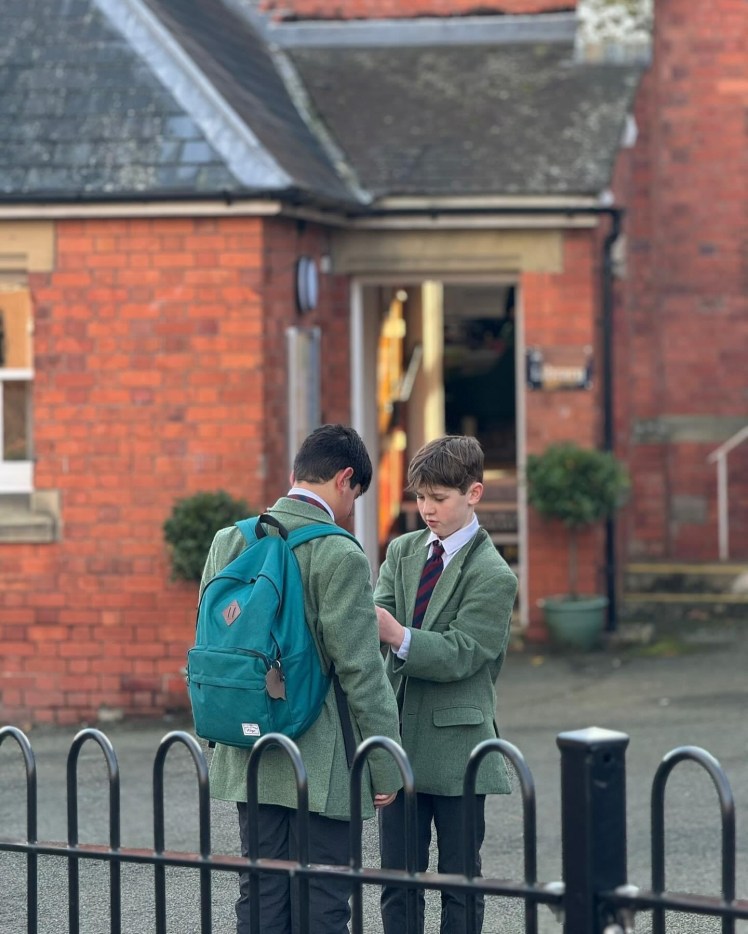
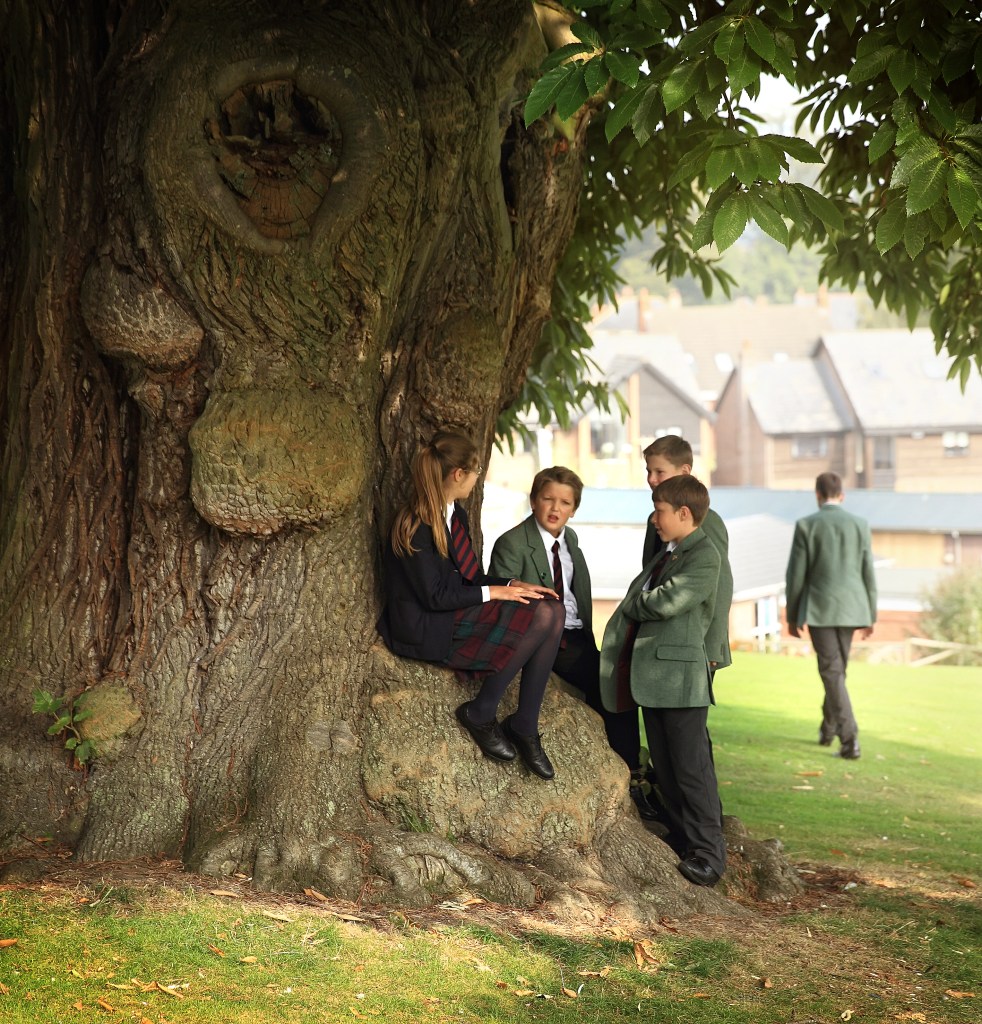
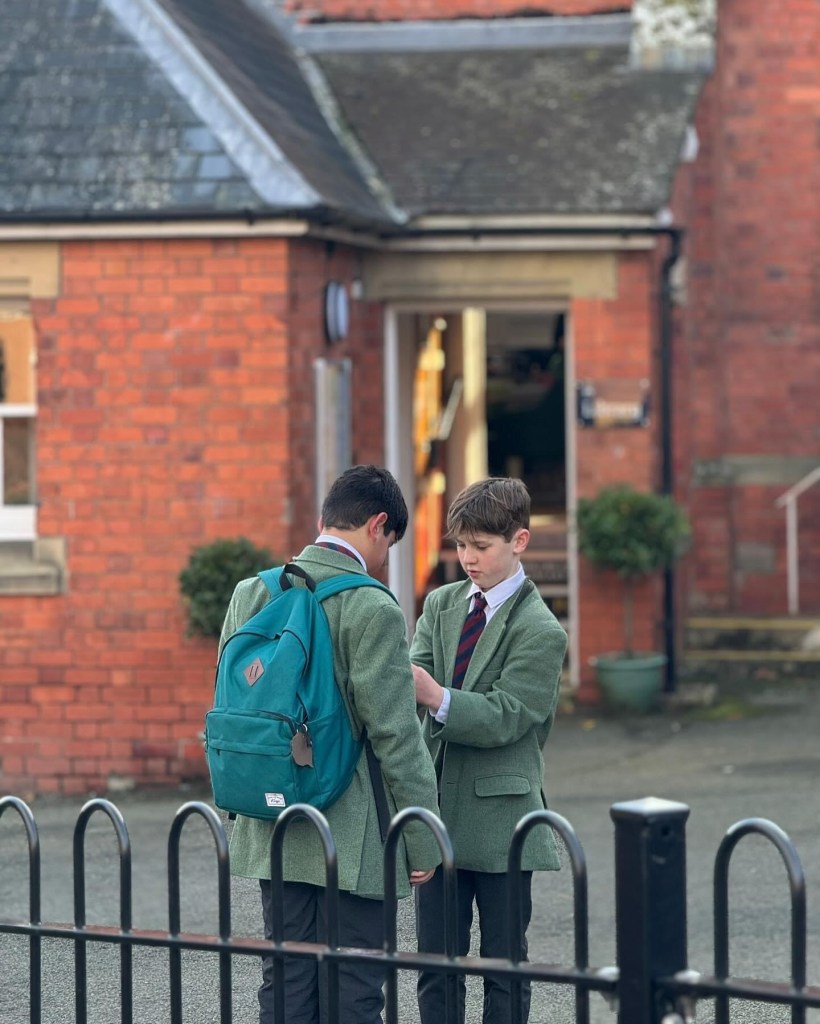
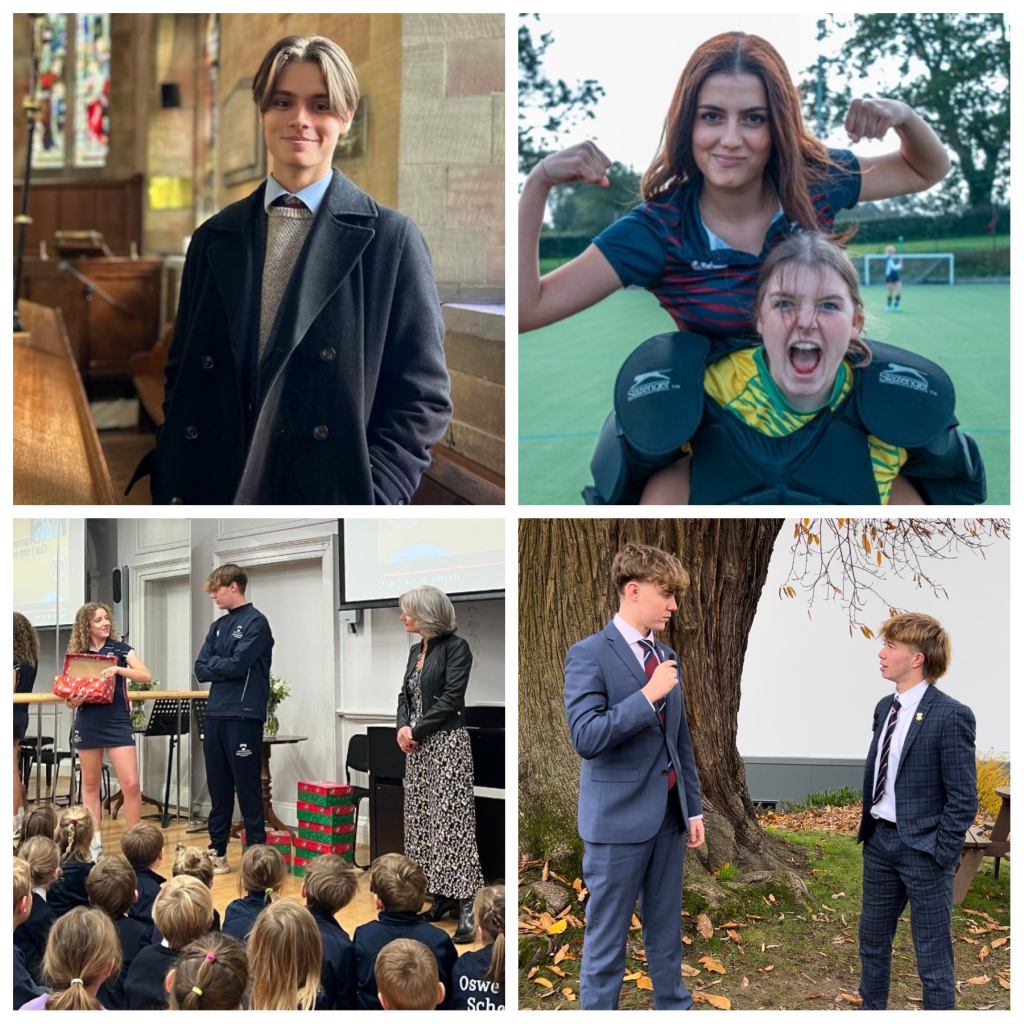
The Little Things: Helping a classmate out with his knotted tie

The Power of Collective Endeavour

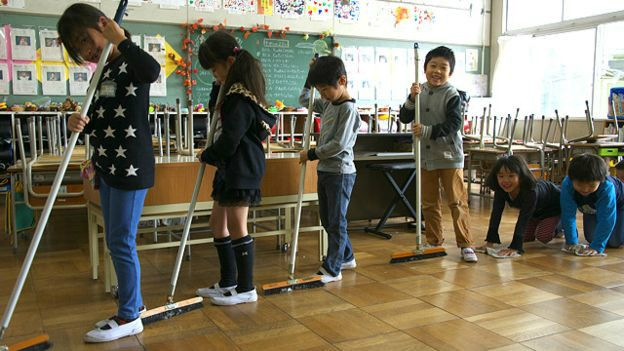
In Japan, the concept of ōsōji (which translates roughly as ‘great cleaning’) is a deeply-ingrained cultural ritual. From the very earliest age, children are taught about the value of collective endeavour, and the importance of service within their community.

As such, each and every day, students and staff have time allocated for the task of cleaning classrooms and corridors together. It’s not left to a janitor or a housekeeping team; it’s everyone’s responsibility to keep the schools clean and pristine. In so doing, children quickly learn about the importance of looking after one another and the value of working together to achieve a collective goal.

It’s testimony to the power of shared endeavour. Cleaning a school is a huge operation, but if everyone plays their part – if everyone puts in their little penny of effort – then those big things can be achieved, and achieved remarkably quickly. No job becomes too big when the entire school community gets stuck in. Every little helps, after all.

Playing Your Part

We’ve experienced something of the extraordinary power of collective effort during the past year having launched a fundraising appeal for a new Performing Arts Centre at Oswestry School, a transformational facility that will be a gamechanger for both our school and for our local community.

The fundraising target we set ourselves would be no small feat – an eyewatering £1.5 million would need to be raised towards the cost of the £2.3 million state of the art facility. There were many who said it was an impossible dream, many who doubted we’d even get close.

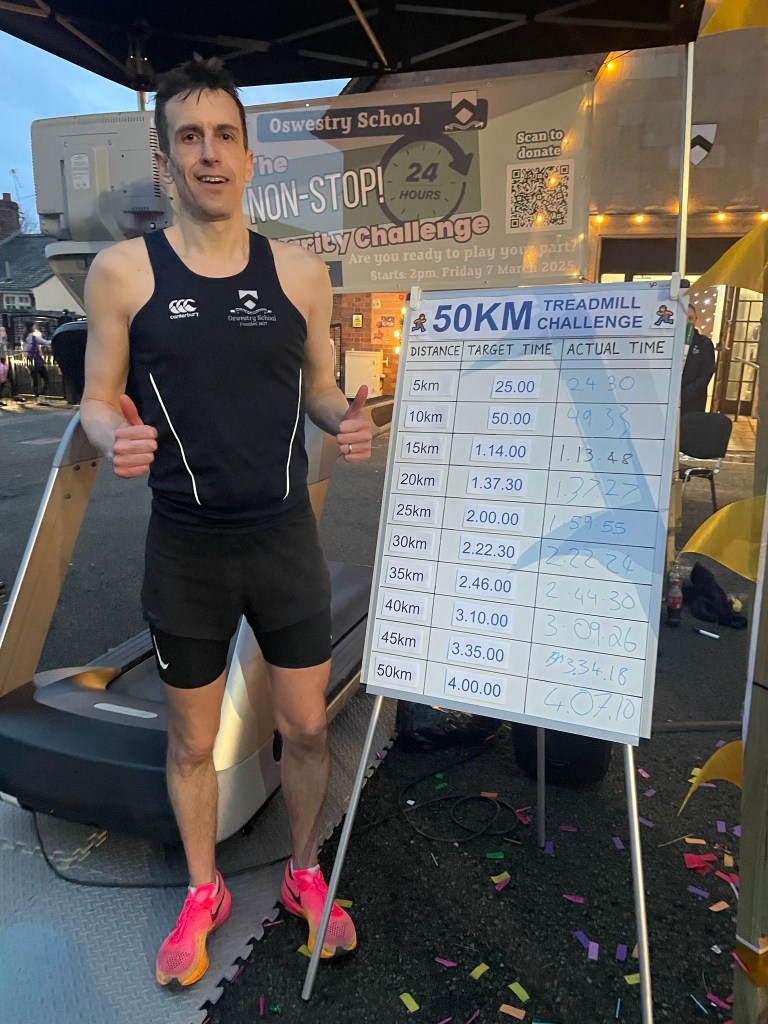
Our belief, however, was that with collective endeavour and a shared purpose, the vision could become a reality. An extraordinary collective effort has borne that out, where our community – and the wider community – have got behind the vision and played their part in making the so-called ‘impossible dream’ a possibility, and indeed a reality. Over a million pounds was raised in less than a year through a wide variety of events and individual fundraising efforts, whether it was selling Plum Puddings at Christmas, a pupil who undertook a litter-picking fundraising effort, or a pair of parents who cycled 1000km culminating in a final leg from Bristol’s Old Vic Theatre – the oldest continuously operating theatre in the UK – all the way back to Oswestry School and what will be the newest theatre in the country! Perhaps best of all was the whole school 24 hour fundraiser that saw the entire community of pupils, staff, parents and alumni come together for a collective effort that raised over £30,000 through a wide variety of weird and wacky activities. For my part (somewhat boldly in hindsight) I committed to running 50km on a treadmill (with a ruined hamstring to prove it…!).

It just shows what can be achieved when you do it together. The pennies become pounds. The seemingly impossible becomes possible. Dreams become reality.

We’re thrilled to have recently been named as Finalists in the Independent Schools of the Year Awards for Outstanding Fundraising Achievement recognising the collective efforts of our community, and with work having commenced on the project early last month, we’re greatly looking forward to curtains up in 2026. I’ve no doubt that the new Performing Arts Centre will in time become a treasured facility for our school community and our local community, and what’s most special of all is that it has been made possible by our community; the collective efforts of so many have made it happen. Every little really does help.

The Personal Touch

On a daily (and, increasingly, hourly) basis I am bombarded with emails and LinkedIn messages from people contacting me about all manner of different products and educational services with lofty claims of transformational impact, which tend to be followed up persistently and regularly (either by themselves or an automated scheduler) with a ‘just checking you’ve received my last email’ or ‘if you’re not the right person in your organisation please let me know who I should speak to’, or indeed any number of other such follow up strategies, some of which border on the aggressively forceful. In the age of enhanced contactability and multiple communication channels, I suspect most of us suffer from a similar scale of ‘cold calling’ clogging up our inboxes.

Set against such a high volume of sales pitches, the only response as recipient is to simply ignore and delete. Rude though it may be to not reply, if I don’t know you and I’ve not actively sought you out, I’m afraid I simply don’t have time to send a polite ‘thanks but no thanks’ response to everyone who contacts me.

One individual did, however, break through the impenetrable barrier earlier this year. It was in such stark contrast to all other contact I had received that I felt compelled to respond, and indeed write a blog post about it!

For a start, this wasn’t an email nor a LinkedIn message; it was a handwritten letter. Now for those of you who’ve read some of my previous blog posts (thank you to all three of you…) you’ll know that I am a big believer in the value of a handwritten note, and in spite of my handwriting being barely legible (“I think it’s actually got worse,” my Deputy Head Academic informed me last week with palpable concern on his face), I make time each week to write handwritten Forte Award notelets, cards of thanks to colleagues, or birthday cards to pupils and staff.

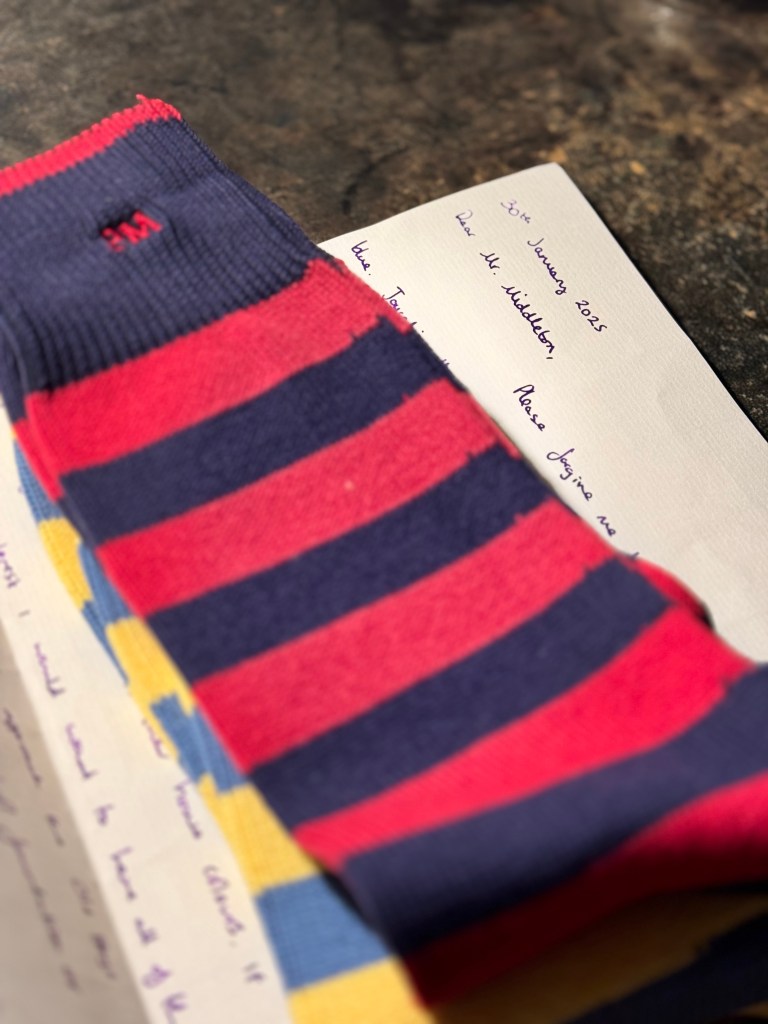
The letter writer – Philip Morrow from Morrows Outfitters – was blessed with far more grown up handwriting than I, and had spent time writing a full two pages having been recommended to contact me by a mutual acquaintance. Unlike most of the uninitiated contact I receive, there was no ‘hard sell’ within the letter, but there was a clear sense of the passion that Philip had for a family business that began in 1873 in Liverpool and, as the fifth generation of the family to act as custodian of the business, there was a compelling sense of his ‘why’.

The letter was accompanied by two pairs of rather splendid striped socks as an example of their produce and, what’s more, my initials had been embroidered into them as well.

As it happens, whilst I’ve not met Philip before, I have previously purchased a pair of similarly-styled socks from Morrows (in the Chocolate & Gold colours of the boarding house in my previous school where I was a Housemaster) so it wasn’t a complete out of the blue contact (and I should add, said socks are still going strong 10+ years later, so I can certainly testify to the quality and durability of the product!). But I’m not sure that a simple email or LinkedIn message would have had the same impact, and would likely have suffered the same terminal fate of the vast majority of the rest of the contact I receive.

The socks were a nice touch, (and have drawn approving looks around campus from pupils and staff alike, yes, even, my Deputy Head Academic…) but what struck me most was the personal touch that was so evident in the effort, time and consideration that went in to the communication; for me, that made all the difference. As the writer EM Forster implored: ‘Only Connect’.

It’s the Thought that Counts

My birthday last year was another such occasion when I was reminded of the personal touch, and the truth of the old adage that ‘it’s the thought that counts’.

Coming into school in the morning, I was greeted by my colleagues at reception with a number of gifts (entirely unnecessarily but nevertheless appreciated!), one of which was a large, square box wrapped in sparkling red wrapping paper.

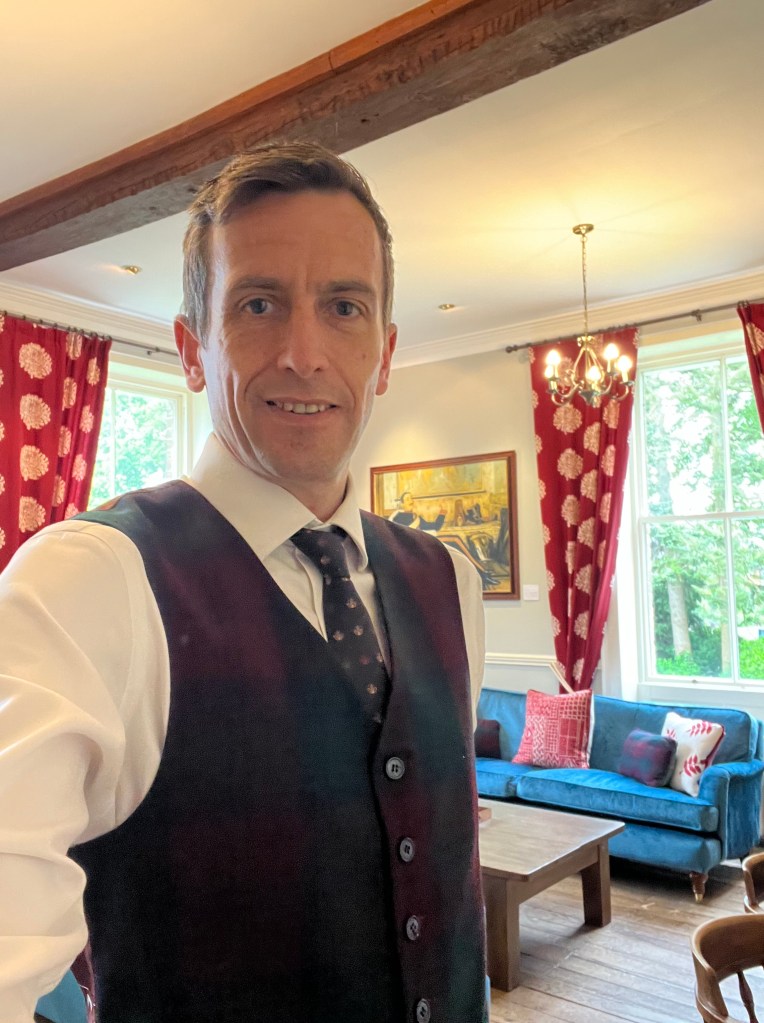
Intrigued, as I opened the box and unwrapped the tissue paper lining, there inside was an item of clothing .  It was a waistcoat, but not just any waistcoat; this waistcoat was made up in the Oswestry School tartan with the same school-crested silk material that lines our green school tweed blazers. 

A lot of effort will have gone in to contacting our school uniform supplier, getting the material ordered, and making it up into a waistcoat that perfectly fits (with a little sneaky assistance from my wife who poached a waistcoat from my wardrobe for them to use for measurements). That’s a lot of thought, a lot of forward planning, and a lot of effort. And regardless of where you stand on tartan waistcoats (as a Scot, for me it is surely the ultimate in sartorial style!) it was- and is – a really, really special gift that I’ll treasure, and it is literally (at least at the moment) completely unique and a one of a kind.  It’s the thought that really does count.

A Culture of Gratitude

This term, we began our staff INSET with an invitation to pause for a moment or two to express gratitude to a colleague who had gone above and beyond, or helped in some way, or – in simply being them – had made the difference. Blank Postcards of Gratitude were placed on the chairs of the seats in the hall, which were soon filled in (enthusiastically I should add) and posted into a specially-designed postbox following which they were delivered to their intended recipients.

Whilst it had the potential to be perceived as a bit of a gimmick or a token gesture, I’m a firm believer in the confidence that comes from collegial gratitude. Don’t just take my word from it – the great Roman statesman Cicero once declared that “Gratitude is not only the greatest of virtues, but the parent of all others”- and in our case, it was a really positive way to begin with words of encouragement that provided a spring in our step as we embarked upon the new term.

Positivity and gratitude resonates and reverberates. Within a relatively small school community such as ours where individuals – and individuality – are valued and encouraged, I see it (and hear it) each and every day, where kindness and compassion are part of the very fabric of the place, and where pupils and staff alike take the time, effort, and care to look out for one another, support one another, and celebrate one another.

That, perhaps, is the ultimate personal touch. Long may it continue, here and everywhere!

Just to prove that the personal touch really does work, I share with you the website of Morrows Outfitters with their range of fine UK-produced apparel. And, no, I’m not receiving commission! https://www.morrowsoutfitters.com/.

One More Step

A journey of a thousand miles begins with a single step.

I was reminded of this ancient proverb during our recent 24 hour fundraiser in aid of the new Performing Arts Centre at Oswestry School, an incredible weekend of collective effort and community endeavour, and one of the highlights not just of the term but of the school year as a whole.

At 2pm on Friday 7 March, the entire school joined together for the countdown to a non-stop challenge that would see hundreds of pupils, parents, staff and alumni throw themselves into a vast array of individual and group endurance challenges and creative efforts that would take us all the way through the night and on into the following afternoon.

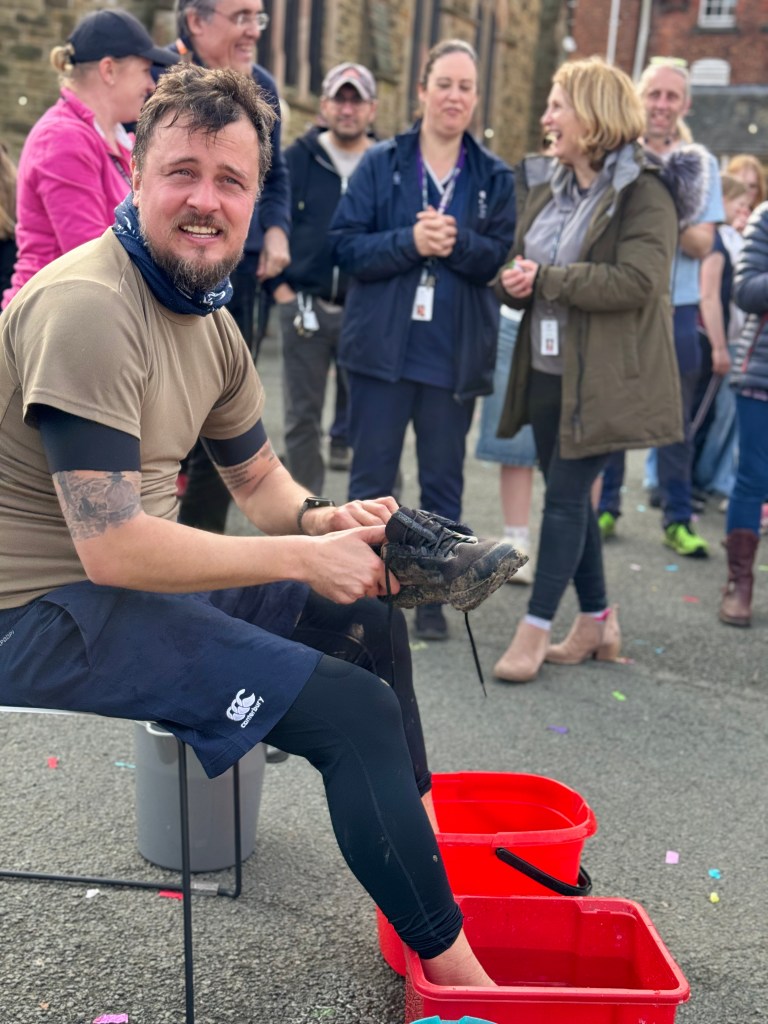
A particularly special moment came right at the end of the event as Head of Lower School Mr Will Taylor concluded his epic 55 mile ‘Sea to School’ trek along Offa’s Dyke from Prestatyn to Oswestry, a feat of endurance that his feet won’t have thanked him for! Having walked through the night, over valley and stile, up hill and through brook, those final miles from the Old Racecourse down to the school were painful and slow ones, but as he neared the school, a group of pupils and staff went up to join him for the final mile, gathering around him to help him through those tough final moments. And, as he rounded the corner and walked towards the awaiting tunnel of cheering onlookers, he dropped his walking sticks and broke into a run, positively charging towards the finishing line where in front of him was a basin of deliciously cold iced water for his feet, and an equally enticing ice cold beer! It was a wonderful moment of collective celebration and admiration, and just one example of the quite brilliant – and quite inspiring – ways so many within our community threw themselves so fully into the fundraising effort.

Head of Lower School Mr Taylor cools off his feet after his feat of endurance!

Stepping Out of Your Comfort Zone

For my own part, I’d agreed (somewhat foolishly, in retrospect!) to attempt to run 50km on a treadmill, a distance I had never come close to running on a treadmill, and a distance I’d not run for very many years; in fact, the last time I’d raced over that distance was over 21 years ago when I was much younger. And much fitter!

But I was determined to play my part, because this is a project that’s personally hugely important to me; having been persuaded as an 11 year old to audition for the school play (and unexpectedly landing the eponymous main part in Peter Pan), a desperately shy introverted young boy was given the confidence to believe in himself, and it changed everything for me. Above all, it taught me about the importance of stepping out of your comfort zone and, for me, it was a first step on the journey towards where I am today. That desperately shy 11 young boy who wouldn’t even dream of putting his hand up in class would not have believed that in his later life he’d not only become a teacher and be the one at the front of the class, but would end up as a headteacher standing at the front of an assembly hall full of hundreds of students. The very thought of it would have struck terror in that young lad, but those first steps on that school stage (yes, green tights and all!) were some of the most important ones in my journey towards believing in myself and having the confidence to do things outside of my comfort zone.

Whilst the 50km Challenge was one of the most difficult things I’ve ever done (and I don’t want to even look at a treadmill for a long while!) each and every one of those steps was worth it as a means of playing my part in the collective endeavour, and whilst those final miles were tough – really, tough – I kept in the back of my mind the reason why we were doing it, and the potential transformational impact it would have on future generations to come, youngsters who might in turn find their forte – and find their confidence – on stage and in the performing arts.

Barely standing at the end of the 50km Challenge!

Building a Legacy

As we gathered on the quad on that Friday afternoon in front of the Memorial Hall, we were joined by Chris Wylie (OO) and his wife Judith. Chris had been a pupil at the school when the Memorial Hall was opened on 11th December 1954 just over 70 years before. He remembered the occasion well, and reflected on just how fortunate he and his peers felt to have this brand new facility, one that – very poignantly – was built to commemorate those from the school who had given their lives in the two world wars. The building was funded almost entirely by donations from alumni and friends of the school, and was a campaign spearheaded – and delivered – through the determination and passion of a group of individuals who fervently believed in a vision for a legacy facility to benefit generations of youngsters in the years to come; that the sacrifices of those who had fallen would not be in vain.

As a school whose motto is We Learn Not For School But For Life, the Performing Arts plays a central role in the development of the skillsets and mindsets that will enable our youngsters to thrive – and flourish- in their adult lives.  After all, there is no better stage than the theatre for developing confidence and communication skills.  No better stage for experiencing collaboration and teamwork.  No better stage for developing resilience, agility, motivation and self-awareness.  Leadership; empathy; attention to detail; creative thinking (all of which, as it happens, are on the World Economic Forum’s list of Top 10 Skills of the Future).

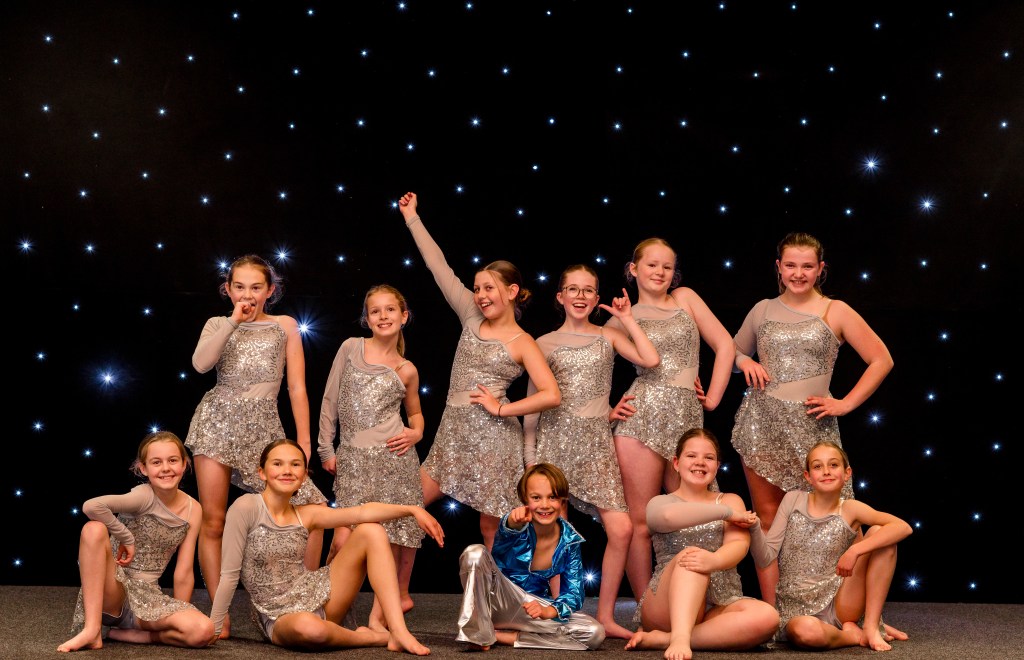
Members of the Oswestry School Dance Academy which this year celebrated its 10th anniversary and has grown to a company of 115 members from 21 local schools

The vision for the new Performing Arts facility is all about making a life-changing impact to generations of youngsters in the years to come, and to make a difference to the local community in which we live.  A theatre and performance venue within walking distance of the town would be an exciting and significant community development for the town of Oswestry and is one of the main reasons why the Town Council were unanimous in their support for the project.   With residential housing for the elderly directly opposite the Memorial Hall, it is exciting to think of the difference we could make to our closest neighbours with regular weekly informal concerts within the new foyer space, or exhibitions of artwork, or talks from visiting authors and speakers.  For young and old, this new facility can – and will – really make a difference.  
Striding Forward

The 24 hr Non-Stop Challenge has raised just over £30,000 at time of writing – a phenomenal total and a demonstration, too, of what can be achieved through shared vision and collective endeavour. It brings our total fundraising to just shy of the million pound mark which will be a significant milestone in the campaign when we get there.

When we set out on this journey, the £1.5million fundraising target seemed like an almost impossible dream, but having taken that all-important first step, with each step, we get closer to the destination, and closer to the dream.

The journey – no matter how long, and no matter how hard – will be well worth it in the end!

https://www.justgiving.com/campaign/pacappeal

Look Back in Gratitude; Look Forward in Hope

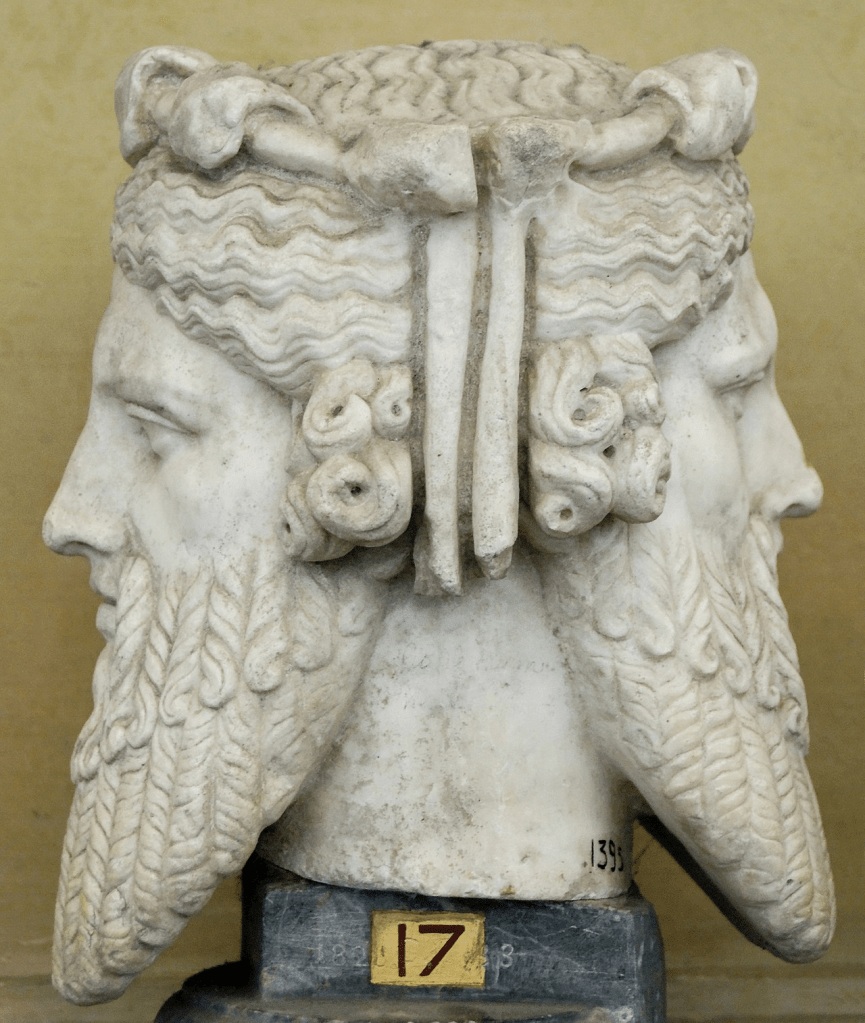
The Roman God Janus (who the month of January is named after) is usually depicted with two faces: one looking back, and one looking forward. Janus was, amongst other things, the Roman God of Beginnings, Endings, and the God of Gates, Doorways, and Passageways.

January – the doorway, or passageway- into a new year, is therefore traditionally a time for looking back, and likewise looking forward: reflecting back on the past year in identifying highlights and things that went well, and looking forward to the year in front of us, perhaps setting aims and goals for the year, or even a New Year’s Resolution or two.

Statue depicting Janus in the Vatican Museums. Image copyright Marie-Lan Nguyen (2009)

Positive Habits

One of the habits I’ve sought to get back into since the start of the new year (having slipped out of it over the last few months) is the process of daily reflection. It’s a fairly simple process and takes but a matter of a few minutes at the start and end of every day. It’s a strategy I read about in the book ‘Flourish’ by Martin Seligman, the founder of the Positive Psychology Movement.

We tend to think too much every day about what goes wrong, Seligman proposes, and not enough about what goes right in our daily lives. Of course, it’s good to reflect on things that don’t go well; doing so, after all, helps us to learn from them and avoid them in the future. However, people tend to spend far too much time thinking about things that go wrong than is helpful or healthy. And our relentless focus on negative events tends to lead us, inevitably, to negative feelings: anxiety; worry; fear; sadness; regret.

To combat this, Seligman proposed the very simple task of spending five minutes every day writing down three positive things that went well during the course of each day. It could be something to do with our professional lives, or our family life, leisure pursuits, or anything more general; whatever it is, it’s about focusing on the positives.

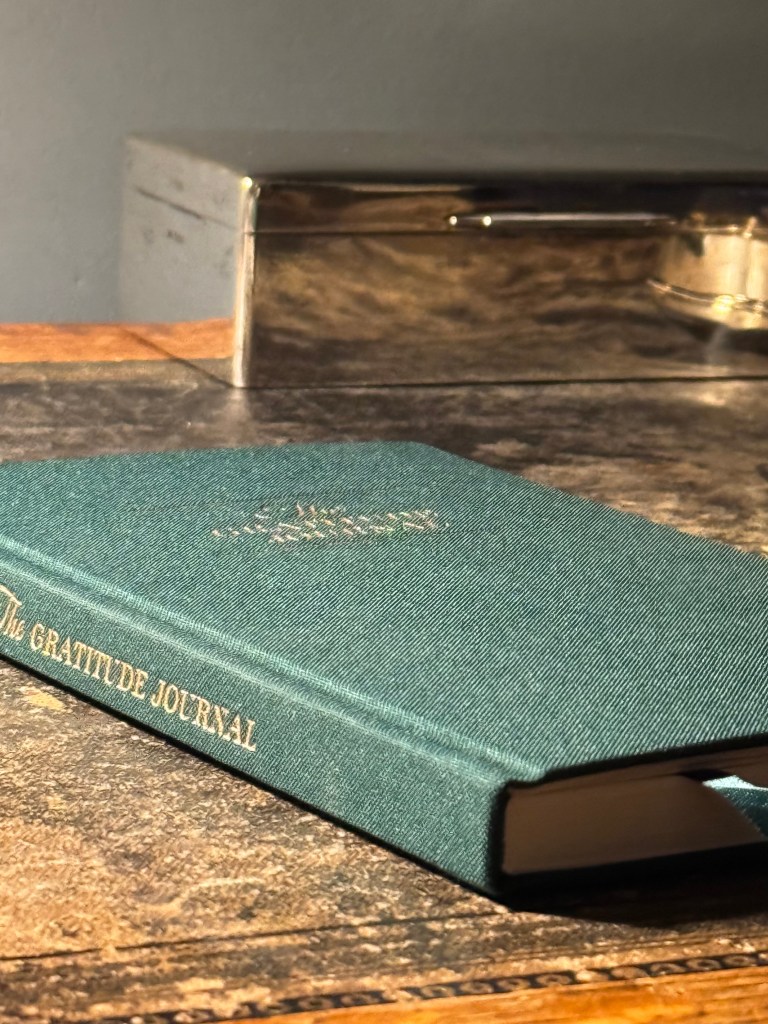
I have found it very helpful to spend that brief period every day reflecting on what has happened during the course of my day, and seeking out the positives rather than dwelling on the negatives. And having received as a very thoughtful gift from a colleague a ‘Gratitude Journal’ this Christmas, I’ve really valued the opportunity to focus not only on Seligman’s What Went Well, but likewise spend time in gratitude for all the many good things that are a blessing in my life and my work, and to look forward to what each day may hold. It’s a simple exercise, but I’ve benefited greatly from it so why not give it a go?!

A New Coat for the New Year

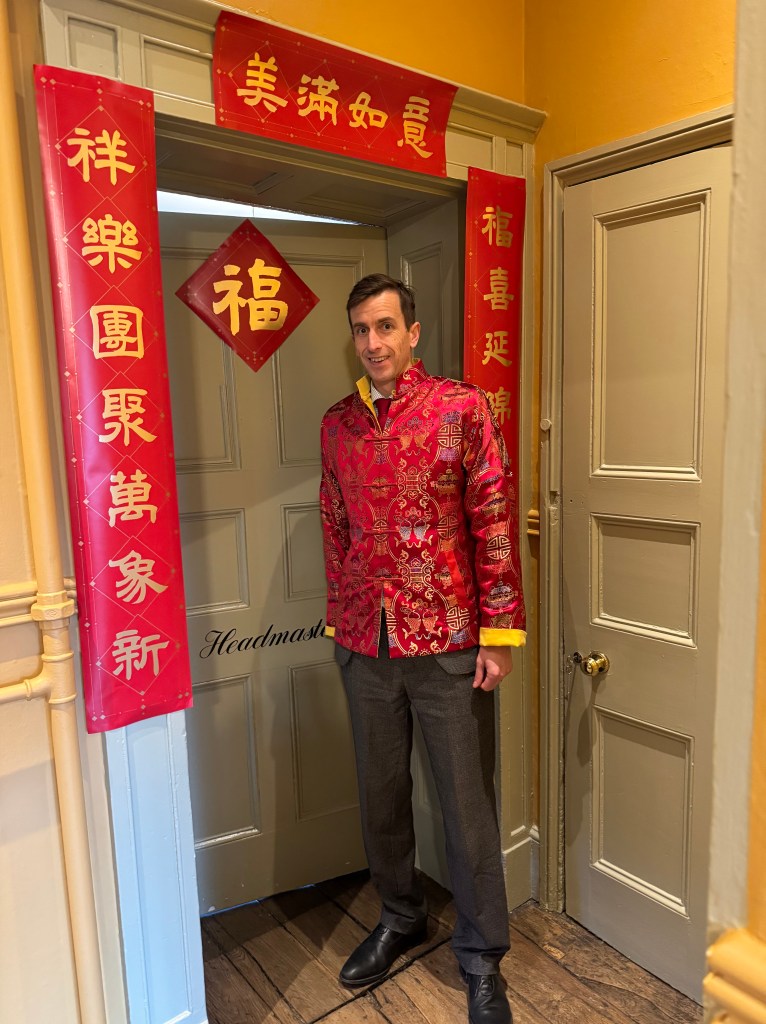
Every year, I look forward to the opportunity to don my rather eye-catching red silk jacket, a beautiful and very generous gift from a former pupil back in my days as a boarding housemaster. Without fail each year, I’ll don the jacket to celebrate the Lunar New Year and join in a cultural celebration that traces its roots back some 3,500 years to ancient China, signifying the end of winter and the arrival of a new year.

2025 is the Year of the Snake – also referred to as ‘little dragons’ – their shed skin (the ‘dragon’s coat’) signifying good luck, rebirth, and regality.

As we marked the celebrations this week here at Oswestry School, it was a reminder once again of that important process of reflection and resolution, determinedly shedding the skin of that which is best left behind, and embracing the new year with hope, positivity, and renewed energy.

Journeying into a New Year

So, as we embark upon a new year, we can look back on the past year with gratitude for all that has been good in our lives, and look forward to all that is to come with a sense of positivity and optimism, and indeed each day reflect on all that has been positive, and look ahead to what is to come. The journey we traverse is never entirely straightforward, and no matter the plans and route-map we might have, life has a tendency to throw us an obstacle or two along the way. However, with our eyes firmly fixed forward (and the occasional glance back…) we can journey onwards with gratitude, companionship, and hope.

Wishing one and all a prosperous new year ahead!

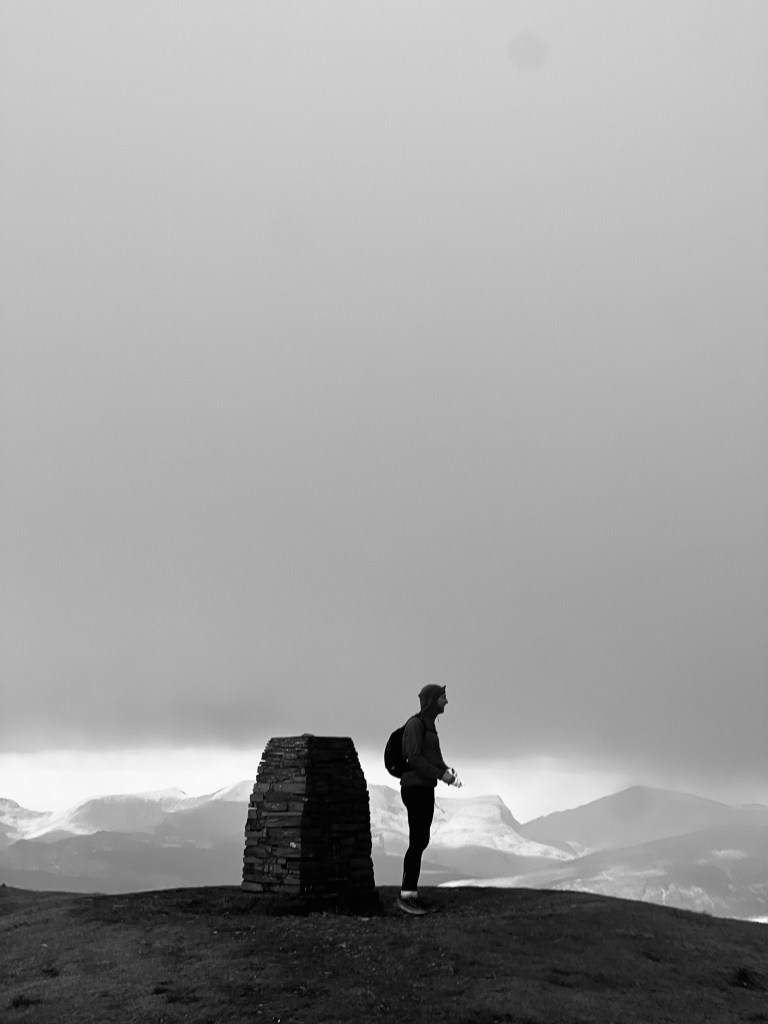
Looking Ahead: a favourite adventure from 2024, traversing the Snowdonia Way with my good friend and running companion Sam, pictured here on Cnicht.

It’s the Little Things

Sometimes it’s the littlest things that have the biggest impact.  

When I was starting out as a teacher, I worked at a school where the Headmaster was a prolific writer of handwritten notes.  One lunchtime  in my first term at the school, we got chatting about my forthcoming challenge of running the Edinburgh marathon.  

A few months later in the week building up to the marathon, an envelope appeared in my pigeon hole in the staff room.  It was a handwritten note from the Headmaster – accompanied by a rather fine ink drawing of a runner pounding the tarmac- wishing me luck in the marathon.  I was touched that he had remembered the conversation we’d had all those weeks before, and had taken the time and trouble to provide such a beautiful and thoughtful note of good wishes.  It was a little thing but it meant a great deal, and  I’ve never forgotten the impact this had on me as a young teacher.  Being recognised, encouraged, and remembered; it really made a difference to me.

Ever since, I’ve sought to do likewise, taking the time to thank colleagues, write birthday cards for staff and pupils (as a school of 500 we’re small enough for me to be able to do so), and at our weekly Headmaster’s Awards – Forte – I make sure to write a handwritten, personal note of congratulations.  It may not seem like much, but I hope that the gesture demonstrates that their efforts are recognised and valued, and that in a small way it provides a little encouragement to them.

Small Actions; Big Impact

A couple of weeks ago, one of my colleagues caught this beautiful moment on camera as one friend helped another. A seemingly small and simple action – one friend helping another adjust his tie – but one that speaks volumes of the big impact that small gestures such as this have on embedding a culture of kindness.

The great basketball coach John Wooden once famously said, “The true test of character is what you do when nobody else is watching.”

Loyalty. Kindness. Thoughtfulness. These are the qualities of character that I value more than any other at Oswestry School and, whilst it’s not always captured around campus in an image like this, I see it every day in the actions – and interactions – between pupils, and it brings me no greater joy to see so clearly the strength that comes from these moments of camaraderie and community. Little moments; small gestures. But they all make a big difference.

Throwing Stars Into the Sea

In Loren Eisely’s story  ‘The Star Thrower’, the narrator describes seeing a figure on a beach in the distance, a young woman who reaches down to the sand and, picking up a starfish, gently throws it into the sea.

“Young lady,” he asked, “Why are you throwing starfish into the ocean?”

“The sun is up, and the tide is going out,” replied the woman.  “If I do not throw them in, they will die.”

“But do you not realise there are miles and miles of sand, and starfish all along it? You cannot possibly make a difference.”

The young woman listened politely, paused and then bent down, picked up another starfish and threw it into the sea saying, “Ah, but it made the difference for that one.”

Pausing to take in her words and think about what she had done, the man then joined her in throwing starfish back into the sea.  Soon others joined, and one by one the starfish were all saved.

Making the Difference

It may seem hopelessly idealistic – or at best futile – to think that small gestures can make a big impact, but I remain firm in the belief that it is in the gift of us all to make a difference to others, and that small gestures of kindness and thoughtfulness truly do have a big – and lasting – impact. In our busy lives where we’re ruled by the tyranny of the clock, it’s all too easy to race through a day without due regard for those we journey beside. But it takes but a few moments to pause to say thank you (or even better, write a note not an email!). It takes but a few moments to stop and help someone out. To ask someone how they are. To make someone’s day that little bit easier by taking something off their to do list. Will it fix the problems of the world? No. But will it make the difference to someone else? Absolutely, and that, in my book, makes it all worthwhile.

Small actions they may well be, but it’s the little things that really do make the difference.

In Search of Home

What do you think of when you think about ‘home’? The place where you grew up? A physical building, the literal home in which you live at present?

Or does ‘home’ mean something different entirely: a community; a town; or even a nation?

It might make us think of the people that make up a home: our family; friends; neighbours; community members.

Or is it a more abstract notion, conjuring up images in your mind of belonging, stability, sanctuary, solace? The feeling of acceptance, the warm embrace of being loved. As the saying goes, home is where the heart is.

Perhaps ‘home’ means all of these things.

A Welcome Home

I have been thinking on the notion of ‘home’ recently following the arrival of a few new members to our school community. The first I knew of their arrival was during the Easter holidays, and I heard them before I saw them…

What’s all the commotion, I thought, as I looked out of our kitchen window as the early morning stillness was disrupted by an incongruous cacophony of noise. Pulling up the blinds, I was confronted by a rather proud-looking male pheasant strutting his stuff and making himself at home whilst the campus was unusually quiet with the pupils all away for the Easter break.

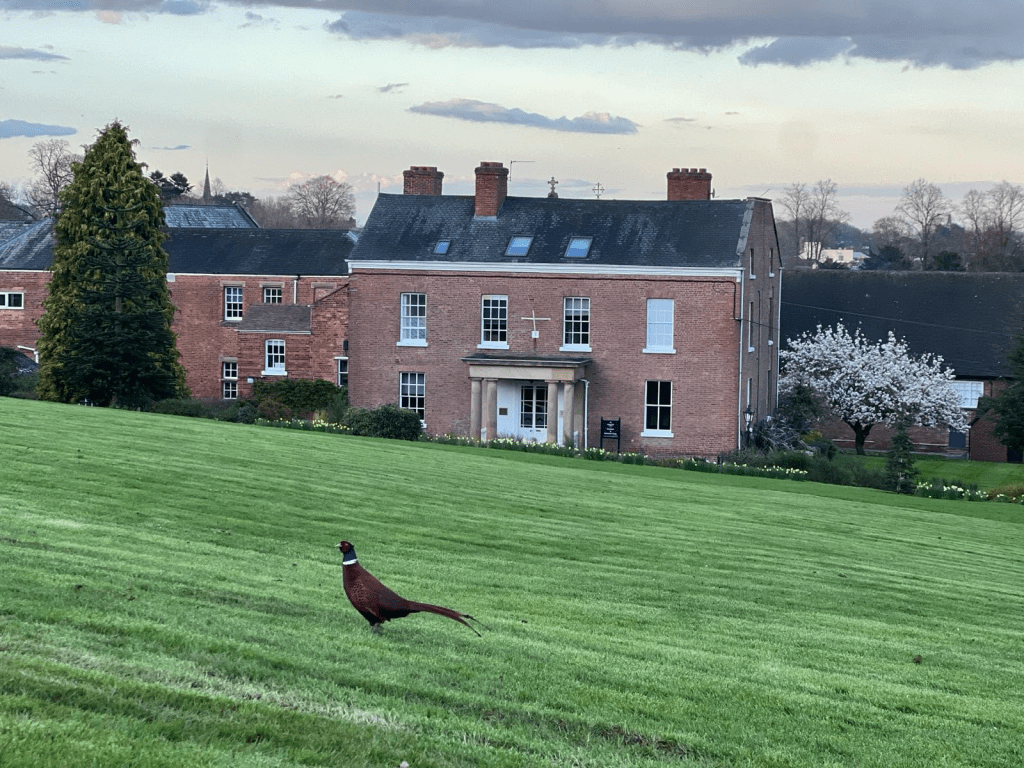
Big Dave the Pheasant

Soon enough a female pheasant was spotted, and during the course of the three week break, my family and I grew rather fond of the pair who were quickly christened ‘Dave’ and ‘Guiney’ (after the founders of Oswestry School: David and Guinevere Holbache). To begin with they were happy to confine themselves to the environs of our garden and the surrounding area (we live on site at the school), though they soon became a little more adventurous in their campus explorations. It made for a rather entertaining Easter as we sought out Dave and Guiney (forget an Easter Egg hunt; anyone for Find My Pheasant?!) and they quickly gained celebrity status on the school’s Instagram account.

As we closed in on the start of the summer term, however, I anticipated that this would mean a fond featherly farewell as the return of over 500 pupils on campus would put an end to their blissful existence, and an end to the peace and quiet of an empty school site.

No such thing. The pupils returned, and Dave and Guiney remained. Seemingly unaffected by the invasion of their new home by a swarm of teenagers, they continued to potter around Potter’s Lawn and pad around the Paddock; they were a part of our community now and very much at home.

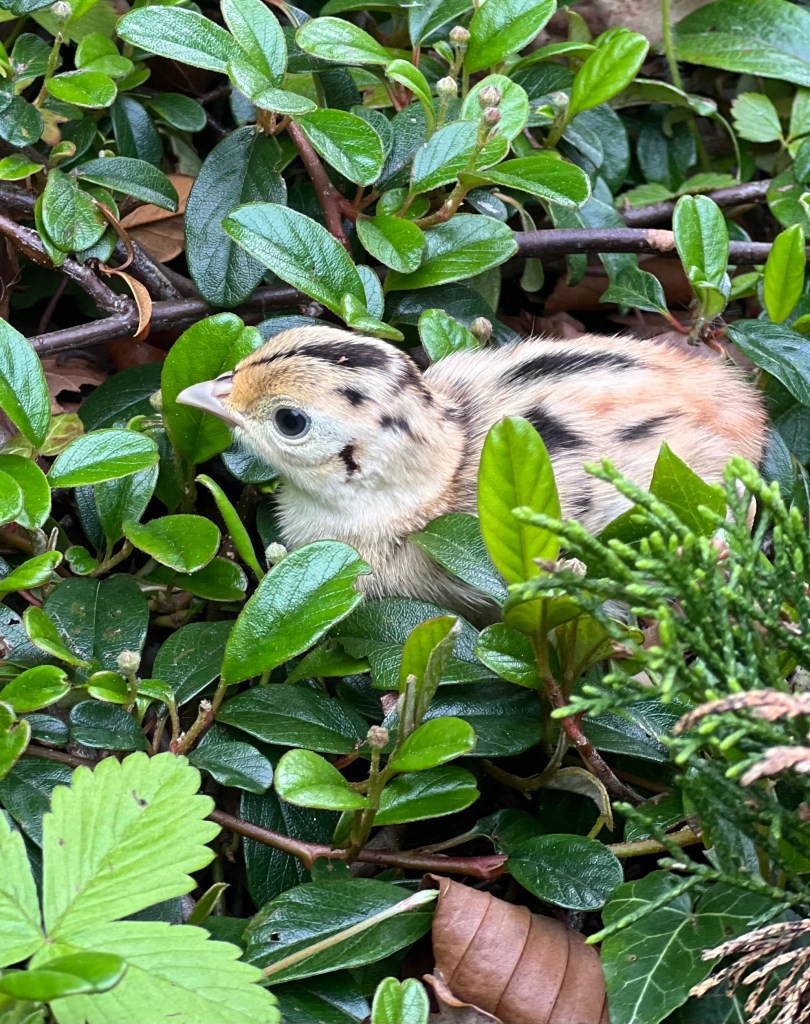
Last week, however, it became clear just why they were here. With Guiney having relocated to the Chapel Garden a few days previously, outside of my study window one afternoon I could see on the lawn the scurrying of many little feet and not one pheasant, but a whole brood of little pheasants. Yes, Dave and Guiney were the proud parents of a dozen little pheasant chicks! The cuteness levels were off the charts, and very little work was achieved by any of us working in School House that afternoon. Never in the space of an hour period have I heard the word “Aw!” expressed so gushingly and so often. Mainly by myself.

One of the as-yet-unchristened pheasant chicks- name suggestions in the comments please…

The Importance of Place

Now perhaps I’m reading a little too much into it, but I viewed this happy moment as something of an endorsement of Oswestry School and our community. Yes, yes… I would say, that wouldn’t I? !

I’m no expert on pheasants nor poultry in general, but as I began to retrace their time with us on campus, I realised that Dave and Guiney had arrived here in search of a suitable place for the birth of their little family. In search of a sanctuary, in search of safety, in search- in short- of a home.

Get a grip, Middleton, I hear you cry! You’re letting your emotions get the better of you again! You’re turning a run of the mill everyday occurrence into an overly-sentimental Disney-esque vignette all for the sake of finding something to write about in your next blog- pathetic!

Say what you will, but I was rather touched – and moved – that they had found that place of sanctuary and safety on our school campus, that they had found a place that they could call ‘home’ for their little chicks, even if it is just temporarily, even if they are just passing through.

Oswestry School: raising pupils (and pheasants) since 1407

A Home from Home

After all, that’s what each one of us are doing: passing through. Home is but a temporary place and space as we journey through life (and we will of course call many places ‘home’), but there is a deep connection to those places that we call home, and when we put roots in a place, those don’t simply wither away when we leave. As the writer Michael Allan Fox puts it, “home always travels with us, preserved in some form or another.”

Whilst schools such as ours are often rooted in centuries of history (Oswestry was founded in 1407 by David and Guinevere Holbache…who weren’t actually pheasants I should add), pupils and staff alike are but passing passengers on that long voyage. Whilst our time here at the school is but temporary (and thank goodness for that, some might add!), in a small, close-knit campus community such as ours, school means so much more than just school.
For our boarders – who come from over 30 nations around the world- our school and their boarding house is very much a ‘home from home’, a sanctuary and solace, a place of belonging. Their parents choose our school because they recognise that this is an environment in which their sons and daughters can thrive and flourish (though alas, probably not fly, at least not literally), and somewhere they can temporarily call home.

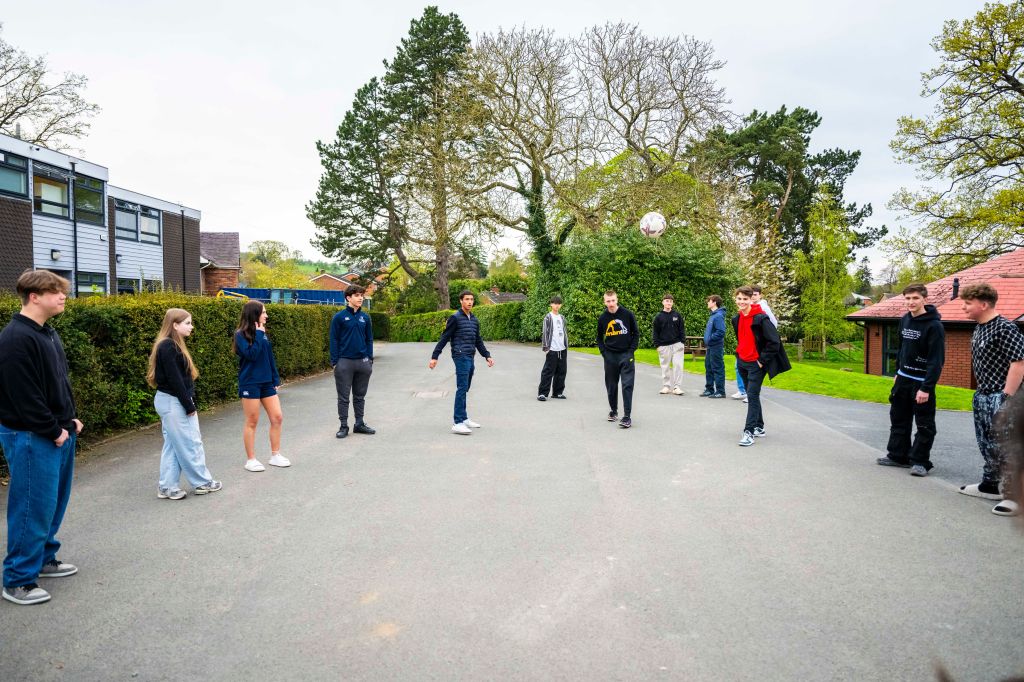
The game of ‘One Touch’ – a favourite evening past-time for our boarders.

Likewise for our day pupils, whilst of course each day they go home to their families, for many there is a deep connection to the school that will stay with them their entire lives; it is likewise a kind of home. That’s bound up in the friendships that they have made and in the experiences that they have had, but also in the sense of belonging and acceptance, and having been part of something that spans the centuries yet touches each and every individual who passes through it.

Homeward Bound

For our Upper Sixth who finished their final day of lessons last week and now embark upon study leave before the next couple of months of A Level examinations, they are readying themselves for their leave-taking. Some have been here their entire school careers from the age of 4 years old -young fledglings now ready to fly- but as they ready themselves to depart, I hope that they will sense that their time here has been more than just about turning up for lessons or turning out for the sports teams, or a star turn on stage (though all of these are still important). Hopefully they’ll sense, too, that this has been a place – and a space – where they’ve belonged, a place they’ve been able to call home.

Some of our Upper Sixth on Chapel Walke. And a haggard old bloke trying to blend in.

And that doesn’t change when they leave. This school will remain a part of them, I hope, as they travel through life, and will always be a place where they will be made to feel welcomed whenever they return. And when they do return- which many of them will- I hope that it will feel very much like a coming home. For home really is where the heart is.

“And though home is a name, a word, it is a strong one; stronger than magician ever spoke, or spirit answered to, in strongest conjuration.”
-Martin Chuzzlewit by Charles Dickens

Follow, my leader

In an early work from his debut collection Death of a Naturalist, the late great Irish poet Seamus Heaney eulogises his farmer father as he “worked with a horse-plough,/His shoulders globed like a full sail strung/Between the shafts and the furrow.” The poem – ‘Follower’ – is a vivid evocation of youthful wonder, admiration and awe, and is a poignant love letter to his ‘expert’ father whose furrows Heaney followed, not as a farmer but, as he suggests in the companion poem ‘Digging’, as a writer who would go on to excavate the Irish landscape and dig into its troubled history.

The collection Death of a Naturalist was to have a profound impact upon me as a schoolboy, introduced to Heaney’s work by a new – and wonderfully passionate- teacher who joined our school as I entered my final year. Until that point, I had always enjoyed studying English, but it was the arrival of the inspirational figure of Mr McLaughlin that truly fired my imagination and revealed to me the power – and impact – of the written word.

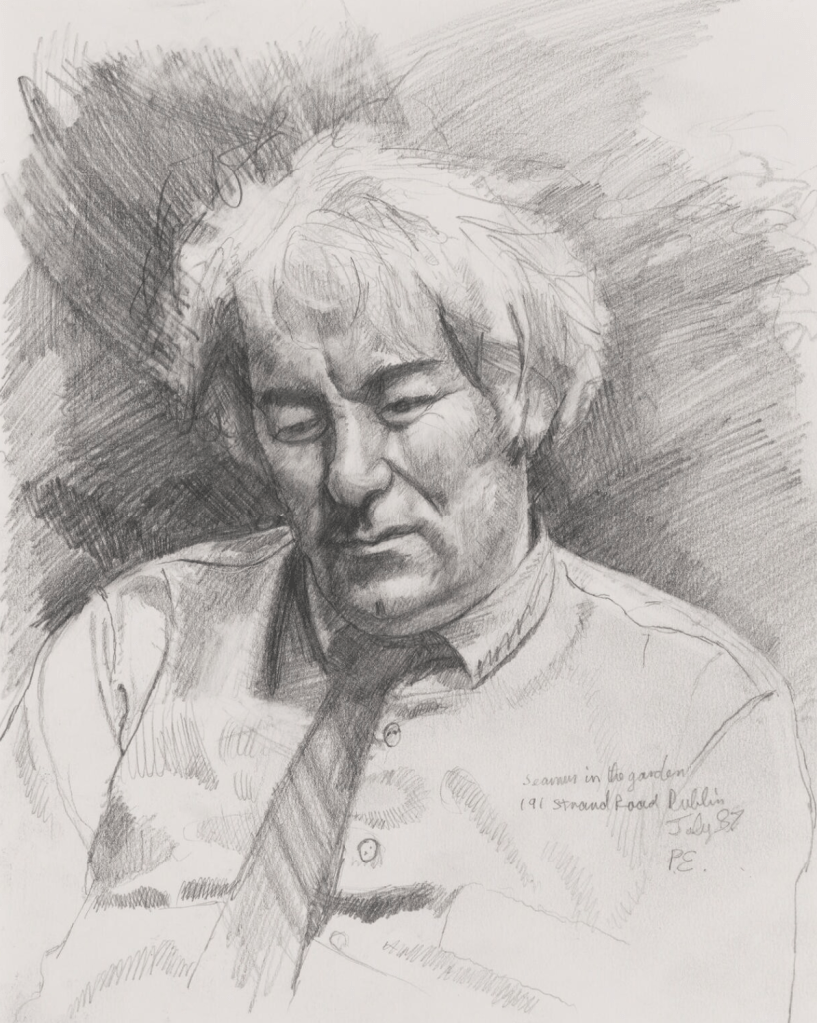
‘Seamus Heaney’ by Old Oswestrian artist Peter Edwards (copyright National Portrait Gallery)

Amongst others – including my grandfather, a Classics teacher – Mick McLaughlin played an influential role in my own pathway into teaching and, having continued to take a keen interest in Irish literature whilst studying English at university, it was to Heaney that I first turned – and returned – when I commenced my own teaching career. I found it a particularly moving – and symbolic – moment as, in turn, I taught Heaney’s poem ‘Follower’ to my own A Level students, conscious as I was of following in the Tweed-suited, brogues-wearing footsteps of Mr McLaughlin. As Heaney did when he followed in the literal furrows of his father, I, too, “stumbled in his hobnailed wake,/Fell sometimes on the polished sod,” though, thankfully for Mr McLaughlin, I at least didn’t ask him to give me a piggy back as Heaney’s father did with the young Heaney “dipping and rising to his plod”!

Leader as Follower

There’s a lovely moment each year at our school’s summer term Speech Day when the Head Boy and Head Girl announce to the school and our guests the names of those who will follow them as the next year’s Heads of School. Having led the school for the past academic year and delivered their valedictory speeches, their final act is to welcome on to stage their successors, handing over their Heads of School gowns as they do so, a symbolic gesture of the passing of leadership from one cohort to another. With a history spanning over 615 years, I find it a powerful reminder of the golden thread that connects one year group to the next, the metaphoric baton of leadership being passed across not only the years but across the centuries, too. In this sense, our Heads of School become both leaders and followers, walking in the footsteps of their forebearers, learning from them, emulating their example, but ploughing their own furrow, and doing it their own way.

This term we have spent the past few weeks interviewing the next cohort of Prefects to lead the school in the forthcoming academic year. One of the questions we ask requires applicants to reflect on what makes a great leader, and to provide examples of leaders they’d wish to emulate. Many of them pointed to the example of our current Heads of School Myles and Marta, and their Deputies Jessie and Harris as leaders they admire and whose example they hope to follow. They point to Myles’s approachability and his empathy, his calm manner and his willingness to drop everything to listen to a fellow pupil in their time of need. They point to Marta’s example on and off the sports field, her energy, her organisation, her ability to get things done. They point to Harris’s kind nature and his imaginative approach (and his Instagram status as the star of our pupil-led Football team account that has a fast-growing following!). They point to Jessie and the way the youngsters in our Prep School look up to her and admire her, and the ‘glue’ she provides in her own yeargroup.

These four – and their Prefect team – were appointed for the skillsets and character attributes they possessed. They had seen examples of strong leadership from their predecessors, who in turn had role models to follow from their own predecessors. And when we appoint the Prefect Elect and begin the process of handover again, next year’s cohort will spend the coming term following in the furrows of the current Upper Sixth before they take the baton on and lead themselves.

The golden thread continues; unbroken. Follower. Leader. Leader-Follower.

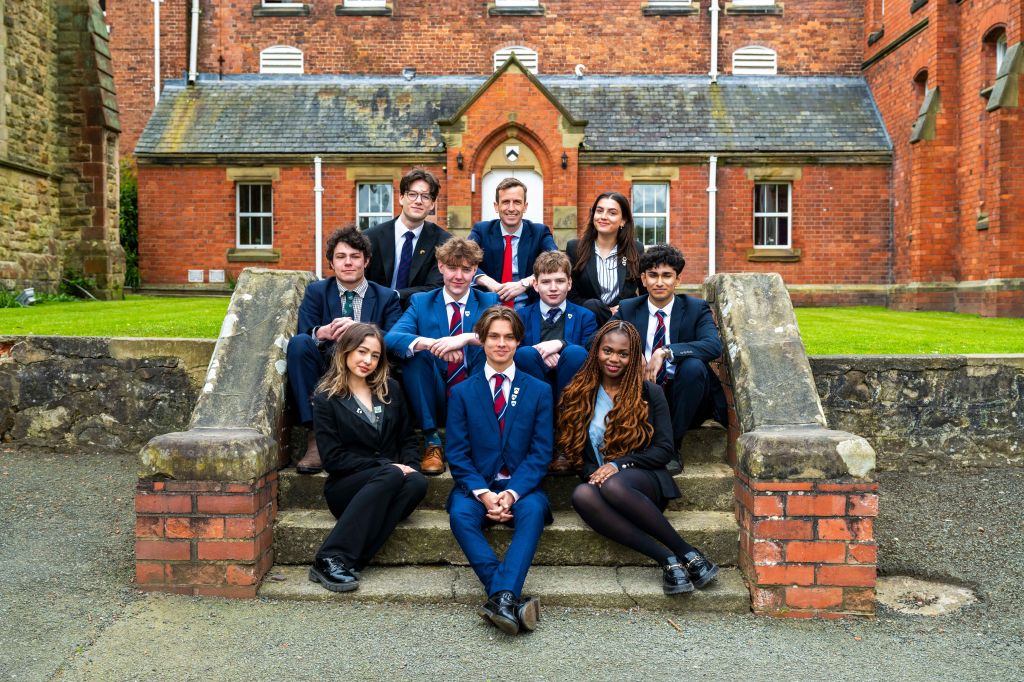
Oswestry Heads of School (clockwise from top left): Myles; Marta; Harris; Jessie

Curator Leadership

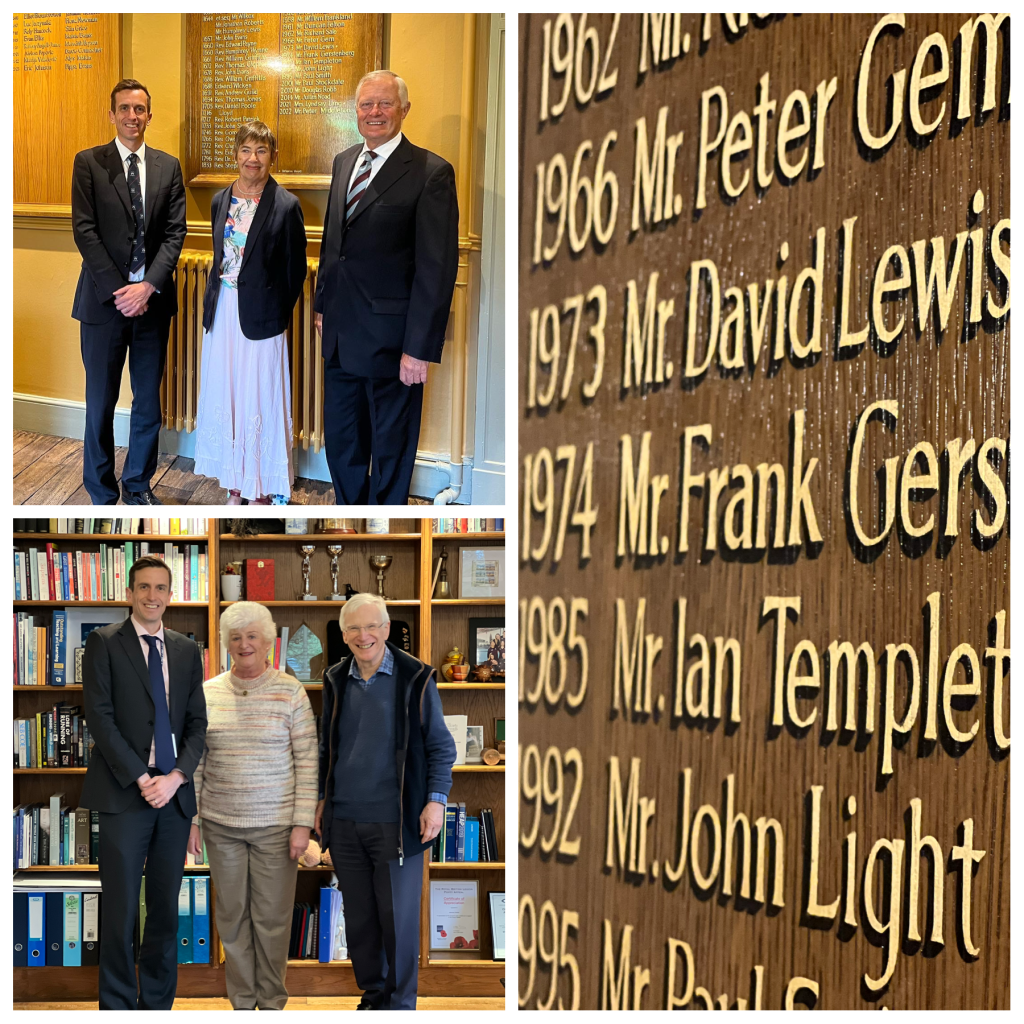
One of the tremendous privileges over the past few years in which I have been Headmaster of Oswestry School has been the opportunity to meet a number of my predecessors. Some I knew already from ‘the circuit’ including my immediate predecessors Julian Noad (now Head at Queen’s School, Taunton) and Douglas Robb (now Head at Gresham’s), but others I have met when they have taken the time to visit us whether on Founder’s Day or just in passing through, including Paul Smith (Headmaster 1995-2000) and the legendary figure of Frank Gerstenburg (Headmaster 1974-1985). All were great Heads and steered the good ship skilfully, carefully, and at times courageously through waters calm, choppy and sometimes stormy.

When you are the Head of a school founded in 1407, you quickly gain a sense of the privilege and responsibility of the role, first and foremost of course to the community of pupils and staff one leads, but likewise the privilege and responsibility of stewardship, taking on the metaphorical baton from those who have led the schools across the centuries, and ensuring the golden thread of the school continues uninterrupted.

“Your leadership is temporary,” writes educationalist and former Head Richard Gerver, “and you are just the author of one chapter in a school’s history, a custodian: your aim must be to ensure that it is a great chapter and actually so good that it sets up the next one to be even greater.”

Former Oswestry School Heads Paul Smith (top left) and Frank Gerstenberg (bottom left)

Whether a Headmaster, a Head of School, a Prefect- or any of the other many leadership roles within a school community- one’s leadership is temporary. We are custodians of the school, curators even: our role is to look after. Looking after those within our care, looking after the school. As we have followed in the footsteps of those who have gone before us, in turn we lay a trail for those who come after to follow behind.

Perhaps it’s not a golden thread after all, but a golden tread. In time, our footsteps will disappear, but for those that follow immediately after, they are firmly imprinted, a golden tread to follow, a golden tread to lead forward from.

Image: copyright Anup Shah | Getty

The Be of the Bang

As a lifelong athletics fun – and keen runner – I was fortunate to grow up in a golden era for Great Britain on the track. I was a little too young to appreciate the enthralling middle distance rivalry of Seb Coe and Steve Ovett and the trail they blazed for the young Steve Cram to follow, but my imagination was nonetheless captured by the athletic brilliance- and entertaining personalities – of the likes of Kriss Akabusi, Sally Gunnell, Roger Black, and triple jump world record holder Jonathan Edwards, amongst many others.

For the casual athletics fan – and even those who perhaps only dipped in to track and field once every four years in the Olympics cycle- the likes of Akabusi et al were very much household names. However, it was a less well known – and less decorated – athlete that truly inspired me as a youngster, and whose example left a more lasting impression: Derek Redmond.

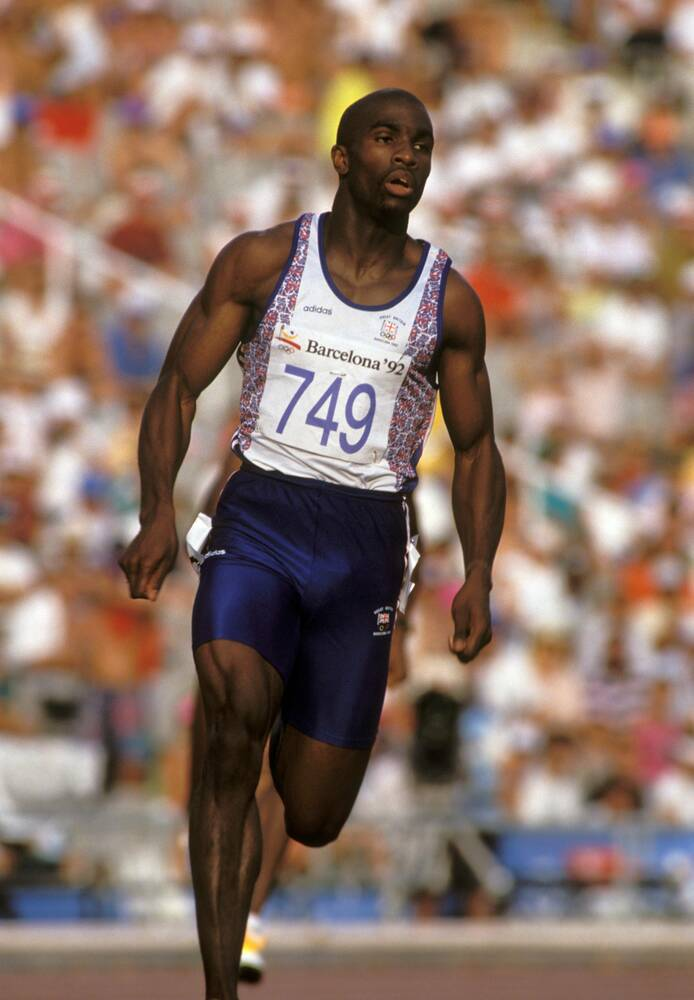
Redmond was one of the world’s top 400m runners going into the 1992 Olympic Games. He should have run at the ‘88 games in Seoul, but cruelly, just 10 minutes before competing in the first heats, his Achilles tendon snapped, resulting in two years of painful surgery. Yet it was his dream to win an Olympic medal, and he had the performance to do it, going into the Barcelona games in the form of his life.

Progressing easily through the heats, everything was going to plan, and as he settled into his blocks for his semi-final, he focused on the goal of reaching that final – and the prospect of an Olympic medal- ensuring he kept focused and trusted in the training of the previous months and years. 

With the crack of the starter’s pistol, Redmond was off like a shot and, settling in comfortably to his stride, made easy work of the first 200m. He was coasting, and looked set for an easy victory.

Then, with just 200m to go…BANG!

Redmond crashed to the track, grasping his leg. He thought he’d been shot.

He hadn’t; his hamstrung had snapped.

His dreams were over. Shattered.

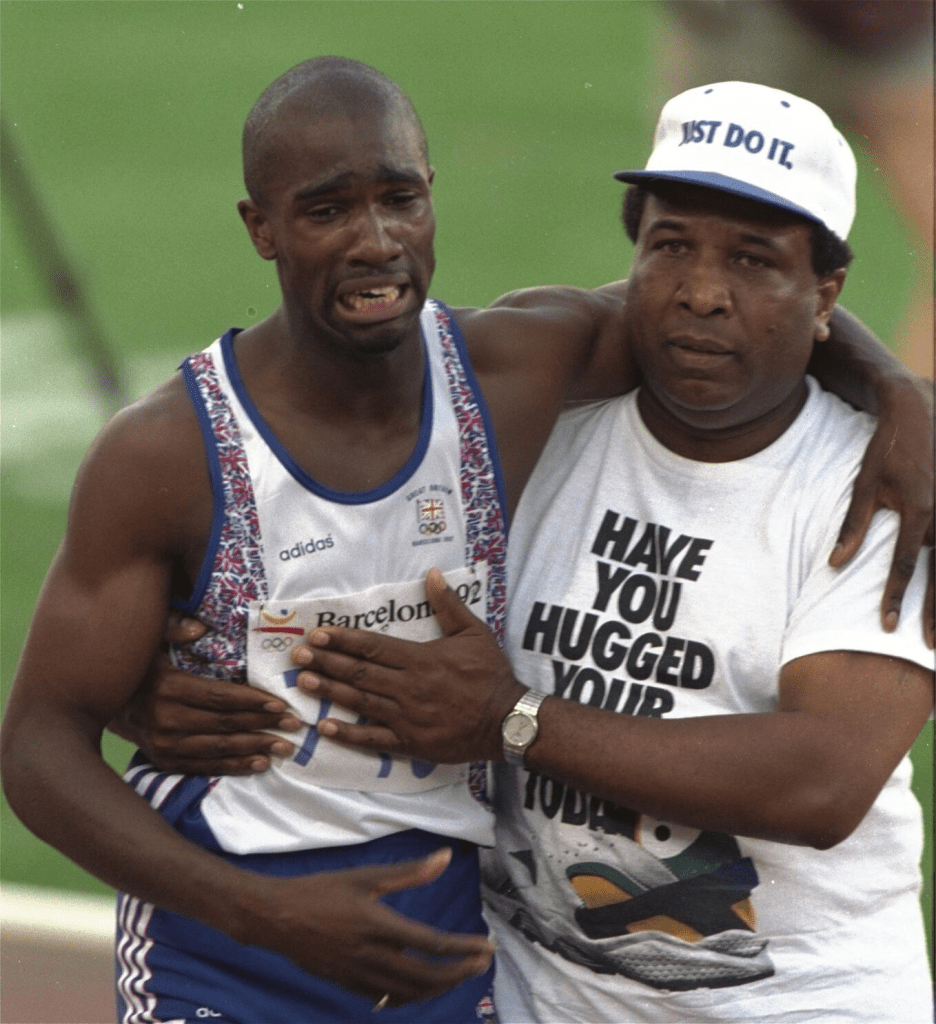
Yet, with the other runners already having crossed the line, he picked himself up, and limped forward in his lane in quite evident agony. As he slowly dragged himself around the final bend, his father Jim- who had travelled especially to see his son compete- jumped over the barriers and onto the track, pushing the security away, and rushed to be with his son. The two men embraced, and the younger of the two Redmonds wept in his father’s arms, his dreams evaporated.

But together they walked all the way down that home straight. Why? Because Redmond was determined to get to that finish line.

And finish that race he did. To this day, it is the slowest ever recorded time of an Olympic 400m, but for me it remains an astonishing demonstration of the indomitable human spirit. It was Redmond, not the other runners, who received a standing ovation from the whole crowd. 70,000 athletics fans, on their feet, applauding a man who more than any other in that Games, seemed to embody the Olympic ideal.

Carry on going, he seemed to be saying to himself. Don’t give up. Persevere.

(Image: AP 1992)

Just Be It

The image of Derek Redmond and his father Jim walking those slow, limping steps towards the finish line is perhaps one of the most iconic sporting moments of all time, made all the more memorable given the cap Jim was wearing with Nike’s famous slogan. The Nike executives must have been rubbing their hands in glee at this free advertising and the poignant, powerful embodiment of determination, resilience and perseverance encapsulated in the Just Do It imperative lived out by Redmond in that race. 

Athletics – as with most sports – is very much about the ‘doing’. Getting the job done in training; putting in the hard yards; getting out there when it’s cold and dark; doing what needs to be done. It’s goal-orientated, and all about competitive results. In this sense, Nike’s slogan is a good one. It’s very much about Just Doing It.

But Barcelona ’92 demonstrated powerfully that sport – as with life – is less about the ‘doing’ and more about the ‘being’. Redmond could quite easily – and understandably – have waited for the medics to scoop him off the track, and ended it there and then. He’d have avoided the agony of that final limp down towards the finish line, and the glare of the television cameras as his shattered dreams were played out live to the watching world. But this wasn’t about sport- or winning- anymore. It was about his very being- who he was, not as an athlete, but who he was as a person.

For Redmond, the finishing was important. His athletics talent – his ability to ‘do’ – became irrelevant in those final 200m; it was his attitude and approach – his ability to ‘be’ -that enabled him to complete that race. Courageousness; determination; perseverance. The ‘be’ of the Bang.

To Do or Not to Do

January is very much a month of ‘doing’. After the blur of the Christmas period, we tend to get down to the busyness of getting our affairs in order, looking towards the year ahead, and no doubt proclaiming a fair few New Year’s Resolutions.

As we head towards the end of January, I wonder how many New Year’s Resolutions have already fallen by the wayside, swallowed up by competing priorities and perhaps less achievable – or important – than we had first felt. 

(Image: Shutterstock)

All too often, these resolutions resemble a 12 month ‘to do’ list: things we plan to achieve; things we’re going to do better; things we’re going to take up; or even things we’re going to stop. It’s very much about doing (or not doing), and in many senses that isn’t a bad thing. Whether it’s learning a new language, cutting down our carbon footprint, or reading more, these resolutions are specific, measurable, and provide a degree of accountability, at least if we’ve gone public with our New Year’s Resolutions. 

Just do it, we tell ourselves.

But wouldn’t it be more impactful if our New Year’s Resolutions were less about doing, and more about being? Rather than setting ourselves goals, and targets, and aims we wanted to achieve, far better, surely, to think about what we can be, rather than what we can do.

Be more thoughtful. Be more considerate. Be more selfless. 

I wonder whether we might even shift the way we carve up our daily tasks, focusing on a ‘To Be’ list rather than a ‘To Do’ list. As someone who needs a ‘to do list’ to keep on top of all the many spinning plates, I’d find it hard to completely drop a ‘to do’ list. But there’s no reason why a ‘To Be’ list can’t work alongside a ‘To Do’ list. I’m going to give it a go. Be first; do second. Why not join me?!

The Beauty of Being

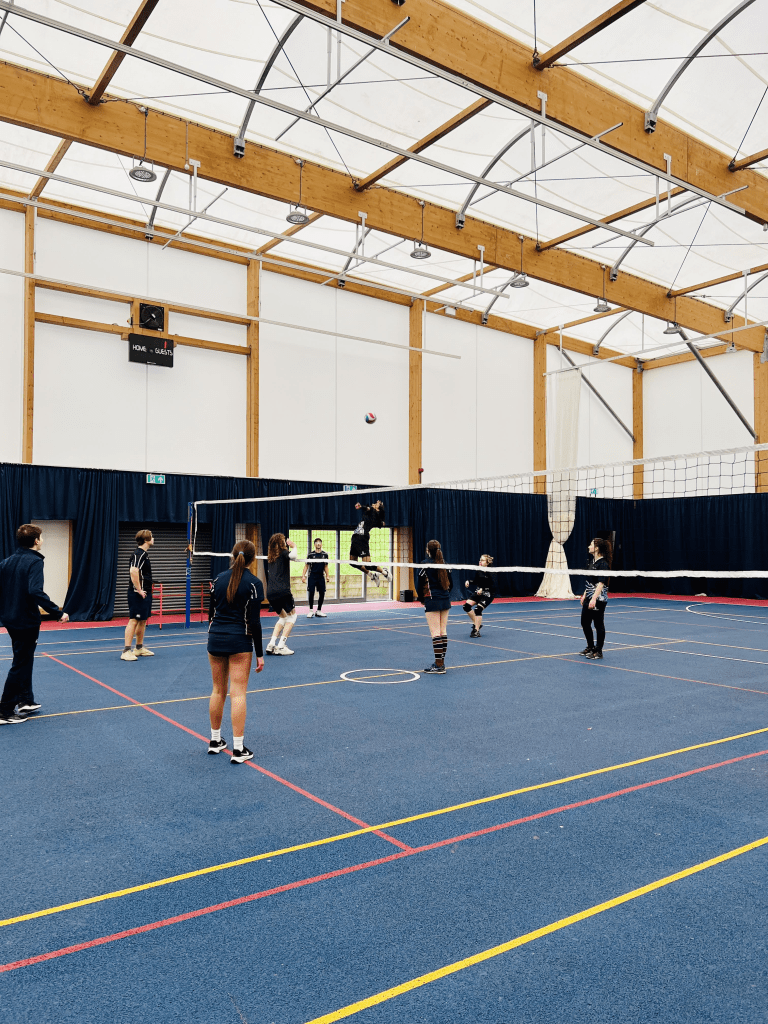
Last weekend I witnessed a joyous, beautiful moment following the end of a competitive volleyball fixture against a local independent school – Wrekin College- where the two teams decided to stay on court after the match finished, but instead of competing against each other, they decided to mix the teams together. With the fixture already over, they wanted to continue playing just for the fun of it, with handshakes of introduction soon leading to high fives and fist pumps. This was about being, not doing.

As someone who has run competitively for the past 20 years, I’m certainly someone driven by a competitive instinct, but I’ve also always felt that sport is about so much more than winning, particularly at a school level.

Sport is, above all, fun. It’s about making friends. It’s about connecting with people, no matter if you’ve just met them and no matter where they’re from (in this instance, there were at least five nationalities represented on court). It’s about enjoying the moment, and being in the moment.

As a Head, the scoreline in that match (or in any match) doesn’t really matter to me. Seeing the way these youngsters joined together, encouraged each other, included everyone, and had fun together… that’s what matters to me, and that, to me, is what sport is all about. 

It’s not about the doing. It’s about the being. 

(Image: pupils from Oswestry School and Wrekin College enjoy a friendly game of mixed volleyball in the Momentum Hall, Oswestry)

Redmond inspired me as a youngster, and his example continues to inspire me to this day. He reminds me that life isn’t about winning, or achieving, or what we have done. People won’t remember us for the things that we’ve done; they’ll remember us, at the end of it all, for who we were. For our attitude, for our approach, for our impact on others. 

So in 2024, let’s focus on the being not the doing. Let’s do less, and be more. 

2023: A Year of Opening Doors

If your home is anything like mine, the daily ritual over the past few weeks has begun with the excitable opening of advent calendars.  When I was growing up, the humble advent calendar would be opened each morning to reveal a nativity-based image: Magi from the East in regal robes; angels in bright raiments; shepherds silhouetted against starry skies.  Largely flat, one-dimensional offerings, this was long before the evolution of advent calendars into the more elaborate, gift-dispensing treasure troves that they have now become.  These days, at the very least one can expect a decent-sized chocolate – or chocolate bar -every day (I’ll pass on the weetabix this morning, mother; this Freddo should sustain me until lunchtime), but you might equally expect a Lego or Playmobil figurine, a Smiggle Bath and Body product, or even a gemstone.  And fear not, mums and dads, these days it’s not just the kids who can expect an advent calendar.    Oh no!  Take your pick from advent calendars offering a vast smorgasbord of festive treats from cheese, beer, gin and hot chocolate to any number of other culinary delights.  There’s even a ‘12 Days of Noodles’ advent calendar for those who like nothing better than a hot bowl of winter noodles to start their December days (once you’ve finished with your Freddo, darling, would you mind taking my Tom Yum noodles out of the microwave; there’s a dear).   It’s not just food, either. There’s a ‘24 Days of Socks’ advent calendar (in case the predictable bundle of socks that every middle aged man can expect each Christmas Day isn’t enough…), a 24 Days of Beard Treats for the hirsute gentleman, and for those looking for something a little more sophisticated, Wedgewood have a Christmas Tree advent calendar with 25 rather exquisite porcelain ornaments retailing at just £860.  Bargain!

In the consumer culture that we live in, it’s perhaps inevitable that things have got bigger, though, at least in my opinion, I’m not sure they’ve got better.  You see, plain and simple though they may used to have been, the humble advent calendar of yesteryear nevertheless still induced thrill and excitement each and every morning, even without the dispensing of a chocolate, a pair of socks, or a tincture of beard oil (which, after all, might have been a little strange for a young boy to receive, albeit aspirational I suppose).  It might only have been a picture that was revealed once the calendar door was opened, but the thrill was in the anticipation of what might lie behind, and the excitement of moving one day closer to Christmas morning itself.  The thrill, in reality, was in the opening of the door itself.  

I have been musing on advent calendars over the past few days since the end of term with the time to reflect back a little on the past few months, and indeed the past year.  As thoughts inevitably turn to the new year ahead and all the possibilities and opportunities that await, I have also found it valuable to reflect back on the year past, and all that has gone before us in the past 12 months.  

So why advent calendars?  Well, I have found myself reflecting back on a lot of doors being opened this year, some literal, some more metaphoric.  Indeed, the year began back in January with the opening of our new Senior School library, with doors opening on the first day of the new term and the new year.  We actually spent quite a bit of time thinking about that door- and the entranceway to it – for we wanted it to feel different, like you were entering somewhere a little special, a little magical.  All great libraries, after all, are places of sanctuary, discovery, wonder.  So we wanted that door – and the entranceway itself – to be like a portal into a different world, for that is the true gift of libraries, and the books within them.  Much like the thrill and excitement of opening up the daily door of an advent calendar, so too should opening the pages of a new book be a thrilling experience; one of excitement and anticipation. It gives me great joy to see just how successful that Library project has been, and as the space celebrates its first birthday, it is heartening to see the Library once again at the heart of the school, and the treasure trove of books within it so greatly enjoyed. 

We likewise opened the doors to a newly-refurbished and renamed Sigi Faith Sixth Form Centre on Founder’s Day earlier this term.  Those who attended the Founder’s Day service will have been moved and inspired by the words of Sigi Faith’s daughter Nicky as she retold her father’s extraordinary story from the young 10 year old boy who left  Hamburg train station to travel to England as part of the  kindertransport to shoe-store entrepreneur who became a household name with Faith Shoes stores found in cities and towns across the country.  Oswestry School played a key part in that story, affording the young Sigi Faith with a sanctuary – or “a paradise,” as he himself would later describe it reflecting on his time here – providing him with a home, an education, and the hope that comes from possibility.  Providing him with an Oswestry education free of charge, the school quite literally opened its doors to Sigi Faith and opened its arms to embrace the young Jewish boy who spoke no English and who knew no one.  Possibilities were opened to him, and once those doors of opportunity were opened, he strode boldly forward, latterly becoming Head Boy, captain of the 1st XI, an assiduous student, and one who involved himself in the wide array of school life both inside and outside the classroom.  His is an inspiring story of hope and opportunity, and what can be achieved when doors are opened for you.  It is fitting, then, that the Sixth Form Centre should carry his name, recognising not only the generous legacy donation from the Faith family, but most importantly reminding our pupils each and every day as they walk through the doors of that new and exciting facility that opportunity and possibility awaits them; all they must do is step boldly forward.

As a school whose motto translates as We Learn not for School but for Life our aim is- and always been- to best prepare our youngsters for their adult lives beyond.  Preparing them with the skillsets and mindsets they will need for future thriving and flourishing, our job, too, is to guide them to those possibilities and, open up the doorways and pathways to the wide range of futures that awaits them.  This was the impetus behind Futures Fortnight which was one of the highlights of the term and a meaningful and insightful two weeks with future-focused lessons in the Prep School and Senior School, and a series of fascinating, engaging and inspiring talks from alumni, parents, and friends of the school.  Central to the school’s strategic plan – Forte – which was launched in September, Futures Fortnight and the broader Futures vision is a firm commitment to ensuring that an Oswestry education best prepares our youngsters for their wide – and wide-ranging – futures. 

An Oswestry education is, above all, about possibility and opportunity.  It’s what I talk about a lot when I meet with prospective parents, or alumni, or indeed anyone who’ll listen!  It’s why, when the Senior School reception underwent a refurbishment in the summer, we thought we’d do something a little different and include a secret door in the visitor room.  What appears to be a bookcase full of leather-bound tomes is in fact a hidden doorway which, aside from being rather fun, unexpected, and typically idiosyncratic, is also a visual representation of all that we do here at the school.  Far from being a gimmick, it’s a metaphor for what an inspiring education should be: a doorway to opportunities and possibilities; a doorway to self-discovery; to fun and laughter; to friendship; to happiness.  Much like the wardrobe in C.S. Lewis’s classic novel The Lion, the Witch and the Wardrobe opened to the magical, mystical world of Narnia, so, too, should an inspiring education be a portal into new worlds.  I like to think that Oswestry has that little bit of magic, and each day as pupils open doors into classroom or Science Lab, sports hall or theatre, swimming pool or music room, there is that same excitement, that same sense of discovery, wonder, boldness, that same childhood thrill and anticipation of what lies within, and what lies beyond.

105 school days remain this academic year.  That’s a whole lot more doors to open than your average advent calendar.  You can be sure that it will include the weird and the wonderful, the inspiring and the inventive, the bold and the beautiful, the simple, the surprising, the joyful.  It is an exciting, and thrilling, prospect.  

“If ye will all have it so, let us go on and take the adventure that shall fall to us.”
-from The Lion, the Witch and the Wardrobe by C.S. Lewis