Wide Futures

There’s a wonderful poem by the writer Grace Nichols – ‘Praise Song for My Mother’ – in which she movingly and poignantly reflects back upon the all-encompassing role her mother played in her early life (“You were water to me…/moon’s eye to me…/sunrise to me…”), nostalgically reminiscing about her idyllic childhood in Guyana and her subsequent transatlantic journey across vast oceans to reach new shores- and a new life – in Britain. The poem ends with a memorable single line stanza, quoting her mother as she departed for that new life with the imperative: “Go to your wide futures”. One cannot help but hear the trembling emotion of those words as her mother releases her daughter into the world and to its vast ocean of possibilities, arms that had enveloped precious youth now unfolding into outstretched palms bidding farewell and gently propelling towards new horizons.

The sun rises to a new dawn for the youngsters of today as they scan the horizon and contemplate their own wide futures. The world of work is changing at pace; the skillsets required to thrive within it are likewise fast-evolving. There are many who are nervous about the impact of A.I., the increased use of technology and the potential narrowing of opportunity, but I see only possibilities for the youngsters of today as the sun rises on a bright and exciting tomorrow.

Never has opportunity been so wide-ranging. When I was 18 (in the last millennium, I must confess…) our route beyond school was presented as a fairly linear and narrow pathway into the world of work. Today, many of my Sixth Form pupils will go to university, but they won’t all be going to UK universities. Some will be go on to study in the States, some in Europe (where, at universities such as Amsterdam, there are many courses taught in English), and some further afield. Others will enter directly into the world of work, whether joining the Armed Forces, the police, or other areas of important public service. There is likewise a growing interest in School Leaver programmes where organisations such as JCB combine university study with on-the-job workplace training.

The jobs they can now consider include roles that weren’t mentioned to me as an 18 year old, largely because they didn’t exist 25 years ago! App developer; cyber security specialist; block chain analyst; driverless car engineer; cloud architect; social media marketeer; big data scientist; podcast producer. Talk about wide futures!

Find Your Future

One of the highlights of this term has been our inaugural Futures Fortnight, a specially curated programme aimed at fostering a future-focused mindset amongst our pupils whether aged 4 or 18 and everything in between. There have been future-focused lessons linking careers pathways to the curriculum, parental engagement events, a Futures Fair, and an expansive range of seminars from alumni, parents and friends of the school across a wide range of careers providing the opportunity for our pupils to hear from a KC, a vet, a pilot, a former Formula 1 mechanical engineer, an entrepreneur, a sports therapist, the global head of creative strategy at YouTube and many more besides. Throughout it all, we’ve been thinking a lot about the skillsets and mindsets that we need to develop inside and outside the classroom in preparing our youngsters for their onward pathways, and they, too, have engaged thoughtfully and enthusiastically in thinking about next steps and the skills of tomorrow.

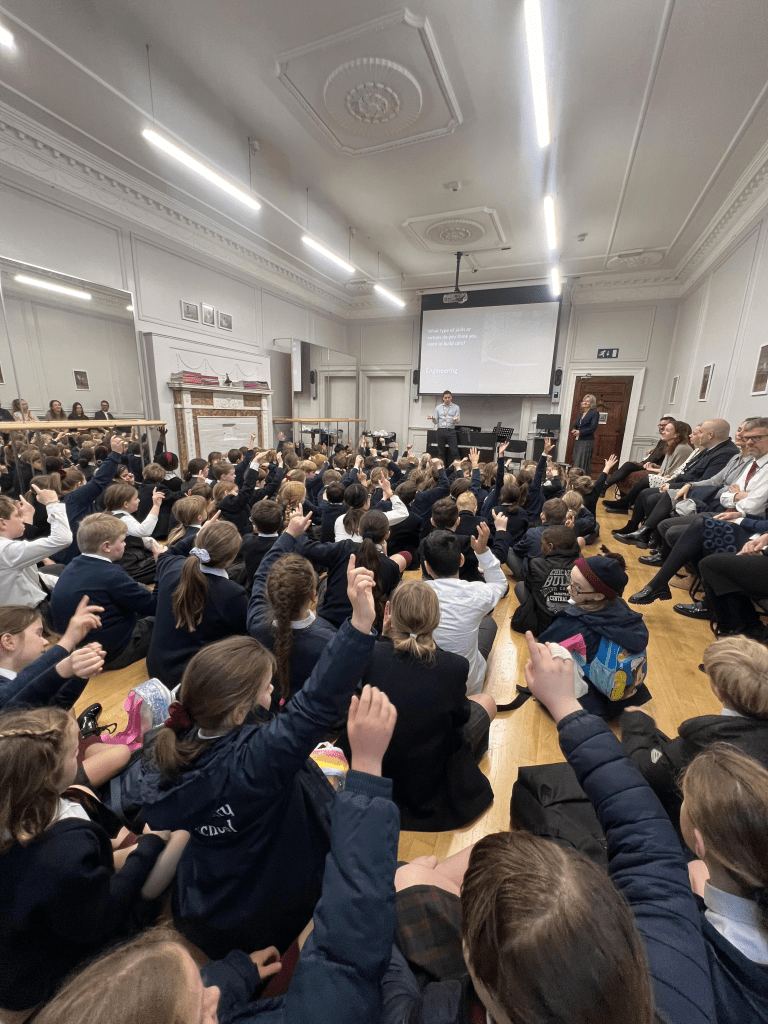
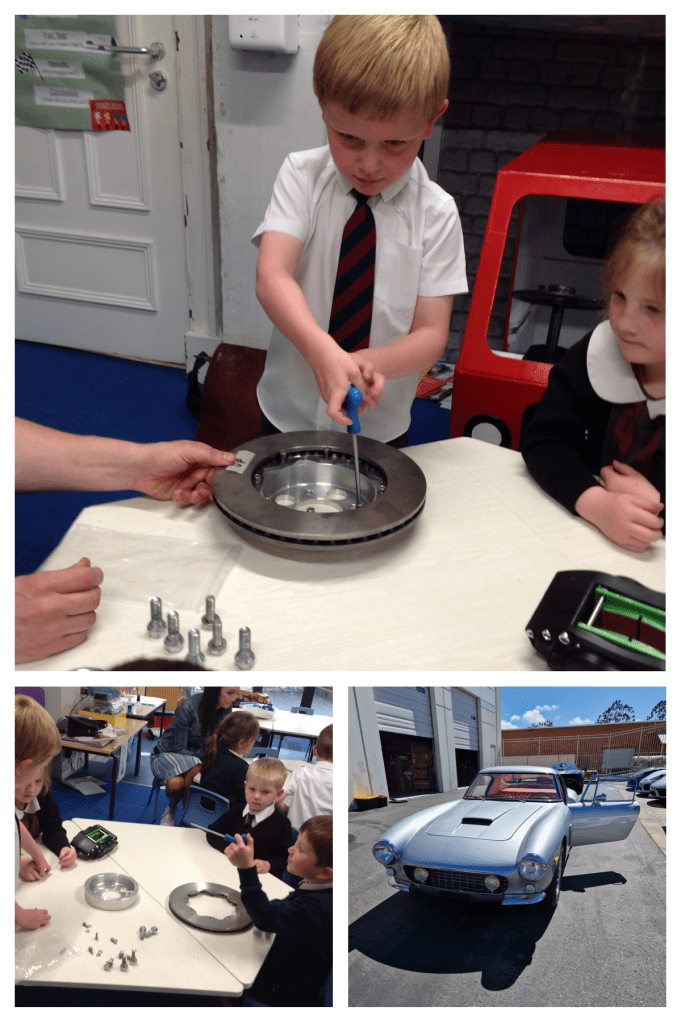
One of the talks I attended was with our Prep School pupils where Matt Potts from Mirage Automotive had his audience in rapt attention as he provided a fascinating insight into his work as the Managing Director of a small business that has sought to disrupt the classic car scene. It was great to listen to the pupils’ insights into the types of skillsets that were needed in the sports car manufacturing industry, with ‘teamwork’, ‘collaboration’, ‘innovation’ and ‘problem solving’ words in their vocabulary and understanding, and skills they are already developing both inside and outside the classroom.

This wasn’t the first time Matt had come to visit our Prep School; indeed, he reminded us that he had spent time with our Reception pupils as part of their topic of Transport a couple of years back where he had been invited to show the children several different parts of the Mirage sports cars that they manufacture locally. The children helped to assemble the entire front suspension components whilst learning what each part did on the car. Matt revealed to us all that “they did such an amazing job that the parts were immediately fitted to a customer’s car in our workshop, following which it was shipped out to Beverley Hills, California later that year. The car is now being driven round L.A. by a very happy customer!”

Imagine being a seven year old finding out that you had helped build a sports car, one of only twenty in existence in the world- I reckon I’d believe I could do anything if I’d found that out at their age!

Pilots not Passengers

As our youngsters journey through their schooling, and at a similar time as they learn to drive, they are encouraged to take more ownership of their learning, to become pilots not passengers as they take the controls in charting their onward journey. Some find this harder than others, but as educators, if we’ve done our job right, we’ve prepared them well for that transition into the cockpit.

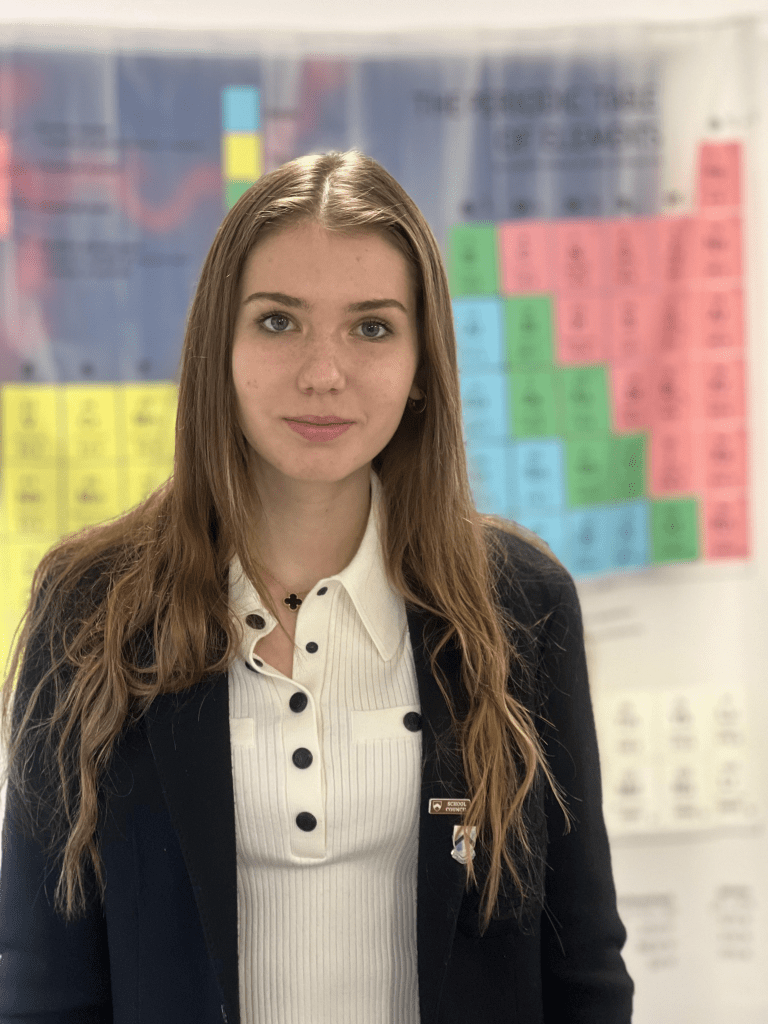
I am continually amazed, enthused and inspired by the innovation of youth, and even in just this past term I’ve witnessed countless examples of pilot initiatives from pupils that have been self-generated and self-propelled. Only last week I was in conversation with one of my Sixth Form pupils – Anna K – who has set up and developed her own website (https://www.sciencenewshub.co.uk/) created out of her passion for scientific research and new discoveries within the world of science. Articulating the genesis of the project and her motivation behind it, Anna explained to me, “I believe that these discoveries deserve to be acknowledged and understood by everyone, regardless of their scientific background. Recognising that scientific papers can often be daunting, I set out to create a platform that simplifies complex topics, making them accessible to a wider audience. In an era where many science news outlets charge for their content, my goal  is to provide the most captivating news stories for free, ensuring that the wonders of science are within reach for all.” It’s a wonderful example of a self-propelled pupil initiative and I’m excited to see how this website develops and grows. It’s worth a look- speaking as someone with limited scientific background, even I found it accessible and interesting!

Bright Futures

Just over a year ago, I attended the HMC Conference in Edinburgh where Headteachers from the independent sector gathered for an inspiring three days with talks, seminars and workshops focused on the conference theme of ‘Enlightened Education’. It was a fitting setting for such a conference; Scotland’s capital was, after all, at the heart of enlightenment thinking during the eighteenth century, an era of similarly seismic change, expansionism and opportunity as we are perhaps experiencing today.

In his opening address, the HMC Chair Melvyn Roffe (Principal of George Watson’s College in Edinburgh) not only provided his own ‘praise song’ for his mother and her guiding influence as a teacher upon him as others, but likewise provided a timely reminder that even amidst all the seismic change and the uncertainty of the future, our role as Heads, our role as teachers, has not changed. That role, Melvyn affirmed, “is, above all, to make things better for children and young people. And to enable the human spirit to flourish… We miss the point if we think that the value of education is only about the wealth of nations; it is overwhelmingly about the light of the human spirit.”

As educators, we are in a privileged position of responsibility in preparing our youngsters for the future. For sure, they must develop the skillsets and mindsets they’ll need to thrive in the workplace, but above all else, we should be igniting that light of the human spirit, inspiring change-makers and innovators propelled to make a difference in the communities in which they live and work, inspired and enthused to make a positive impact. The human spirit will prevail, and with it as our beacon, there’s a blazing, bright light of a future.

And what should be our message to those youngsters of today as they prepare to voyage into the world of tomorrow? Why, it must surely be that very same imperative, that very same encouragement: go to your wide futures!

Sunrise over the Firth of Forth from the top of Arthur’s Seat, Edinburgh with fellow HMC Conference Heads, October 2022

Lighting Fires not Filling Buckets

The poet WB Yeats once declared that “Education is not the filling of a bucket but the lighting of a fire.” For centuries, our education system has been too narrowly focused on the ‘filling of the bucket’ – the acquisition of knowledge and the relentless drive towards examination outcomes- at the expense of critical thinking, curiosity, and creativity. With the advent of A.I., a rapidly-changing workplace and potentially seismic changes to the educational landscape, all that may be about to change.

I’m all for it. For too long, we have viewed education through a purely academic lens with a solitary focus on public examination outcomes alone. At present, they remain an important and arguably necessary gateway to future pathways, but they aren’t the only keys to the kingdom, and indeed there is a danger in thinking of examination results as the sole means of assessing ability, intelligence, and potential. For sure, there are plenty who will achieve strong academic grades in Public Examinations and go on to further success but there are plenty more whose exam results are less stellar but will nevertheless go on to great things. As Harvard University Professor David Perkins puts it, ‘A high IQ is like height in a basketball player. It’s very important, but there’s a lot more to bring a good basketball player than being tall.’

IQ vs EQ

For five years, I was a boarding Housemaster at my previous school, a uniquely wonderful privilege (albeit rather exhausting too; try getting 60 teenage boys to bed before midnight every night!). One of the boys in my house (let’s call him Ben) I had taught previous to becoming a Housemaster and knew that he struggled academically, though not for want of trying. The Sixth Form was a big leap up for him and A Levels were a real battle. Whilst it might not have been evident to his teachers, he worked hard and gave A Levels his best shot, but he was never destined to be an A grade student, nor a candidate for onward progression to a top university. By traditional measures of school success, he would perhaps have been deemed a failure, with less than glittering grades at the end of it, and – some might have said- not a lot to show from his time at the school. Yet, by the time he left school, I viewed Ben as a tremendous success, and a young man who had grown considerably in confidence during his time at the school. He might not have scored highly in academic assessments, but he would have been off the scale in any measure of Emotional Intelligence (or EQ, as it is often referred). Indeed, not only was he a key leadership figure within the boarding community, but he was also my ‘go to’ guy for prospective family visits, touring them around the school and the boarding house, and – without fail- impressing them with his authenticity, his personable nature, his articulacy, his infectious personality and his ability to bring to life the boarding experience. He possessed a hugely impressive skillset, and one that I would argue is just as valuable for onward success as academic grades. It therefore hasn’t surprised me that he has gone on to do just that, and would very much be deemed a success story in his working life beyond school.

The Soft Skills Suite

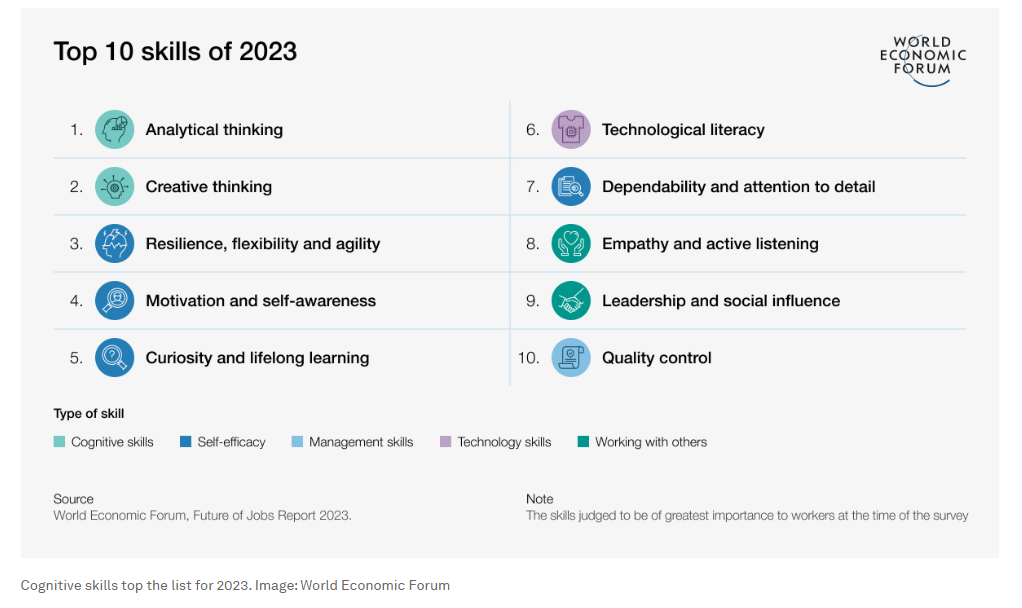
As the writer and educationalist Richard Gerver put it to me recently, “Soft skills will be the hard currency of the future.” These so-called soft-skills are becoming increasingly important in preparing our youngsters for the world beyond the school gates; employers are very clear about the skillsets, aptitudes and attitudes they are looking for in the workforce of the future, many of which would fall into the category of ‘soft skills’. Take, for example, the list below of the World Economic Forum’s Top 10 Skills from their Future of Jobs Report:

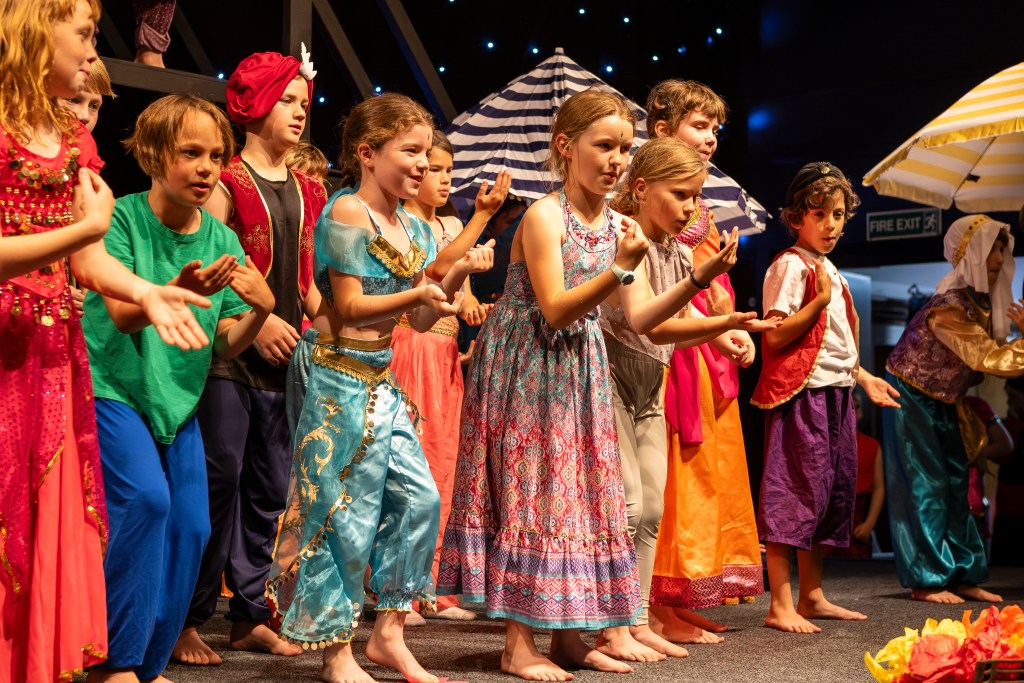
Many of these skills are developed within the classroom, but many more are developed outside of the classroom on sports fields, concert halls, theatres and mountain tops. Just think about what our youngsters experience, by way of example, when they perform on stage: Creative Thinking; Resilience, Flexibility and Agility; Motivation and Self-Awareness; Curiosity and Lifelong Learning; Dependability and attention to detail; Empathy and active listening; Leadership and social influence. And that’s just the skills on the WEF’s list (seven of the ten) not to mention their ability to deal with pressure, learn from mistakes, work effectively in a team, their coachability and much more besides.

The truth is, the skillsets and mindsets our youngsters will need for the future can- and should – be developed both inside and outside the classroom. Thankfully, there has been a perceptual shift in recent years where life outside the classroom is no longer seen as a separate entity to academic study, and indeed, in many schools with an expansive outlook (my own included) academics and co-curricular are aligned in their objectives and shared purpose.

It wasn’t that long ago that we referred to extra-curricular rather than co-curricular, and this has been an important shift in both terminology and reality. For if we are serious about preparing our pupils effectively for the future beyond, we must provide the platform and experiences for them to develop these future-focused aptitudes and attitudes in all areas of school life.

Finding your Forte

Every Friday breaktime, I host a gathering of pupils who have gone above and beyond across a wide variety of areas of school life and beyond, celebrating pupils who have impressed and demonstrated our core values and virtues, from those volunteering in community projects to those enacting simple- but meaningful -acts of kindness. From international pupils leading language lessons for our Prep School pupils to those getting out of their comfort zone and challenging themselves, the Forte Awards are always the highlight of my week, and I never fail to be in awe of the can-do attitude of our pupils, their consideration for one another, and their imagination, creativity, and resilience. These are pupils who embody and demonstrate what happens when you light fires in young people rather than fill buckets.

Forte: Future-focused

This September we launched our 2030 Strategic Plan which likewise takes Forte as its vision name. It is a roadmap for the years ahead that is focused on individual and institutional thriving and flourishing. Above all else, it is future-focused in preparing our pupils for the fast-changing world beyond, ensuring that they have the skillsets, mindsets, aptitudes and attitudes needed to make a positive impact in the communities and workplaces in which they will go on to in their adult lives.

We recognise that the world is changing – and changing fast – but we see that as exciting: a landscape of opportunity and possibility.

Forte is therefore a vision rooted in the imperative for education to be about lighting fires in our youngsters: fires of wonder; fires of awe; fires of confidence; fires of passion; fires of innovation; fires of imagination. With the right kindling and the careful tending of the flames, we have the opportunity to let our youngsters blaze brightly, boldly, and brilliantly.

So let’s throw out those buckets, and start lighting some fires!

https://www.yumpu.com/en/document/read/68376415/forte

Foundations for Thriving: the Sigi Faith Story

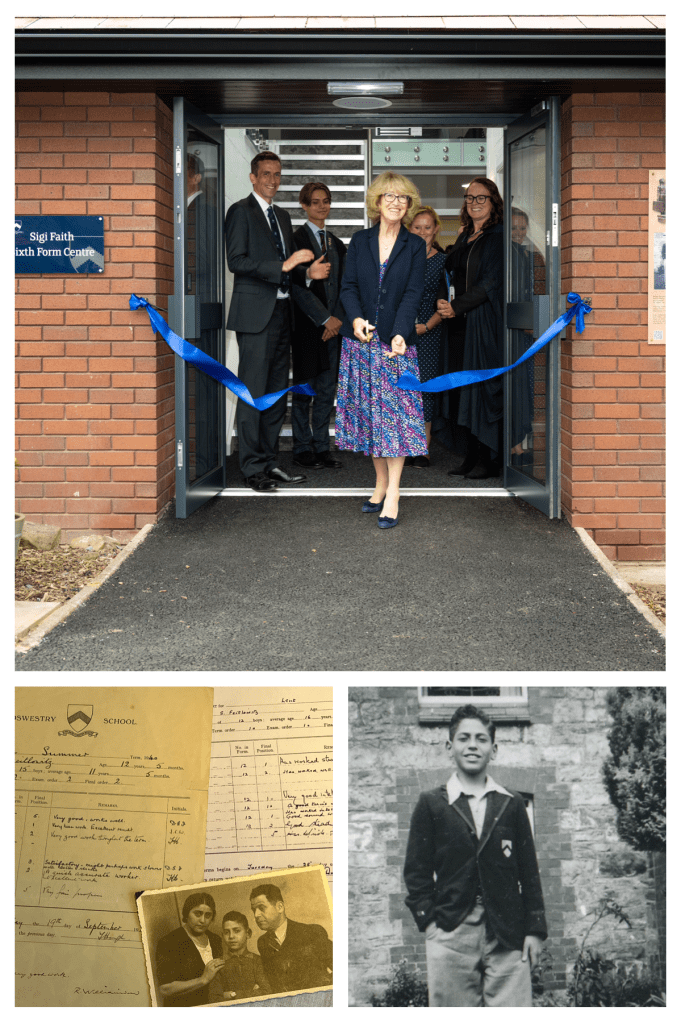
On the 15th December 1938, a young 10 year old boy stood on the platform at Hamburg’s Hauptbahnhof central station with his mother, nervously awaiting the arrival of a train that would transport him from his homeland to a country far away, one where he didn’t speak the language and where he knew not a soul. It would be 10 years before he saw his mother again.

The month previous, escalating persecution of the Jewish community had culminated in the violent anti-Jewish pogroms of Kristallnacht or, as it became known, ‘The Night of Broken Glass’. For those Jewish families living in Nazi-controlled territory, it became increasingly clear that it was no longer safe, and they sought refuge for their children.

The young boy on the train – Siegfried Feitlowitz – was one of 10,000 Jewish children brought over to England as part of the kindertransport; as she waved off her only son, Siegfried’s mother promised him that he would be going to a country that would look after him, and that the Queen of England would be there to greet him on arrival and present him with flowers.

Whilst the latter never transpired, the young boy did indeed find himself in a country – and a county – where he would be well looked after, and likewise enabled to thrive.

A New Home and a New Beginning

Initially placed in a refugee camp in Ipswich with 700 boys, each day young Siegfried would check the noticeboard at the end of the dining hall where lists appeared of boys for whom a home had been found. Days passed; weeks passed; his name did not appear. Months passed. Still nothing.

Then, 10 months after arriving in England by boat, Siegfried’s name at last appeared on the list. He was to be sent to a small town on the Welsh border called Oswestry.

Traveling to Shropshire with another boy- who would be taken in by a local farmer- the taxi from Gobowen station took Siegfried to the gates of Oswestry School which, in later life, he reflected was a moment where his life changed.

Whilst an independent fee-paying school, the Headmaster Ralph Williamson waived all fees and welcomed the young Siegfried into his school with open arms on a full bursary. He personally provided the young Siegfried – whose name was soon anglicised to Samuel ‘Sigi’ Faith- with pocket money and ensured that he was looked after in school holidays, often indeed staying with the Headmaster’s family.

A daunting prospect at first- the young Sigi didn’t speak a word of English when he arrived- he quickly settled in to boarding life, reflecting that “compared to the refugee camp, it was a paradise… a home from home.” He found in Oswestry School a welcoming community, a place where he was accepted, valued and appreciated. “In Germany as a Jew one felt inferior, even hated,” Sigi noted in an interview towards the end of his life. “At Oswestry School I was treated as an equal.”

It was a place where he thrived, quickly learning English and excelling in academics, indeed ending up as a greater linguist in French than he was in his native German.

The Foundations for Success

Seven years on from arriving as a young Jewish boy speaking no English, Sigi’s time at Oswestry School was one of thriving and flourishment, achieving academic success and going on to become Captain of Cricket, President of the Aeromodelling Club, and – in his final year- Head Boy.

Sigi described his time at Oswestry School as the best years of his life, and they were strong foundations upon which to build, going on to become a successful entrepreneur as the founder of Faith Shoes, established in 1964 when he opened his first shoe shop in Wood Green, north London, trading as Faith Footwear. The business grew quickly and expanded to 58 stores and employing over 2,500 people. It was a remarkable journey from that young lad on the train platform in Hamburg without a word of English to a businessman whose very name was emblazoned on the shop fronts of High Street stores up and down the country.

When he died at the age of 82 in 2010, he was described by those who knew him as enormously generous, a gentleman, and with very high moral and ethical standards which he never compromised. His was a life well lived.

Foundational Responsibilities

Over the last year, I have thought a great deal about Sigi’s remarkable and inspiring story, reflecting upon my own responsibilities as Headmaster of a school that for over 615 years – and from its very foundations- has always sought to provide the opportunity for as many as possible to access an Oswestry education. Through our bursary programme, we continue to support many families for whom an independent education – and access to a small-school nurturing environment such as ours- would otherwise not be possible, and we continue in our commitment to this bursary programme knowing just what a transformational impact it can provide.

Likewise, in the same way that Oswestry School embraced the young Sigi Faith and provided a sanctuary for him as he fled war and persecution, over the course of the past year we, like other independent schools, have sought to do the same for a number of Ukrainian pupils, many of whom have arrived in the country as part of the UK Government’s ‘Homes for Ukraine’ scheme. Without question, we have sought to provide safety, security and sanctuary to these young children, embracing them – and their families- in seeking to provide that little bit of paradise that Sigi himself experienced- an escape from the horrors of war, and the opportunity to flourish and thrive in a nurturing, caring environment.

A Lasting Legacy

Sigi was eternally grateful for the opportunities provided to him by Oswestry School and for the ways in which his years here prepared him for life, and the foundations for thriving.

Perhaps more than anyone else, Sigi Faith lived out our school motto, ‘We Learn not for School but for Life’, and his story continues to inspire. It will be a story that our school community will hear more of when we welcome on Founder’s Day as our Guest of Honour his daughter Nicky, who joins us in formally reopening our Sixth Form Centre following a major transformational refurbishment this summer made possible by the generous legacy donation of the Faith family. Fittingly, it will be renamed the Sigi Faith Sixth Form Centre, and I can think of no greater example to our senior pupils of living life to the fullest.

Through Sigi’s inspiring story, I hope that future generations of Oswestrians can be encouraged to follow their dreams and aspirations, and might know that in the face of adversity and hardship, where there is humanity and goodness, there is always hope. And that in the face of challenge and difficulty, where there is resilience and determination, there is always opportunity.

His lasting message to us? Work hard; make the most of your opportunities; have faith in yourself; have faith in others.

Learning for Life

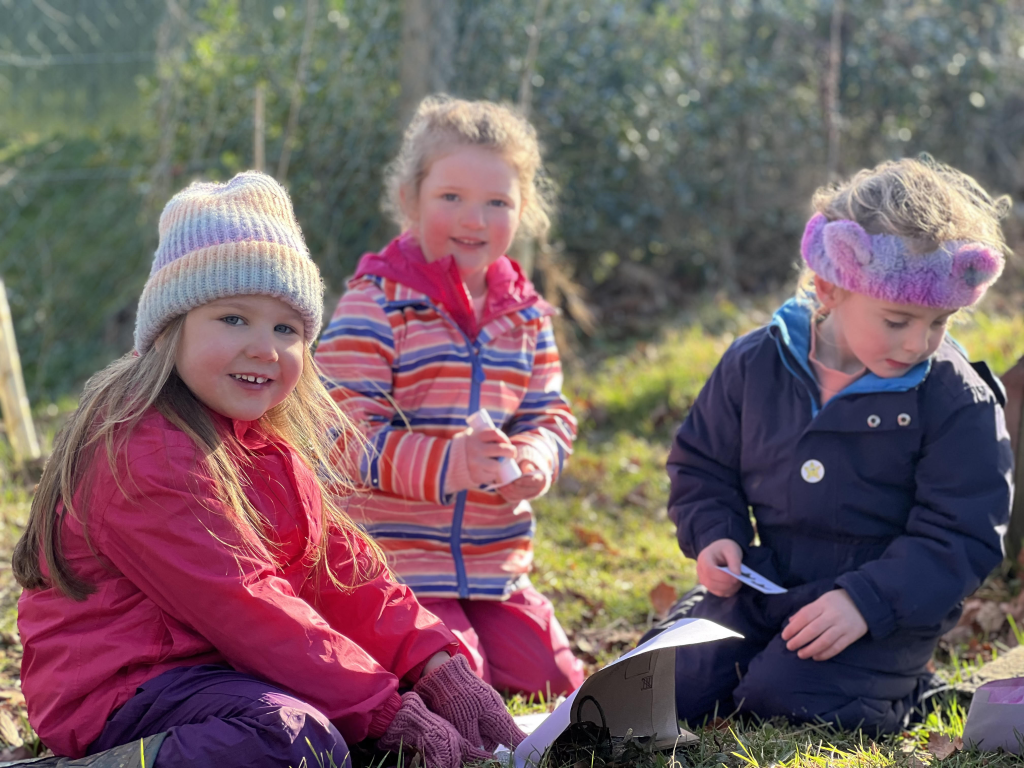
I always enjoy spending time with the Reception pupils- the very youngest of pupils at our school at just 5 years old- and greatly look forward to popping in to see them at Bellan House every Tuesday afternoon.  Getting down to carpet level- and listening to them reading stories, playing with tractors, seeing them dressed up as super-heroes, trying to keep myself steady as they grab my legs one after another and threaten to topple me like a giant tree… whatever it is they are doing, it is always an energising time being with them.  Like we all once were, they are at the start of their Learning Journey, and it is wonderful to see their enthusiasm, curiosity and creativity in action.

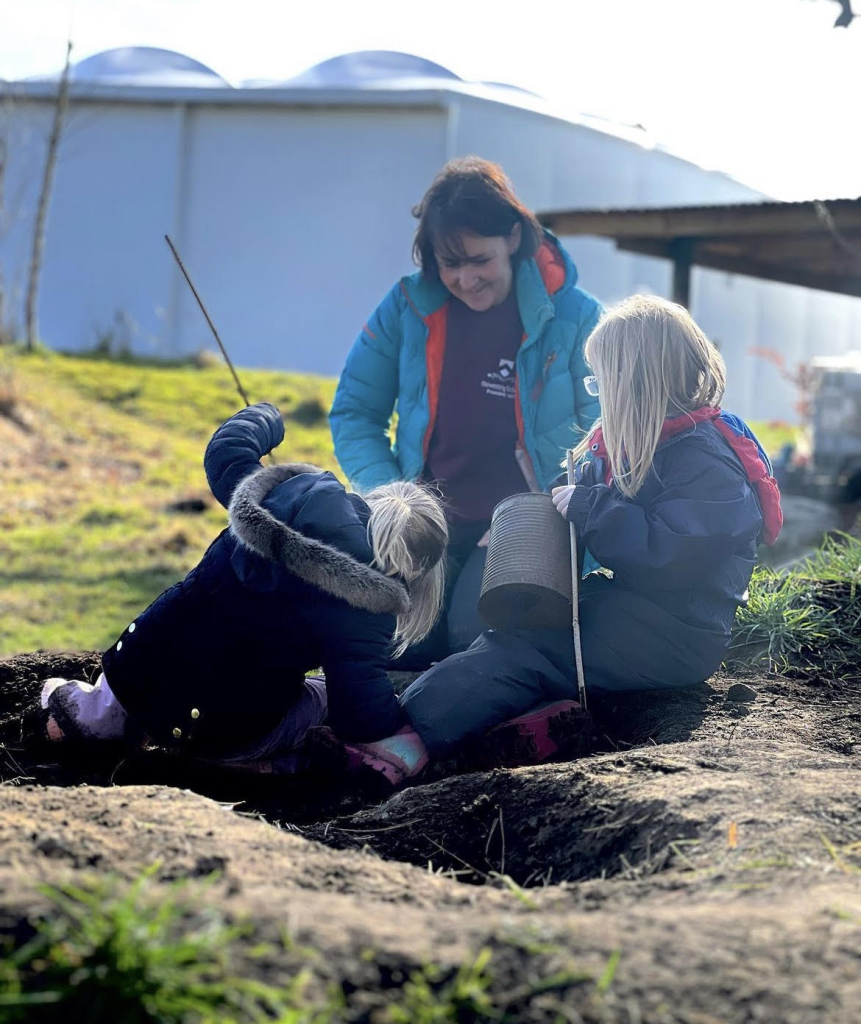
A month or so ago I spent a morning with them during their Forest School time.  As my pupils and staff know, I’m a bit of a Big Kid at heart and try not to take myself too seriously, so getting a bit muddy and doing some digging and exploring was right up my street, or rather…right up my Forest!  

It was a greatly enjoyable hour or two, but what I was particularly struck by was the complexity of the Learning Experience and the skills and abilities that were being demonstrated and developed.  A fact-finding trail involved the boys and girls working in small groups using a map to find the locations of dinosaur bones (spoiler alert: they weren’t real dinosaur bones…!).   

They had to work together as a team.  They needed to communicate effectively.  They needed to think creatively.  They needed to problem solve.  They needed to be resilient and cope with making mistakes.  Cope with the frustration of getting it wrong, or maybe not being as quick as others.  


They experienced the thrill of success.  The rich reward of putting in the hard work.  They enjoyed the camaraderie of collective achievement.  And, above all else, they enjoyed getting muddy and Digging Stuff Up.  Well, who doesn’t?!  


Learning doesn’t only take place in the classroom; as our school motto puts it, ‘We Learn Not for School But for Life’… and we’re doing that in everything we do here at Oswestry whether that’s in the Maths classroom or the mountains we climb, whether in Chemistry Lab or Concert Hall, whether DT workshop or Drama Stage.  

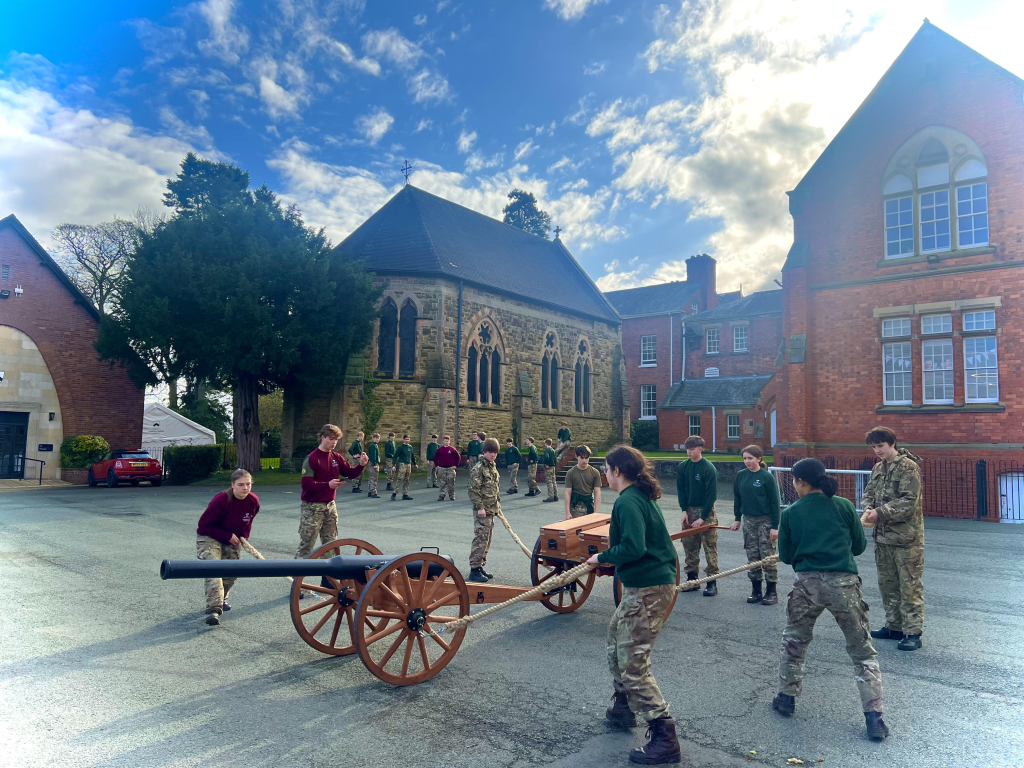
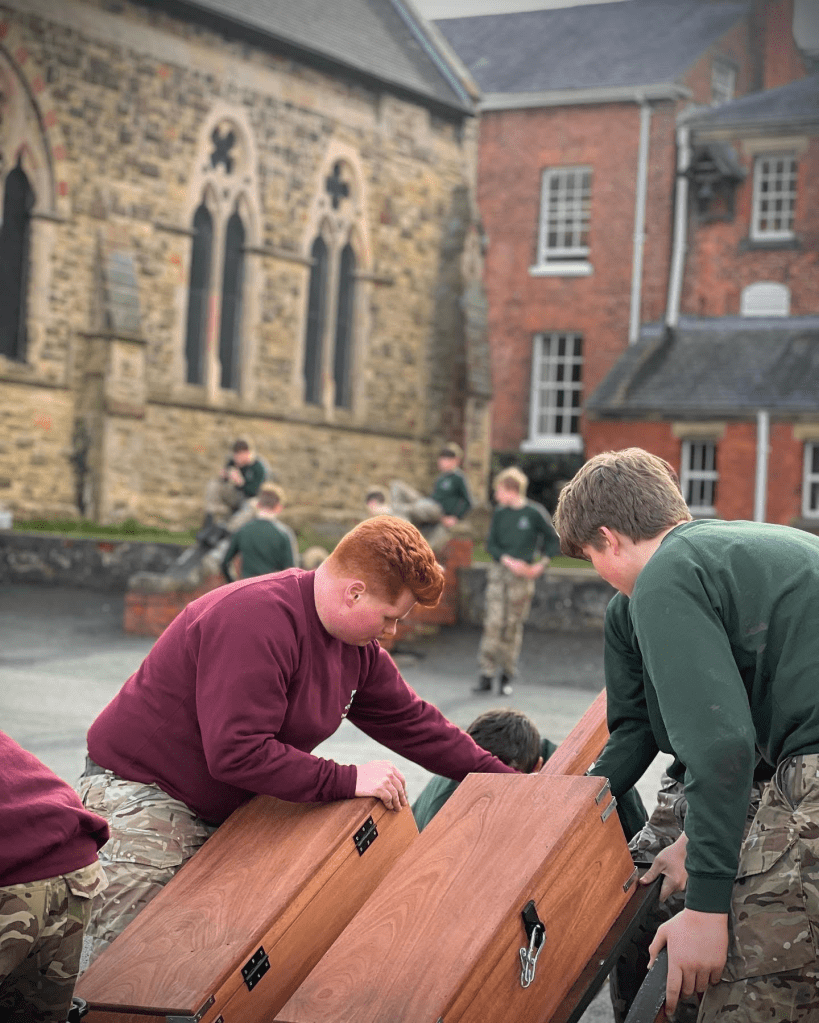
I was reminded again of this recently as I observed the inaugural Gun Run activity with the CCF one Friday afternoon with the delivery that week of a rather impressive 5.5m-long wheeled cannon (Spoiler alert: not a real gun…).

The Gun Run is a team competition against the clock where the component parts have to be taken apart and put back together again as quickly as possible.  The gun is made up of two sections:  The Limber section made up of a 55kg Frame and boxes, and two detachable wheels; The Field Gun section made up of 2 detachable wheels, a 35kg detachable gun barrel, and a 35kg Barrel Support Arm.   The parts are very heavy- with a total mass of 220kg- so if you drop them on your foot it’s going to hurt. A lot!  

It’s a high-octane, fast-paced competition.  Working in teams of 8, this is the very definition of teamwork.  It’s a pressurised environment.  One mistake and it’s going to cost you.  

You have to stay calm under pressure.  You have to focus on your own particular job.  Being precise, deliberate in your actions.  Communicating effectively with your teammates, not panicking when the pressures ramps up, when the clock ticks, when things don’t go quite as well as you want.   

You need leaders to step up to get the very best out of their team; leaders to motivate; leaders to encourage; leaders to inspire confidence.  And you need a team who will work together effectively; work collaboratively; work efficiently; work towards shared goals.  

As with the Reception pupils at Forest School, I was struck again by just how important these skills and aptitudes are as part of the Learning Experience.  What was being experienced during the Gun Run activity- and what was being experienced during Forest School- these are skills that will powerfully prepare our youngsters for their adult lives beyond.  


What’s going to set you apart, set you up for successful living?

-The ability to collaborate
-The ability to communicate
-The ability to be creative/imaginative/innovative
-The ability to stay calm under pressure
-The ability to learn from mistakes
-The ability to set targets. And work hard towards them.
-The ability to be resilient, reflective, responsive.

All these things- and more- are being experienced every day at school both inside and outside the classroom.  So to answer those who are tempting to question ‘‘What’s the point of this all? What’s the use of it?’ I’d point to some of the lasting, character-building, person-defining skills and abilities that are being learned, developed and mastered each and every day within an holistic educational environment.  As our school motto puts it, We learn not for school but for life. And what is education for, after all, but to prepare our youngsters for adult lives where they can thrive, flourish and be happy.

We learn not for school but for life.

The Kindness Imperative

Be Kind.

These two words have been imprinted on my mind ever since I started as Headmaster of Oswestry School in January last year, the imperative given to me by a 9 year old pupil at the school when I asked her what words of advice she had for a new Head.

As a relatively small school with just under 500 pupils aged from 4-18, ours is a close-knit community and one that places great emphasis on empathy, compassion and kindness. I see it every day in the interactions between pupils, between colleagues, and between pupils and colleagues, and this spirit of camaraderie and kinship is exactly what gives the place such a friendly feel.

In a world that is increasingly focused on the individual, we would do well to heed the advice of that youngster. Rather than look out for ourselves, we should look instead to help others. Rather than relentlessly pursuing individual success, we should look instead to how we can help others achieve. Staying true to that mantra, the ripples of kindness have the potential to swell into great waves.

Deliberate Acts of Kindness

My dad was- and is- one of the kindest, most caring people I know. I was remembering recently this thing that he’d occassionaly do when we were growing up in Scotland and we were travelling north from Edinburgh where we lived. To cross the Firth of Forth you had to travel over a road bridge which, in those days, required a toll payment, it’s fee something like £1.60 to travel over in a car. From time to time as we pulled up to the toll booth, my dad would pay his £1.60 and then leaning back in the car, he’d fish out a further £1.60 and hand it through to the person manning the kiosk. “That’s for the car behind”, he’d say, and then leaving a look of puzzlement on the face of whoever was on the kiosk, he’d drive off. I asked my dad once why he did this- these were not people he knew in the cars behind, these weren’t his friends, these were – in reality- people he’d likely never even meet. His response was simply that it would brighten up their day and they might, in turn, seek an opportunity for generosity and kindness themselves. Less a random act of kindness; this was deliberate, intentional kindness.

The Gift of Encouragement

Just such a spirit of giving was famously exemplified by New Yorkers Michael and Joy Brown whose names will not necessarily be remembered in the annals of history other than for the impact their generosity had on the world of literature. Back in Christmas 1956, the Browns invited their friend for Christmas dinner as they often did. She was an aspiring writer but struggling to balance her job and finding the time to write. That Christmas, however, things were about to change. Michael and Joy Brown gave their friend a Christmas present that would not only change their friend’s life, but would likewise have a profound impact on the world of literature. Once their children had ripped open the wrapping paper on all their presents and the day was coming to a close, the Browns told their friend to go to the Christmas tree where she would find an envelope. There in the envelope was a letter that said simply, “You have one year off from your job to write whatever you please. Merry Christmas”. Their friend was in disbelief, but the Browns told her it was no joke. They’d had a good year and had saved enough money to give her an opportunity to really make it as a writer. Their gift would in fact be a gift to the entire world, for their friend was Harper Lee and that year with the financial support of the Browns, she would write the novel To Kill a Mockingbird, now widely regarded as one of the truly great novels of the 20th century and one that has sold over 30 million copies worldwide. Without this act of kindness, that novel may never have been written.

Cultures of Kindness

There’s a great moment in Mockingbird where the central protagonist Atticus Finch gives some advice to his daughter Scout, sage advice that we’d do well to heed:

“First of all,” he said, “if you can learn a simple trick, Scout, you’ll get along a lot better with all kinds of folks. You never really understand a person until you consider things from his point of view…until you climb into his skin and walk around in it.”

Not all acts of kindness have to be about financial giving; just as impactful is the gift of understanding, getting alongside others and taking time to empathise.

Healthy schools- and healthy organisations – are ones where there is just such a culture of kindness, empathy and understanding. Individuals feel included and part of a community; nobody feels like an outsider.

A kind and considerate approach isn’t weak or ‘soft’, in fact quite the opposite; strength comes from the authenticity and inclusivity of just such a culture. If we feel understood, valued, and listened to, then we’re going to experience a greater sense of belonging, a greater sense of camaraderie and community, and a greater sense of shared purpose. That advice from the 9 year old pupil- be kind – wouldn’t be out of place as sage wisdom for the CEOs of our most successful organisations, and indeed in a great many of these organisations, just such a culture has been developed, and has in fact played a pivotal role in their success.

Stretching Out a Hand

In Robert William Service’s poem ‘Compassion’, the narrator describes ignoring “a beggar in a street”, turning away from him and buttoning up his coat only to observe a hard-working mother take out from her purse a penny and give it to the man in spite of her own needs. As he walks further, he encounters “a shabby dame” feeding six sparrows “as they came/in famished flight”. The narrator is humbled by this act of kindness from the frail impoverished lady who feeds “with pure delight” the “crumbs of her last crust”. The example of these two women moves the narrator to repent of his self-absorbed ways, and he resolves to help others- whether “bird, beast or man” by daily undertaking a “kindly deed”:

For God knows it is good to give;
We may not have so long to live,
So if we can,
Let’s do each day a kindly deed,
And stretch a hand to those in need,
Bird, beast or man.

It’s a nice thing that we have a ‘Random Act of Kindness’ Day (which this year is Friday 17 February), but we should not store up our kindness for one day in the year. Rather, it should be a part of our daily habit, a value that informs the way we speak, the way we think and the way that we act.

Each and every day, there are opportunities for stretching out a hand to those in need- whether literally or otherwise- and if in our example we can encourage others to do the same, then our schools, our organisations and the very fabric of our society will be all the better for it.

I for one will continue to be guided by the imperative from that nine year old pupil- be kind – and one year on it remains the best piece of advice I’ve been given. Let kindness ripple into great waves!

A New Leaf of Life for the Library

Libraries will soon be obsolete.

So declared the head of the global thinktank the RAND corporation in 1979. 2019 was marked out as a year in which the last library would close its doors. Technology was fast-changing and taking over, so went the argument, and the attention-span of a multi-media-devouring public would have no time any more for reading, no need any more for libraries, no need, even, for books.

It’s certainly fair to say that the so-called ‘assault on our attention-span’ has only increased in recent years with the ubiquity of smartphones, Netflix, and all else that the technological world throws at us and which we, in turn, eagerly consume. A study in 2016 concluded that we touch our mobile phones a staggering 2,617 times a day, whilst meanwhile Amazon’s Alexa answers over 500 million questions a day from information-seeking customers around the world. What time, then, is there for books? What need, therefore, is there for libraries?

(Photo: Dreamstime/TNS)

The Future for Libraries

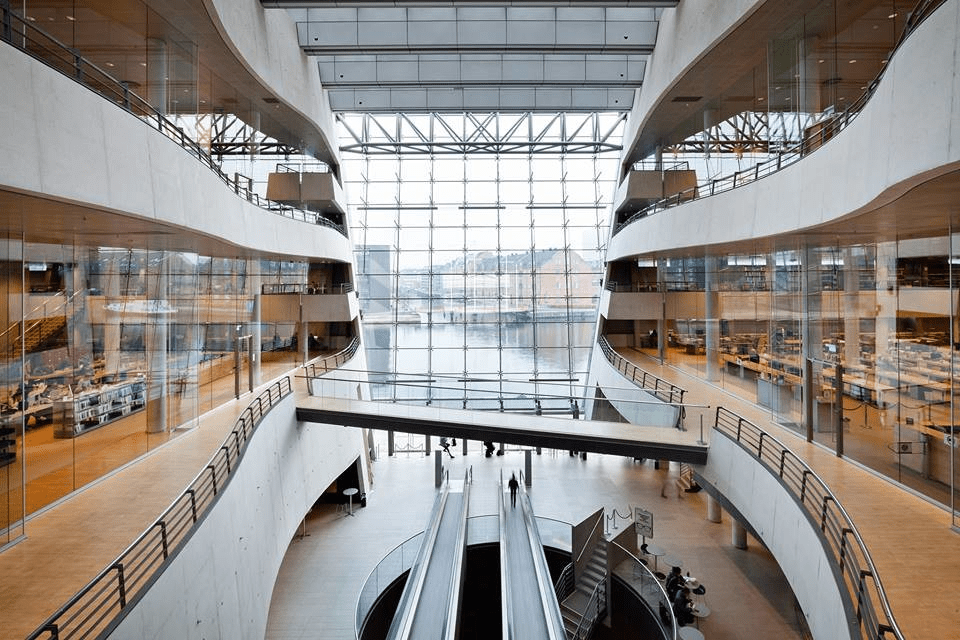
2019 has of course been and gone and the predicted demise of Libraries has, thankfully, not come to pass. In fact, in 2020 there were over 2.6 million libraries worldwide and, as noted in Andrew Pettegree and Arthur der Weduwen’s excellent book The Library: A Fragile History there are new libraries being created and built all the time. Pettegree and der Weduwen point to the new national libary of Copenhagen (the Black Diamond), the new Latvian national library in Riga, and a newly-regenerated central library in Manchester, one of the oldest public libraries in England. These are significant – and hugely costly – endeavours, so why invest so heavily in libraries in the 21st Century if, as some have argued, they are no longer necessary, mere relics of a bygone era?

The Royal Library- The Black Diamond- Copenhagen

Reimagining Libraries for the Modern Age

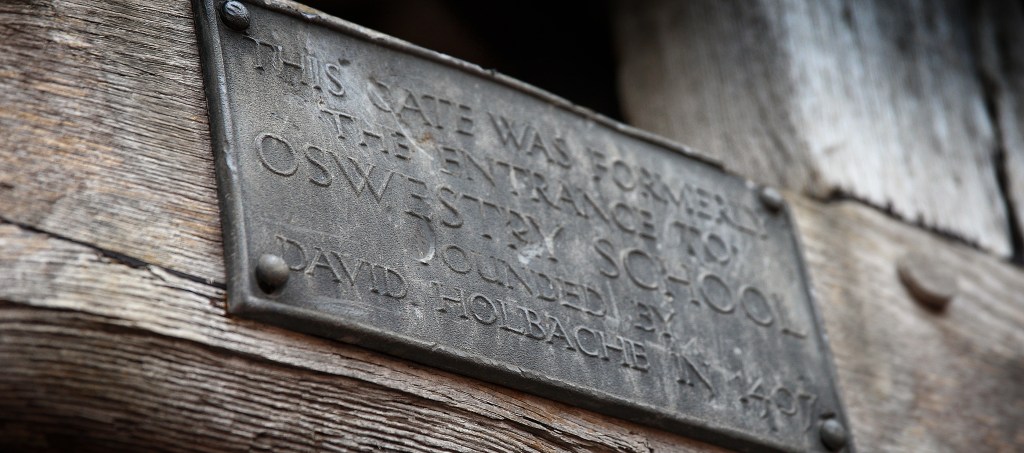
Joining Oswestry School as Headmaster in January 2022, I was surprised- and saddened- to learn that this ancient school whose origin story dates back over 600 years to its foundation in 1407, no longer had a library. With a strong history and heritage of scholarship, curiosity and discovery, the school counts amongst its alumni individuals who played a key role in the expansion of libraries both in the UK and worldwide, such as Thomas Bray who in 1698 established the Society for Promoting Christian Knowledge (SPCK), a movement that focused on providing library collections for parish churches for the benefit of rural communities, libraries which, by the time of his death, numbered over 140.

As an English graduate, books and reading have always- unsurprisingly- been a passion throughout my life, but as an educationalist I would likewise strongly argue that, even in the digital age, books, reading and libraries remain important. They are, in fact, more important now than ever before. Not just important, but essential.

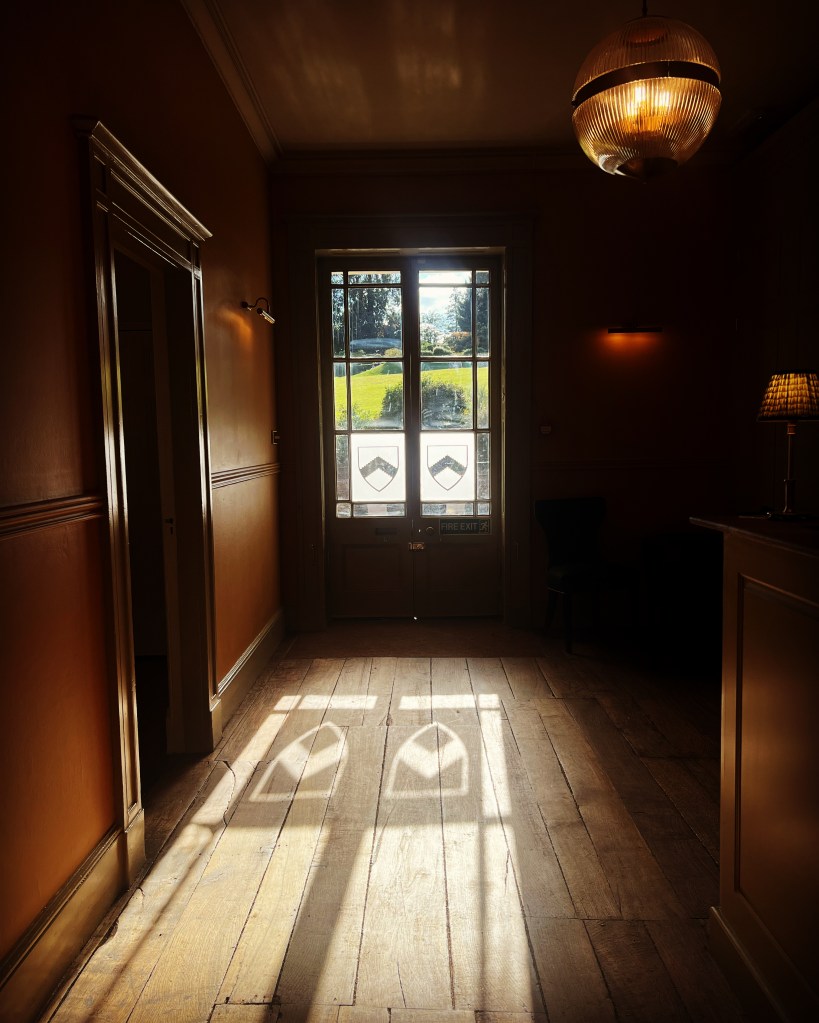
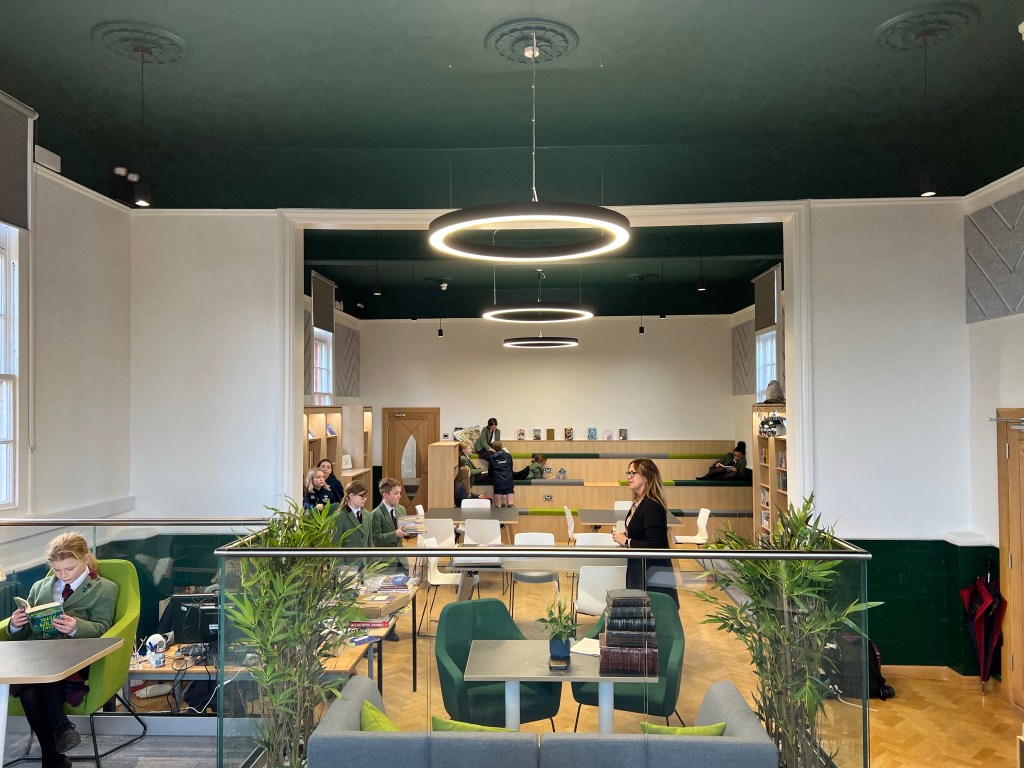
My immediate priority in 2022 therefore quickly focused on restoring once again the Library to the architectural and academic heart of our school. Designed in collaboration with a creative team of pupils, staff and an external team from Taskspace, we set about re-imaging a vacant space within the old part of the school into a contemporary Library space for reading, reflection, discourse and debate. Blending modern design with nods to our ancient heritage, we sought to create an inspiring, engaging and dynamic space that would become a hub and a haven within the school, encouraging curiosity, collaborative working and independent study alongside, of course, a love of reading.

Opening the doors to the library at the start of the new term and calendar year, the space has quickly become a treasured space with pupils flocking in large numbers at break, lunchtimes, and during study periods. It’s a welcoming space, and there’s a purposeful but relaxed atmosphere, an atmosphere that is unique and distinct on campus.

Writing recently in The Guardian, Moira Donegan described libraries as providing an “edifying sanctuary for thought and curiosity”, sanctuaries that are perhaps needed now more than ever before given the frenetic pace of modern living. Certainly, if our experience is anything to go by, the Library can- and should- be central to the school experience for the 21st Century pupil.

The new Oswestry School Library

Survival Through the Ages

Since its earliest days, the Library has been under threat. The Library has survived the dissolution of the monasteries during the Reformation during which time large collections were plundered, stolen, or burned. The Library has survived man-made destruction, most notably the devastating destruction experienced in the two world wars where many libraries and their collections were either collateral or deliberately destroyed, and the Library has likewise survived natural disaster, such as the loss of the Library of King John V- one of the finest collections in Europe- in the earthquake that hit Portugal in 1755.

The Louvain University Library, one of the oldest and most distinguished in Europe, consumed by fire during the First World War and again reduced to ashes during the Second World War with the loss of a million books.


The greatest threat to Libraries in the 21st Century might well be the digital distractions that all of us are susceptible to, but there is no reason why the contemporary library can’t go hand in hand with a progressive approach to technology and the benefits that come with it. Books and reading, however, should always have a place in the experience of those youngsters within our care, and libraries, too, should be a part of their lives.

Long Live the Library

In their wonderful picture essay ‘Why We Need Libraries’, Neil Gaiman and Chris Riddell declare their hope that “we can give our children a world in which they will read, and be read to, and imagine, and understand.” The Library is the sanctuary in which imagination can take flight, where ideas can be shared, and where the bustle and busyness of daily life can be exchanged for the bliss of a different kind of pace. As the writer Jorge Luis Borges mused, “I have always imagined that Paradise will be a kind of library.”

Judging by the effusive comments I am hearing on a daily basis from my pupils, the Library here at Oswestry School was an investment well worth making and is a little slice of paradise at the heart of our campus.

So are libraries a relic of the past? Definitely not. Are they necessary? Absolutely.

Contrary to predictions of its demise and extinction, the Library continues to have a place in 21st century society. We enter a new era for the Library, turning the page to a new chapter in its long and enthralling story. Far from dead, in the right hands and with imagination, creativity and passion, it is very much alive and its heart beating strong.

Long live the Library!

The Freedom to Fail

Five years ago I stood in front of an audience of parents and told them that I wanted their sons and daughters to fail.  

It was a deliberately provocative statement and, as I had hoped, the statement got their attention, for most of them were very keen that their children did the very opposite and were actively encouraged and enabled to succeed not fail.

That talk was part of the launch for a whole school ‘Failure Week’ in which we sought to reframe the narrative around the concept of failure- so often seen as terminal or catastrophic – to advocate its positive benefits as an important step on the road to success.

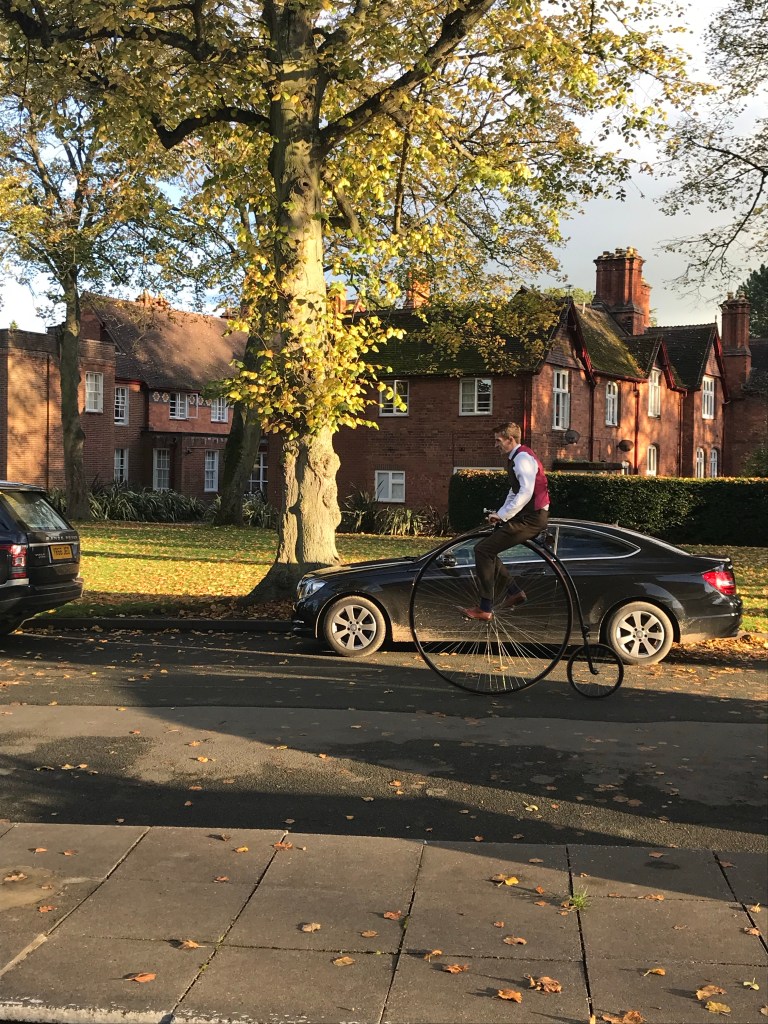
Staff and pupils took part in a variety of Failure Challenges from learning an instrument to performing standup comedy, participating in a ‘Failure Choir’, getting in a rowing boat for the first time, and countless other activities. For my own part, I’ll never forget the trepidation as I stepped on to a Penny Farthing and attempted to cycle down the tree-lined avenue of the main school entrance, nor indeed the somewhat terrifying experience of having to perform ‘Camptown Races’ on the trombone to a packed theatre of pupils and staff having only picked up the instrument four weeks before.

As Matthew Syed argues in his book Black Box Thinking, “only by redefining failure will we unleash progress, creativity, and resilience.” That was very much the impetus behind Failure Week, and if it helped our pupils think differently about failure, then it was a success (though, if Failure Week was a success, does that mean it was in fact a failure?!).

The F Word

Failure is all too often seen as a dirty word.

To be seen to have failed is humiliating. Embarrassing. Nobody wants that label on them.

So much so that failure has become synonymous with another ‘F’ word: Fear. The prospect of Failure is so terrifying to us that we are crippled by a fearfulness that leads us to avoid the potential for any possibility of failure.

So why is it that we fear failure? I suspect that for most of us, a large part of our fear of failure is down to worrying about what other people think about us. We want to be accepted. We want to be seen to fit in. Failure, therefore, isn’t a hat we particularly want to wear.

It’s probably likewise got a lot to do with confidence.  Success feels good.  Failure doesn’t.  We like to win; losing, not so much.  

We don’t want to fail, so we try our level best to avoid it. Instead, we tend to reside in our Comfort Zones, spaces where we feel confident, comfortable, and safe. A zone where we know that, even if it’s not somewhere we will necessarily succeed, it is certainly somewhere that we can avoid failing.

Yet as anyone who has ever succeeded at the top level will tell you, to achieve success you are going to have to experience failure, and indeed embracing failure as not just an inevitability but a positive stepping stone towards helping you achieve the success that you strive for. From JK Rowling – who chose to speak on ‘The Fringe Benefits of Failure’ when she addressed graduates of Harvard University – to James Dyson, whose 5,126 prototypes eventually led to his final cyclone technology breakthrough, the list of successful authors, innovators and sporting stars who extol the benefits of failure is a lengthy one. Most famously, perhaps, one of the greatest – if not the greatest – basketball players of all time, Michael Jordan, put it like this:

“I’ve missed more than 9,000 shots in my career. I’ve lost almost 300 games. 26 times I’ve been trusted to take the game winning shot and missed. I’ve failed over and over and over again in my life. And that is why I succeed.”

Failing Forward

For the past month and a half, I’ve been very much out of my comfort zone doing something that I find very difficult and have no prior experience in: dancing. Convinced to take part as a contestant in the charity event Strictly Shropshire raising funds for Hope House & Ty Gobaith children’s hospices, along with the other 11 contestants, I’ve been tasked with learning to dance, performing a routine- in my case a salsa number – to a packed audience of over 400 people on the evening of Friday 25th November. The very thought of it is utterly terrifying, but as a process, I have greatly enjoyed the experience of being a learner once again, with all the frustrations, failing and falling that comes with it, but likewise the satisfaction, confidence and joy that comes- as CS Lewis put it – from failing forward towards success.
With each lesson I’ve had (and with all the secret practising I’ve been doing at home whilst nobody was watching!) the things that initially seemed impossible are now coming more easily, and with each step I’m taking- even the wrong ones – I know that I’m taking steps forward.

Facing Failure Fearlessly

Strange though it may sound, my greatest ambition for the school in which I am Headmaster is that it is known to be a failing school. If Oswestry School is known as a failing school, that should tell you that we are comfortable with the concept of failure, understand its role as a stepping stone on the journey to success, and we don’t fear failure. I want us to be courageous in our approach to failure, determined to step out of our comfort zones, doing things that are difficult, challenging, perhaps even a little scary. For it is in that space that each of us learns most: the Discomfort Zone.


As we resumed the second half of term at Oswestry School, I urged my pupils – and indeed staff- to approach failure fearlessly, stepping out of their comfort zone and into the infinitely rewarding space of the discomfort zone. When we challenge ourselves to learn new skills and push ourselves harder, we might risk the possibility of failure, but, to repeat CS Lewis’s lines once again, “Failures are the fingerposts on the road to achievement. One fails forward towards success.”

Face failure fearlessly. Fail forward towards success.

https://www.justgiving.com/fundraising/petermiddletonsalsa?fbclid=IwAR0wVVKOWycFP80e9-Qftblc5pitvVTgc_7gFIOYoXb1zBM-b7-VeO5vJ-g

Dwelling in Possibility

The English poet Emily Dickinson once wrote, “I dwell… in possibility.”  

As an educationalist, when I think of our pupils I think, above all else, of possibility. The possibility of new experiences.  The possibility of new friendships.  The possibility of exciting futures ahead.  

Some of our pupils- those who attend the Prep School at Bellan House- are as young as 4- how exciting to be starting school in Reception and to begin this great adventure for the first time!  At the other end of the school, those in the U6th enter their final year of secondary education with the prospect of moving on to a new chapter beyond.  Those in between have opportunities galore: adventures to go on; memories to make; whole worlds to explore inside and outside the classroom.  Possibilities abound.  

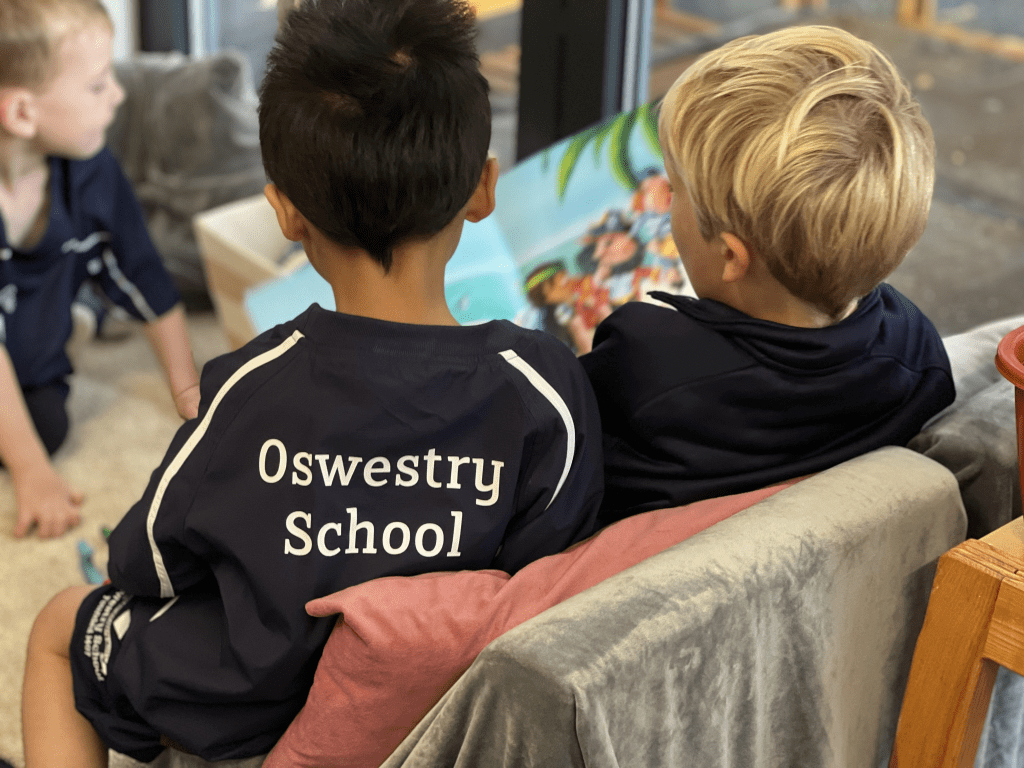
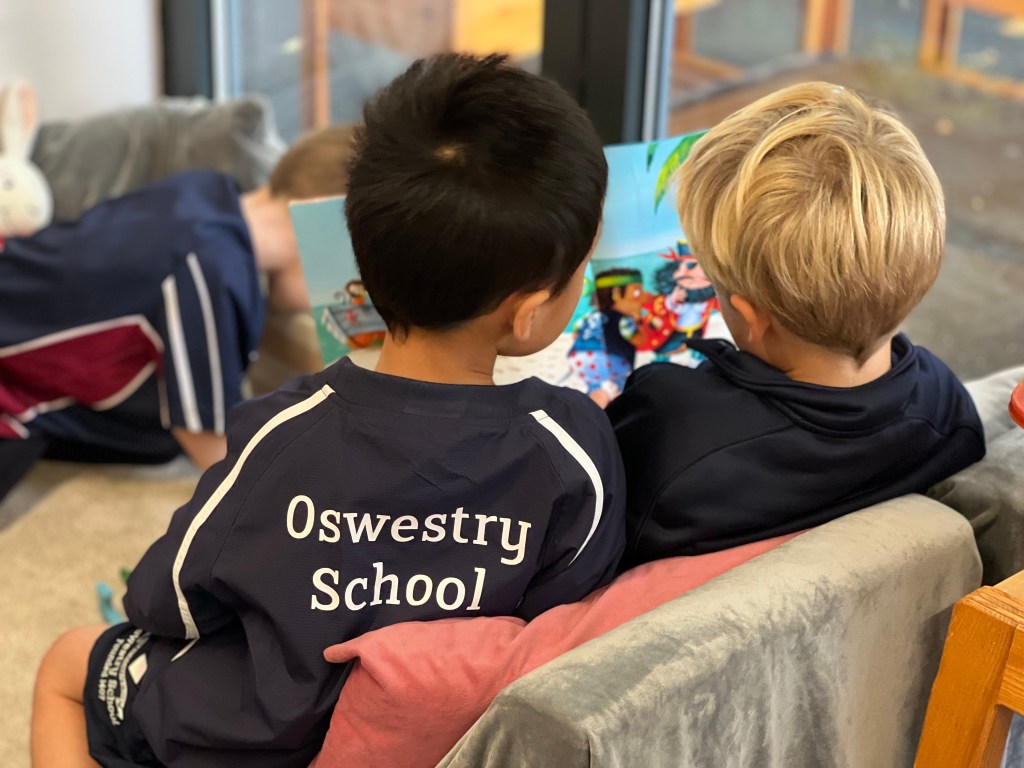
Reception pupils from Bellan House share a moment reading together as they embark upon their first year at school


Never Give Up

This summer, anyone who likes their sport was treated to an absolute feast of sporting competition, perhaps best of all the glorious victory of the Lionesses in the women’s European Football Championships.  If, like me, you like your athletics, not only was there the World Athletic Championships held in Oregon, USA, but you also had the Commonwealth Games in Birmingham and the European Championships in Munich. 

Now I’m a bit of a running geek, so I’ll literally watch any athletics going, but for me, the greatest moment of them all was the Scottish runner Eilish McColgan’s epic 10,000m victory in the Commonwealth Games, roared on by the 30,000 capacity crowd in Birmingham’s Alexandra Stadium.  

It was an incredible race, an unbelievably gutsy run, but what made it so special is that this was McColgan’s first global title which, at the age of 31 was something that many felt was perhaps slipping from her grasp. 

Photo: Tom Jenkins/The Guardian


McColgan had competed in three previous Commonwealth Games. And in those three previous Games, she had raced in three different events: the 1500m; the 5km; and the Steeplechase.  She had never won a medal, finishing 6th every single time.   

What made her victory all the more impressive was that it came during a year in which she was wiped out for seven weeks due to Covid, and then suffered further illness and minor injuries in the run up to the previous month’s World Championships where she finished 10th.  

Imagine what it takes to stand on that startline in your fourth Commonwealth Games, having never placed higher than 6th, towards the end of your track career, and having just a month before placed 10th, your year’s training ravaged by injury and illness.  Oh, and throw in the fact that her mum Liz had twice won Commonwealth Gold in the same event; a further weight of expectation and pressure to contend with.  You’d think she’d have gone in with significant doubts about whether or not she could do it.

The odds stacked against her, that race took guts; it took self-belief.  But Elish McColgan refused to be defined by her past.  She dwelled in possibility.

Think Not What You Are, but What You Can Become

In the small town of Gilgil in Kenya there’s a place called The Restart Centre.  On its walls are painted in big, bold letters, the words: Think Not What You Are, but What You Can become.

I have had the privilege of visiting the Restart Centre on many occasions over the last decade, and it is one of the most extraordinary places I have ever been to.

Home to orphaned and abandoned street children- some as young as but a few months old- The Restart Centre was set up by an incredible lady called Mary Coulson who felt that she had to do something to help the increasing number of street children in her home town of Gilgil following tribal violence in the country during the 2008 election.  Her vision was to provide a safe haven for these children who had experienced such a difficult start to their lives, many of whom had experienced significant loss, many of whom had suffered unspeakably, all of whom had been dealt a cruel hand in life.

Founder Mary Coulson with children from the Restart Centre

If you ever get the chance to visit The Restart Centre you will be surprised, as I was, with just how happy these children are.  They have experienced terrible loss, suffered tremendously, and carry wounds both physical and emotional.  You would expect them to be downcast.  Downbeat.  Damaged.   Yet even if you’re only there for a short time, you will quickly be infused with the most glorious laughter, the most infectious smiles, and a wonderful, deep joy that can be seen in the way they sing, in the way they dance, in the way they talk, in the way that they live.  It is one of the most uplifting and inspiring things to witness.

Mary Coulson’s simple goal was to provide these children with a future.  With a restart.  And in this small green corner of Gilgil, she has created a place of love.  A place of support. A place, above all, of hope.  For these children, there is now a future.  They have been able to start again; to re-start.  They do not dwell on their past and what their lives have been; instead, they dream of the future, focus their energies on what they can become.

They, too, dwell in possibility.  Think not what you are, they’ll tell you, but what you can become.

Refresh and Restart

For those of us in education, the start of September marks a restart.  Whether new or returning, pupil or staff, the first day of the new term and the new academic year signals an opportunity.  We are fortunate not to have experienced the unimaginable start in life that the children of the Restart Centre have gone through, but we can be inspired by their example, as indeed we can be inspired by the likes of Elish McColgan, the Lionesses, and countless other shining examples of determination, perseverance, and hope.  We can be encouraged to dwell not in the past but to focus our energies on the future and the possibilities that lie ahead.  We can- and should- dream.

Dwell in possibility.

Gold Standard Leadership

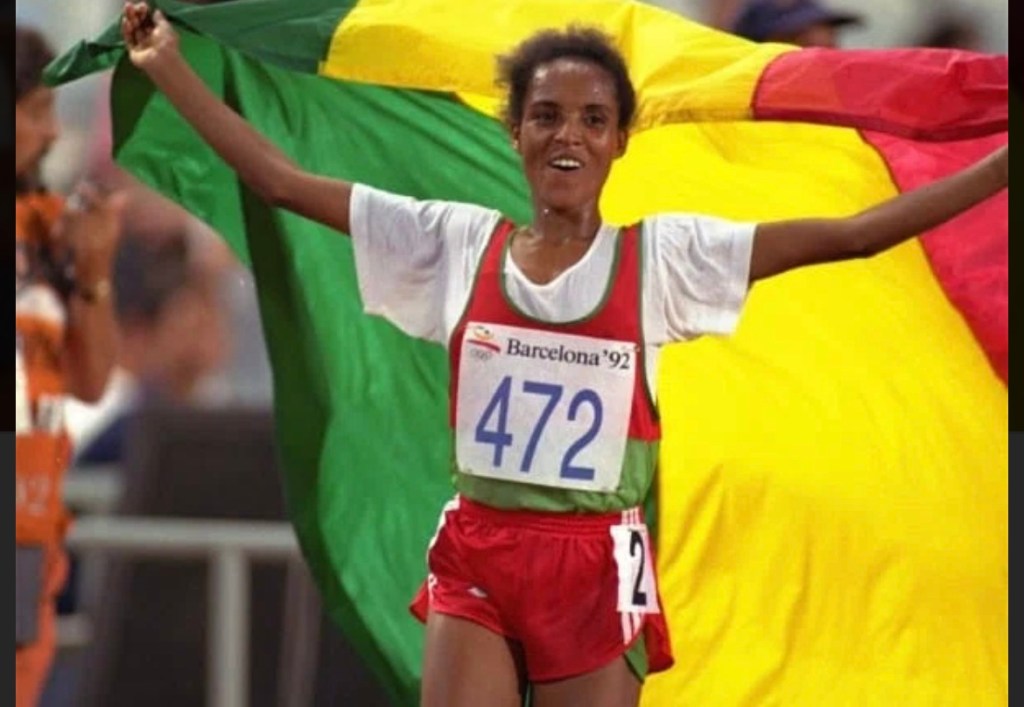
On 7 August 1992, the diminutive Ethiopian runner Derartu Tulu took to the start-line of the women’s 10,000m at the Barcelona Olympic Games. Standing at just 5’1, she was towered over by the world champion Liz McColgan and, having placed 8th at the Tokyo World Championships the year previously, Tulu wasn’t expected to feature in the race, and few would have predicted that she would make the podium. She had other ideas, and that night she not only made the podium, but took the Olympic title. It was a significant sporting moment; in winning the race, Tulu became the very first African woman to win an Olympic gold medal. History was made that night, a milestone reached.

Derartu Tulu celebrates Olympic Gold (photo credit: The Next Canvas)

First Steps

Hailing from the small town of Bekoji in the Ethiopian highlands of Arsi Province, Tulu’s journey to gold can be traced back to the early influence of her first coach Sentayehu Eshetu known affectionately as ‘Coach’. A PE teacher whose background was actually in football, ‘Coach’ recognised in the young Tulu a rare and exceptional talent, and switching his attention to the sport of running, he made it his mission to nurture and develop the talents of this special young runner. At 16, she finished third in the national senior cross-country championships in Addis Ababa, then aged 18 she took gold in the 10,000m at the 1990 World Junior Athletics Championships.

Tulu’s achievements are impressive and, of course, history-making, but rather than the story of an individual, this is the story of a remarkable town, and the remarkable influence of the inspirational figure of perhaps the most successful coach in the history of the sport, from whom I think there are valuable leadership lessons to be learned whether you’re involved in sport, education, business or otherwise.

The Town of Runners

As the first Ethiopian woman to win Olympic Gold, Tulu’s victory that night in Barcelona set into motion a period of East African distance dominance, but it was likewise the catalyst for further successes for athletes from her home town of Bekoji. Indeed, arguably the greatest female distance runner of all time, Tirunesh Dibaba (winner of three Olympic track gold medals and five world championship gold medals), is also from the town of Bekoji, so too her sisters Genzebe (current world record holder for the 1500m; Olympic silver medalist and five-time world indoor champion) and Ejegayehu who, although far less well known than her two sisters, does have an Olympic silver medal to her name from the 2004 Athens Games. Fatuma Roba, the first African woman to win a gold medal in the women’s Olympic marathon race at the Atlanta 1996 Olympics, is likewise from Bekoji, as is the 2012 London Olympics women’s marathon champion Tiki Gelana and, perhaps most famous of all, Bekoji’s golden boy Kenenise Bekele, three times Olympic champion, five-times World Indoor Champion and, having won an unfathomable 11 titles at the World Cross-Country Championships, almost certainly one of the greatest distance runners of all time, if not the greatest.

All come from Bekoji, a town with fewer than 17,000 residents. To put that into context, it’s a town of a comparable size to Connah’s Quay in Deeside, the UK’s 605th largest town. Put simply, Bekoji is a very small town, and a very poor one at that. Yet such are the achievements of its athletes that the town has entered into international sporting folklore and fame, hailed as the ‘Town of Runners’ as showcased in the excellent Jerry Rothwell documentary of the same name. Over 35 Olympic medals have been won by athletes from Bekoji over the past 25 years. That is truly remarkable.

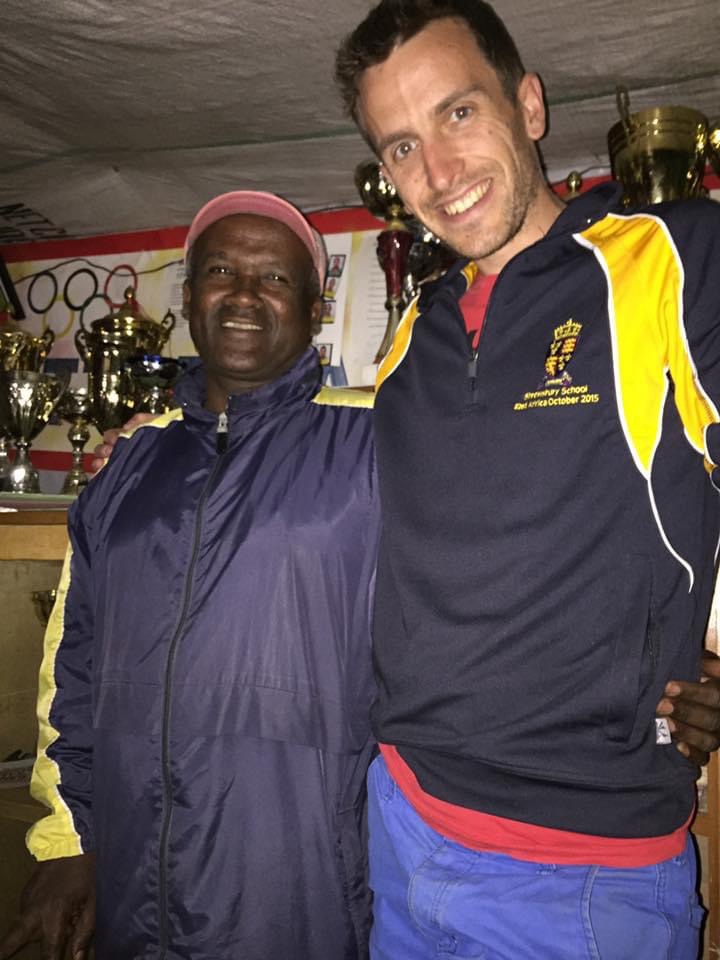
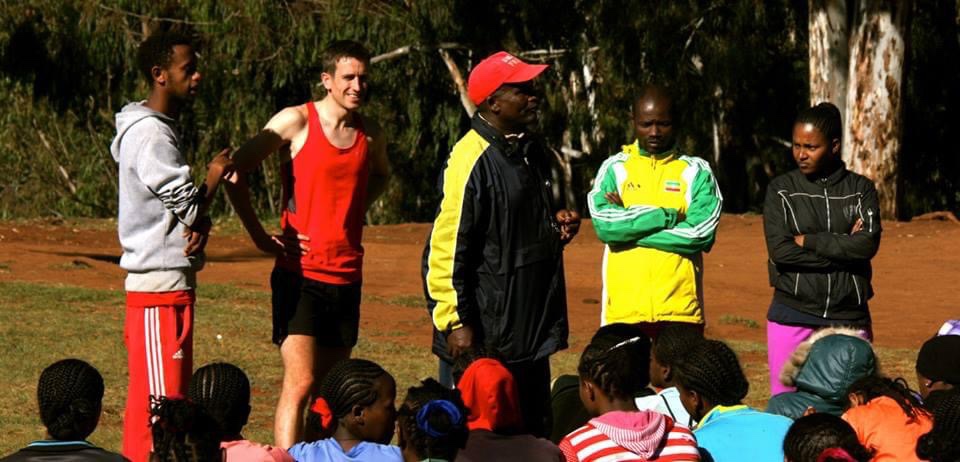
All were coached by one man: Coach Sentayehu Eshetu. He is, quite simply, an extraordinary individual and, whilst they say you should never meet your heroes, as a mad-keen distance runner myself, I have been privileged to get to know Coach over the years, first in bringing him over to the UK for a Coach in Residence role at my previous school, and then on three memorable occasions out in Bekoji itself with three school running tours to East Africa including time in Bekoji.

With Coach Sentayehu Eshetu in his Bekoji office, resplendent with trophies

A humble, quietly spoken man with an infectious laugh and smile, anyone who has met ‘Coach’ will testify to the magnetic energy that he exudes and, whether joining in a session (not for the faint-hearted or, rather, faint-lunged given the 10,000ft altitude in Bekoji!) or observing from the sides, one quickly senses that Eshetu is a natural leader whose impact on this small town has been nothing short of extraordinary.

So what lessons can we learn from ‘Coach’ and how might we apply them to our own contexts?

Identify Talent and Realise the Potential

Firstly, it’s worth reminding ourselves that a significant part of our role as leaders is identifying talent, encouraging those individuals, and ensuring their potential is realised. Coach Eshetu’s first act of effective leadership was doing exactly that with the young Derartu Tulu and since then with countless other youngsters from the town of Bekoji. He has a knack for spotting talent and getting the very best out of young athletes, investing time, energy and encouragement in that process of developing others and helping them reach their potential.

So whether you are a teacher, Headteacher, business leader or coach, this should be a part of our mission to ensure we can get the very best out of those we teach, train, line manage, mentor or support. No matter how experienced- or inexperienced- they are, take time out to work with talent and help them grow.

Nothing Beats Hard Work

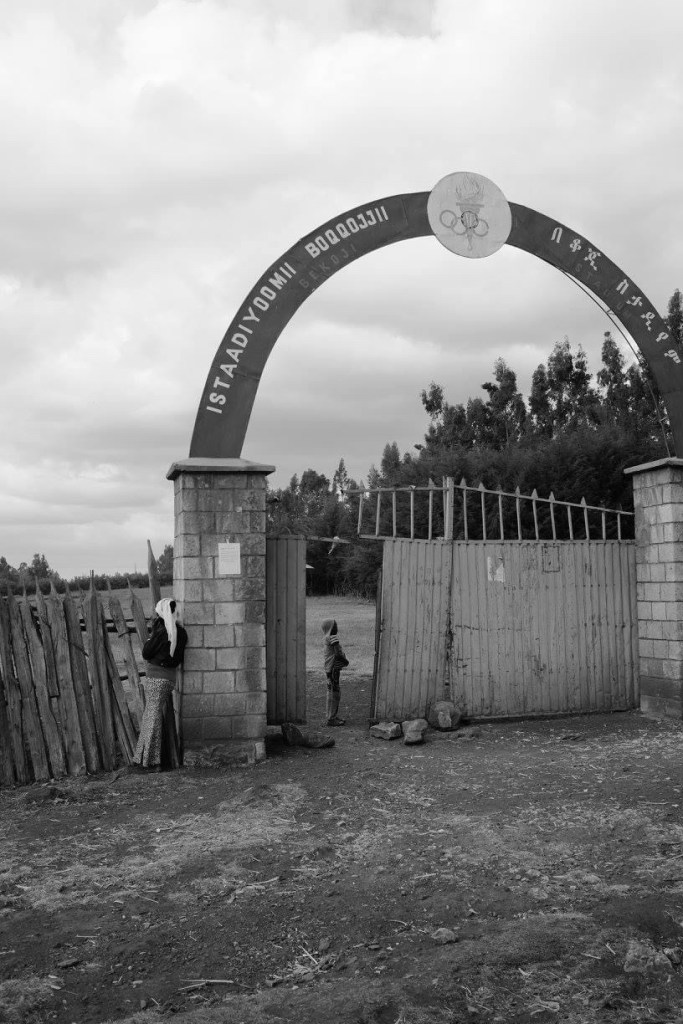
A big budget Eshetu did not have, nor does he still. Neither can he access world-class training facilities for his athletes. Instead, they train in the surrounding forests and on a lumpy, dirt track where athletes battle to avoid potholes, stones and the invading grass.

Of course, living at 10,000ft altitude and enjoying year-round clement weather helps to provide good conditions for training, but in Coach’s view, determination and dedication are key.

The entrance into the Bekoji track

“Our runners are successful because they work hard,” he explained in an interview with CNN. “They work with the aim of reaching for success. This is what makes them different.”

It’s a reminder to us all; whatever our budget, make the most of what we have and remember, nothing beats hard work!

Innovate

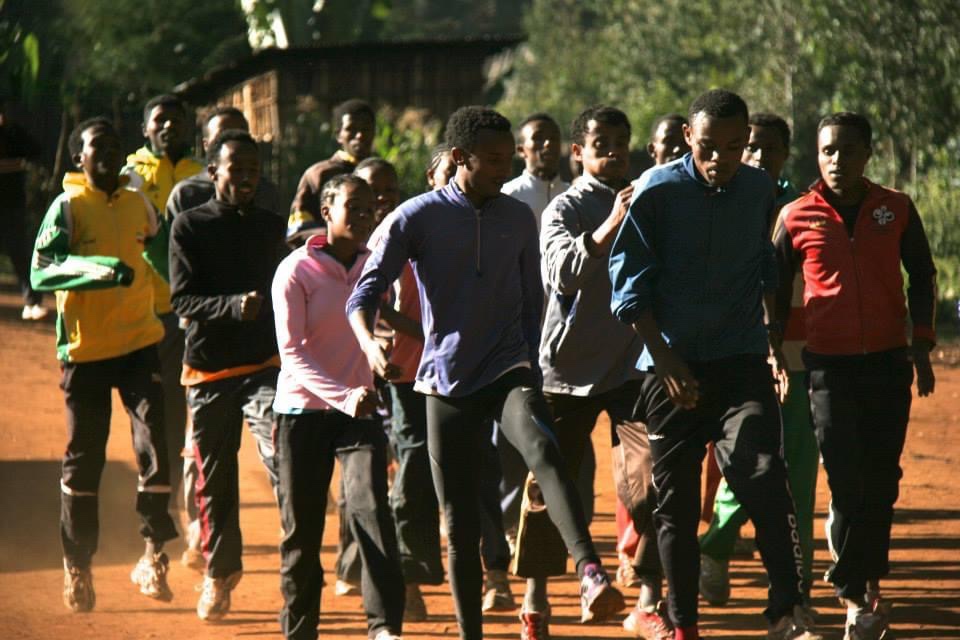
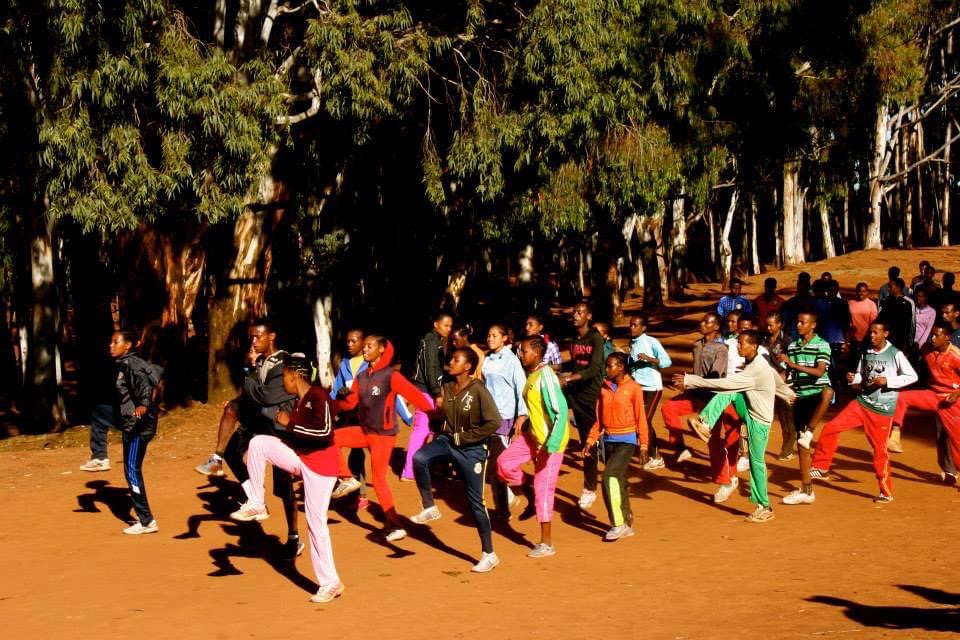
My first experience of Bekoji running was an early morning training session in the eucalyptus forest on the periphery of the town. Close to 100 young athletes had gathered there (which is not unusual) and all waited patiently as the dawn sun cast long tree-thin shadows on the dusty ground. After a short warmup and drills (which in itself was exhausting) I was invited to join one of the lines of a dozen or so runners that had grouped together. “Just follow the guy in front” was Coach’s only instruction to me, and before I could ask any more questions, we were off.

What followed was a training session like nothing I’ve ever experienced before. Most runners train in a linear motion whether on tarmac or off-road, or perhaps doing laps of a running track. Here in the eucalyptus forest, countless lines of runners weaved in and out of the eucalyptus trees, up and down the slopes, changing directions, doing 180 degree turns and at times full circles around the base of trees (“Don’t touch trees!” Coach would exclaim when he could see in exhaustion I was trying to relieve the strain by grabbing the trunk to help get me round).

Bekoji athletes undertaking drills ahead of their ‘tree’ session in the eucalyptus forest

There was no set plan, no set route, and part of the challenge was reacting to the actions of the runner in front of you, speeding up when he sped up, slowing down when he slowed down, leaping perilously over a ravine when he did. Run. React. Run. React.

It’s lung-burstingly tough, but exhilarating, great fun, and I don’t think I’ve ever finished a session feeling such an overwhelming sense of achievement.

With no sporting facilities to speak of, Coach had to innovate. The eucalyptus forest became his training ground, the ‘tree’ session his ingenious means of developing unrivalled speed and strength in his athletes. With all those twists and turns, and the benefits to core strength and stability, it’s no wonder Kenenise Bekele went on to become an unstoppable force in cross-country running. After all those ‘tree’ runs, anything else was easy!

Innovation doesn’t have to come with financial cost. Innovation comes with creativity, imagination, and the boldness to do things differently. And sometimes, like the eucalyptus forest, it’s there staring us in the face.

Success Breeds Success

Running is often viewed as a solitary sport, even a lonely pastime. Certainly, it is an attractive sport for those who are comfortable in their own company and enjoy the pleasure of being alone in one’s own thoughts, uninterrupted by emails, phone calls and idle chatter.

However, in Bekoji, you will almost never see a solitary runner. They train together. Always. Every morning the group will meet, often well over a hundred athletes, all gathered together in the hope (and in most cases, fervent belief) that they will be the next Olympic champion from Bekoji. And why not?

Success, of course, breeds success, and in the likes of Detartu Tulu, the Dibaba sisters and the Bekele brothers (Keninise’s brother Tariku is also a runner and has an Olympic bronze medal to his name which is, you know, ok), the young athletes of Bekoji have had strong role models who have shown them what is possible with hard work. And this has bred belief, desire, and ambition. Day in day out, they turn up in their hundreds to train together, push each other harder, all under the encouraging tutelage of Coach.

Celebrating success and achievement is important, and strong role modelling instils an aspirant culture. Whilst those that have gone on to win Olympic medals have achieved individually, these successes are celebrated as collective achievements for the town. They are immensely proud of Tulu, Dibaba, Bekele et al and their successes have been inspirational and transformational for the town.

Western society has perhaps become much more individualistic, and our focus is often on ourselves. We could perhaps learn something from the Town of Runners and, whilst there too you will find youngsters focused on individual ambitions and aspirations, you will also find a community bound together in a culture of collective achievement and hard work. They won’t all make it- in fact few will- and they know that, but when one of them stands on the start line of an Olympic final you can bet that they’ll all be there gathered around a TV set somewhere in Bekoji cheering their lungs out.

As for Coach, he’s happy to stay in the shadows and will always deflect praise and shy away from any suggestion of his coaching greatness. Yet here is a man who came to this small town as a PE teacher with no knowledge of running, who transformed the fortunes of countless individuals within it, and created a culture and a community that is truly unique and special. A golden town, melded by the golden leadership of Coach Eshetu.

Starting Out on a Positive Footing

When you start a new job, it’s inevitably going to be a steep learning curve. By the very definition of the job being new, there’s going to be a great deal that you don’t know, a high chance that you won’t always get it right, and much of what you do will almost certainly be demanding and difficult, no matter how rewarding and enjoyable the role may be.

Having started a new job as Headmaster of Oswestry School in January of this year, this has certainly been my experience and whilst as Head I am leader of our school community, I have been as much a learner as I have been a leader during my first two terms in post. As you can see from the photo below, I have certainly had my hands full during my time here thus far!

Oswestry School’s ‘Discovery Day’ (March 2022)- an Open Day with a Difference!

You learn, of course, on the job, but one likewise benefits from the wisdom of others, and I have certainly valued both the example of other Heads who I have worked with (and I have had the privilege of working with a great many inspirational leaders including Richard Stanley at Highbury School in South Africa, Michael Mavor at Loretto School, and Jeremy Goulding, Mark Turner and Leo Winkley at Shrewsbury School), and have likewise valued the sounding boards of a great many others, including my wonderful mentor Garry Bowe (a former Headmaster himself), my fellow new Heads, and many more individuals who have been invaluable in their insights, empathy and understanding, not least my ever-patient and considerate wife Jenna!

I’ve also found the likes of LinkedIn and Twitter invaluable sources of ideas and insights whether from those working in education or indeed in other areas of leadership. For example, I read somewhere- I can’t remember where- of a new Head who had written to every member of staff prior to starting, encouraging others to do the same. I thought this was a tremendous idea and shamelessly copied the idea, handwriting close to 200 cards to my new colleagues- teaching staff and support staff- at the start of my first term. A small thing, perhaps, but it really did make a difference, and I would wholeheartedly recommend it to anyone starting out in a new leadership role as a Head or otherwise. It was hugely appreciated, and the personal gesture was well worth the time and effort.

One thing I’ve really benefited from is a very brief daily exercise as recommended by Martin Seligman in his seminal book on Positive Psychology, Flourish. It’s called the ‘What Went Well’ exercise (or the ‘Three Blessings’), and is something I began doing myself at the start of the Summer Term having read the book over the Easter holidays. It’s a very simple exercise involving simply writing down three things that went well that day and why they went well.

As Seligman himself notes, all too often we focus on what goes wrong and dwell on the frustrations and annoyances of day to day life. Not often enough do we focus on what goes right, and in Seligman’s view that is something we’d all benefit from redressing. He encourages individuals to make WWW a daily discipline, stipulating the importance of keeping a written record, and states confidently that six months in, you’ll feel happier, more positive, and indeed will be somewhat addicted to the exercise.

Whilst it might not be for everyone, I have certainly found it immensely useful keeping a WWW daily journal. It’s been very helpful indeed to spend five to ten minutes at the end of every day reflecting back on the good things that have happened and waymarking moments of progress. On every single day since I started- no matter how difficult things may have been or what might have gone wrong- I’ve always been able to reflect back on three things that have gone well. Sometimes, given the busyness and sheer variety of the school day, I’ve often completely forgotten about them until the end of the day and it’s only when I’ve taken the time to look back at my diary and the things that have happened that I’ve remembered those good moments- the sweet spots of the day. It’s likewise been very useful at various points- not least at the end of a term- to look back on these journal entries and reflect back on the weeks and months of positive moments; the cumulative list of good things makes for encouraging and positive reading!

It doesn’t always have to be a big thing; sometimes it’s the small things that keep us buoyant and keep us going. The minor victories. The small steps of progress. The things that make us smile, encourage us, challenge us.

It likewise doesn’t always have to be to do with work; it could be those small, precious moments at home or the rejuvenating, re-energising power of going for a walk, a run, or a rare catch up with friends. Whatever it is, the very act of writing it down and focusing on the positives in itself has a positive effect. As I say, it might not work for everyone, but it has certainly worked for me and I for one will be making sure it’s part of my daily routine come the start of the new academic year in September.

For now, I share with you a few of my ‘what went well’ moments from my first two terms in post, capturing- I hope- some of the wonderful and invigorating variety of life as a Headmaster!