Follow, my leader
In an early work from his debut collection Death of a Naturalist, the late great Irish poet Seamus Heaney eulogises his farmer father as he “worked with a horse-plough,/His shoulders globed like a full sail strung/Between the shafts and the furrow.” The poem – ‘Follower’ – is a vivid evocation of youthful wonder, admiration and awe, and is a poignant love letter to his ‘expert’ father whose furrows Heaney followed, not as a farmer but, as he suggests in the companion poem ‘Digging’, as a writer who would go on to excavate the Irish landscape and dig into its troubled history.
The collection Death of a Naturalist was to have a profound impact upon me as a schoolboy, introduced to Heaney’s work by a new – and wonderfully passionate- teacher who joined our school as I entered my final year. Until that point, I had always enjoyed studying English, but it was the arrival of the inspirational figure of Mr McLaughlin that truly fired my imagination and revealed to me the power – and impact – of the written word.
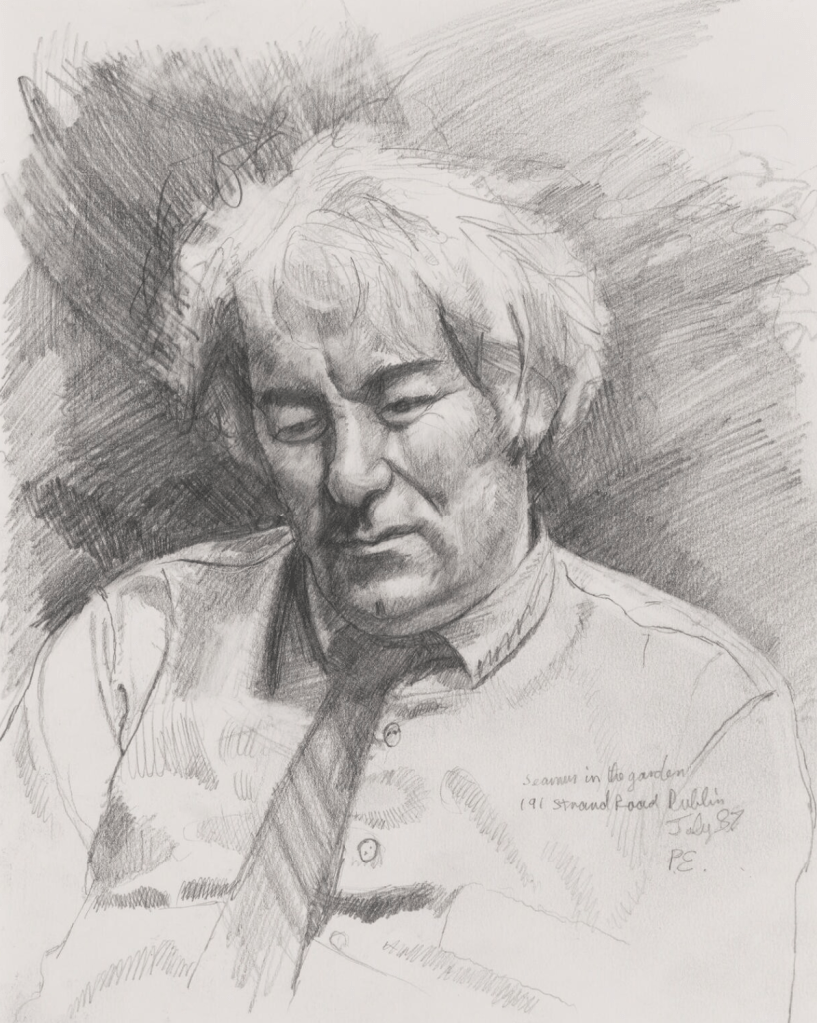
Amongst others – including my grandfather, a Classics teacher – Mick McLaughlin played an influential role in my own pathway into teaching and, having continued to take a keen interest in Irish literature whilst studying English at university, it was to Heaney that I first turned – and returned – when I commenced my own teaching career. I found it a particularly moving – and symbolic – moment as, in turn, I taught Heaney’s poem ‘Follower’ to my own A Level students, conscious as I was of following in the Tweed-suited, brogues-wearing footsteps of Mr McLaughlin. As Heaney did when he followed in the literal furrows of his father, I, too, “stumbled in his hobnailed wake,/Fell sometimes on the polished sod,” though, thankfully for Mr McLaughlin, I at least didn’t ask him to give me a piggy back as Heaney’s father did with the young Heaney “dipping and rising to his plod”!
Leader as Follower
There’s a lovely moment each year at our school’s summer term Speech Day when the Head Boy and Head Girl announce to the school and our guests the names of those who will follow them as the next year’s Heads of School. Having led the school for the past academic year and delivered their valedictory speeches, their final act is to welcome on to stage their successors, handing over their Heads of School gowns as they do so, a symbolic gesture of the passing of leadership from one cohort to another. With a history spanning over 615 years, I find it a powerful reminder of the golden thread that connects one year group to the next, the metaphoric baton of leadership being passed across not only the years but across the centuries, too. In this sense, our Heads of School become both leaders and followers, walking in the footsteps of their forebearers, learning from them, emulating their example, but ploughing their own furrow, and doing it their own way.
This term we have spent the past few weeks interviewing the next cohort of Prefects to lead the school in the forthcoming academic year. One of the questions we ask requires applicants to reflect on what makes a great leader, and to provide examples of leaders they’d wish to emulate. Many of them pointed to the example of our current Heads of School Myles and Marta, and their Deputies Jessie and Harris as leaders they admire and whose example they hope to follow. They point to Myles’s approachability and his empathy, his calm manner and his willingness to drop everything to listen to a fellow pupil in their time of need. They point to Marta’s example on and off the sports field, her energy, her organisation, her ability to get things done. They point to Harris’s kind nature and his imaginative approach (and his Instagram status as the star of our pupil-led Football team account that has a fast-growing following!). They point to Jessie and the way the youngsters in our Prep School look up to her and admire her, and the ‘glue’ she provides in her own yeargroup.
These four – and their Prefect team – were appointed for the skillsets and character attributes they possessed. They had seen examples of strong leadership from their predecessors, who in turn had role models to follow from their own predecessors. And when we appoint the Prefect Elect and begin the process of handover again, next year’s cohort will spend the coming term following in the furrows of the current Upper Sixth before they take the baton on and lead themselves.
The golden thread continues; unbroken. Follower. Leader. Leader-Follower.

Curator Leadership
One of the tremendous privileges over the past few years in which I have been Headmaster of Oswestry School has been the opportunity to meet a number of my predecessors. Some I knew already from ‘the circuit’ including my immediate predecessors Julian Noad (now Head at Queen’s School, Taunton) and Douglas Robb (now Head at Gresham’s), but others I have met when they have taken the time to visit us whether on Founder’s Day or just in passing through, including Paul Smith (Headmaster 1995-2000) and the legendary figure of Frank Gerstenburg (Headmaster 1974-1985). All were great Heads and steered the good ship skilfully, carefully, and at times courageously through waters calm, choppy and sometimes stormy.
When you are the Head of a school founded in 1407, you quickly gain a sense of the privilege and responsibility of the role, first and foremost of course to the community of pupils and staff one leads, but likewise the privilege and responsibility of stewardship, taking on the metaphorical baton from those who have led the schools across the centuries, and ensuring the golden thread of the school continues uninterrupted.
“Your leadership is temporary,” writes educationalist and former Head Richard Gerver, “and you are just the author of one chapter in a school’s history, a custodian: your aim must be to ensure that it is a great chapter and actually so good that it sets up the next one to be even greater.”
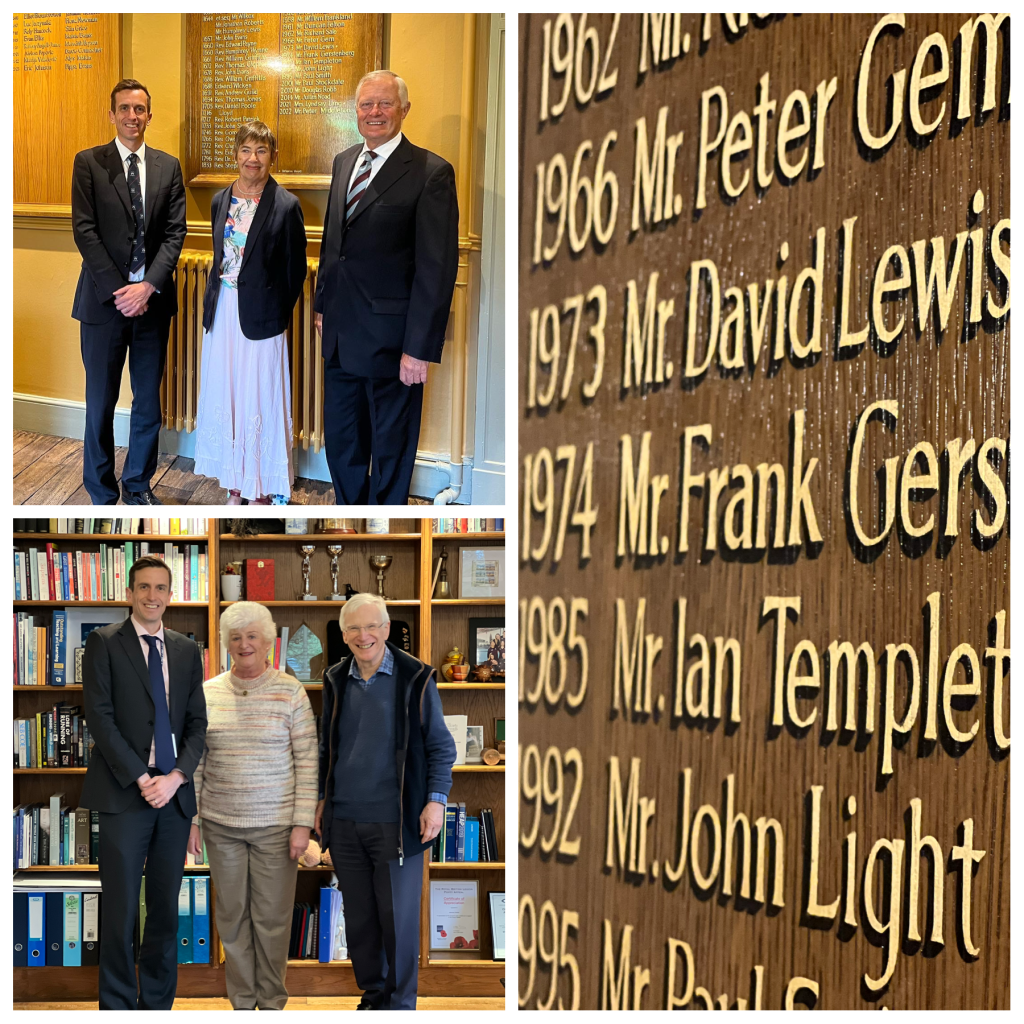
Whether a Headmaster, a Head of School, a Prefect- or any of the other many leadership roles within a school community- one’s leadership is temporary. We are custodians of the school, curators even: our role is to look after. Looking after those within our care, looking after the school. As we have followed in the footsteps of those who have gone before us, in turn we lay a trail for those who come after to follow behind.
Perhaps it’s not a golden thread after all, but a golden tread. In time, our footsteps will disappear, but for those that follow immediately after, they are firmly imprinted, a golden tread to follow, a golden tread to lead forward from.

 Peter Middleton