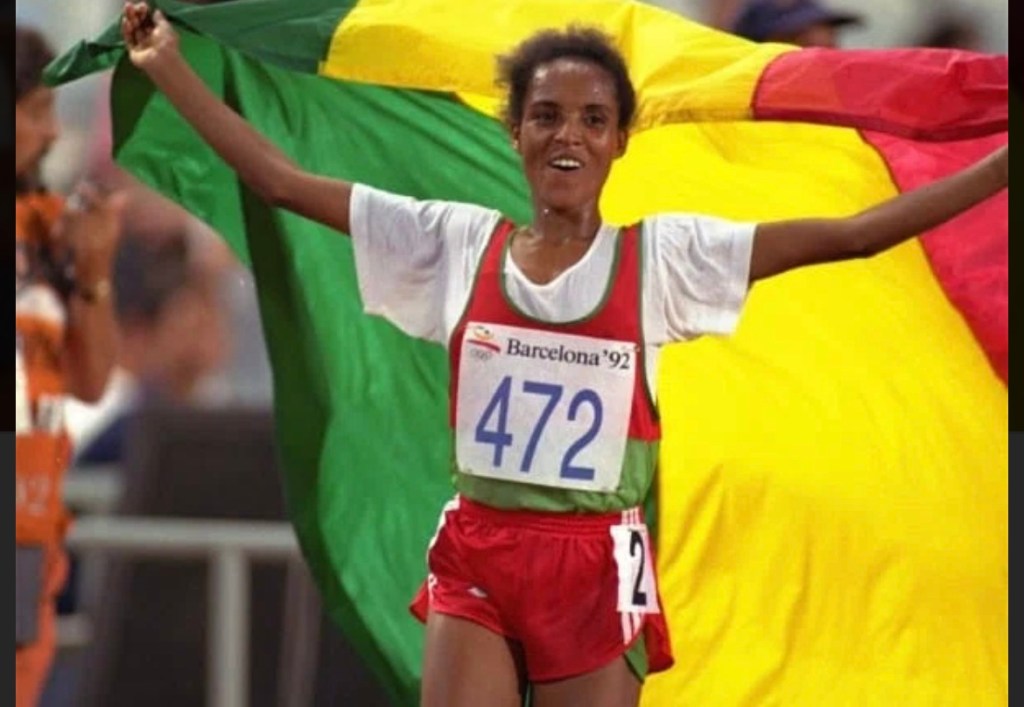
On 7 August 1992, the diminutive Ethiopian runner Derartu Tulu took to the start-line of the women’s 10,000m at the Barcelona Olympic Games. Standing at just 5’1, she was towered over by the world champion Liz McColgan and, having placed 8th at the Tokyo World Championships the year previously, Tulu wasn’t expected to feature in the race, and few would have predicted that she would make the podium. She had other ideas, and that night she not only made the podium, but took the Olympic title. It was a significant sporting moment; in winning the race, Tulu became the very first African woman to win an Olympic gold medal. History was made that night, a milestone reached.
First Steps
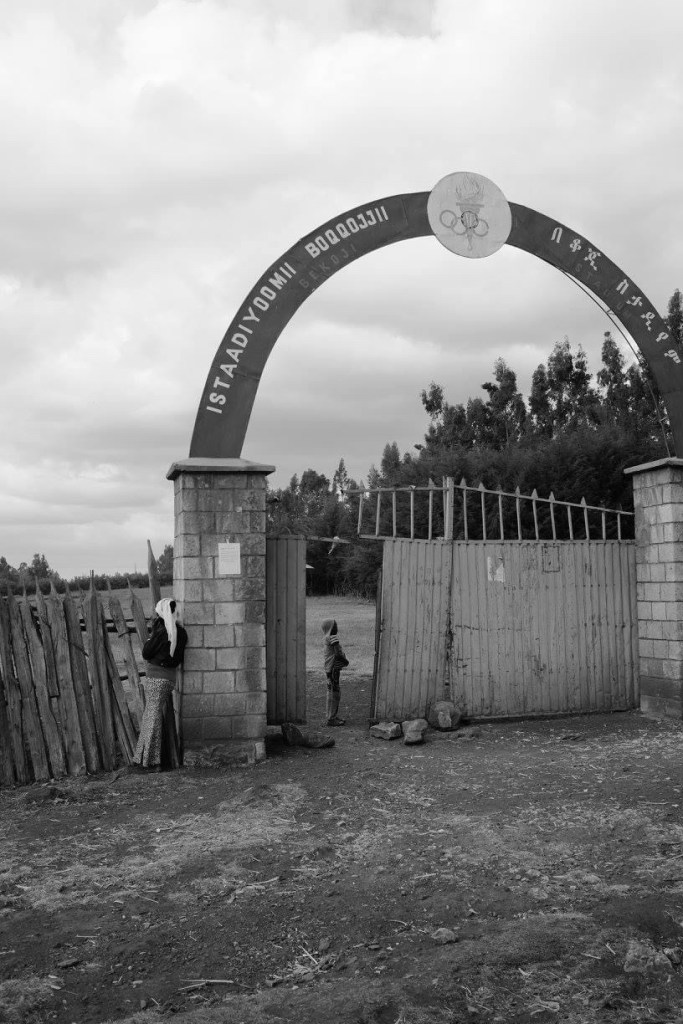
Hailing from the small town of Bekoji in the Ethiopian highlands of Arsi Province, Tulu’s journey to gold can be traced back to the early influence of her first coach Sentayehu Eshetu known affectionately as ‘Coach’. A PE teacher whose background was actually in football, ‘Coach’ recognised in the young Tulu a rare and exceptional talent, and switching his attention to the sport of running, he made it his mission to nurture and develop the talents of this special young runner. At 16, she finished third in the national senior cross-country championships in Addis Ababa, then aged 18 she took gold in the 10,000m at the 1990 World Junior Athletics Championships.
Tulu’s achievements are impressive and, of course, history-making, but rather than the story of an individual, this is the story of a remarkable town, and the remarkable influence of the inspirational figure of perhaps the most successful coach in the history of the sport, from whom I think there are valuable leadership lessons to be learned whether you’re involved in sport, education, business or otherwise.
The Town of Runners
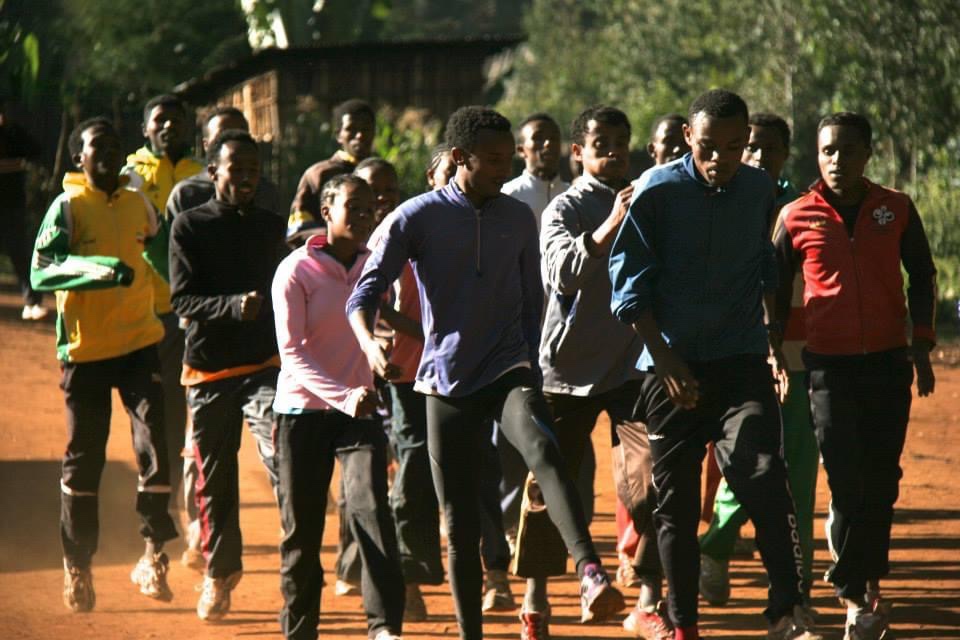
As the first Ethiopian woman to win Olympic Gold, Tulu’s victory that night in Barcelona set into motion a period of East African distance dominance, but it was likewise the catalyst for further successes for athletes from her home town of Bekoji. Indeed, arguably the greatest female distance runner of all time, Tirunesh Dibaba (winner of three Olympic track gold medals and five world championship gold medals), is also from the town of Bekoji, so too her sisters Genzebe (current world record holder for the 1500m; Olympic silver medalist and five-time world indoor champion) and Ejegayehu who, although far less well known than her two sisters, does have an Olympic silver medal to her name from the 2004 Athens Games. Fatuma Roba, the first African woman to win a gold medal in the women’s Olympic marathon race at the Atlanta 1996 Olympics, is likewise from Bekoji, as is the 2012 London Olympics women’s marathon champion Tiki Gelana and, perhaps most famous of all, Bekoji’s golden boy Kenenise Bekele, three times Olympic champion, five-times World Indoor Champion and, having won an unfathomable 11 titles at the World Cross-Country Championships, almost certainly one of the greatest distance runners of all time, if not the greatest.
All come from Bekoji, a town with fewer than 17,000 residents. To put that into context, it’s a town of a comparable size to Connah’s Quay in Deeside, the UK’s 605th largest town. Put simply, Bekoji is a very small town, and a very poor one at that. Yet such are the achievements of its athletes that the town has entered into international sporting folklore and fame, hailed as the ‘Town of Runners’ as showcased in the excellent Jerry Rothwell documentary of the same name. Over 35 Olympic medals have been won by athletes from Bekoji over the past 25 years. That is truly remarkable.
All were coached by one man: Coach Sentayehu Eshetu. He is, quite simply, an extraordinary individual and, whilst they say you should never meet your heroes, as a mad-keen distance runner myself, I have been privileged to get to know Coach over the years, first in bringing him over to the UK for a Coach in Residence role at my previous school, and then on three memorable occasions out in Bekoji itself with three school running tours to East Africa including time in Bekoji.
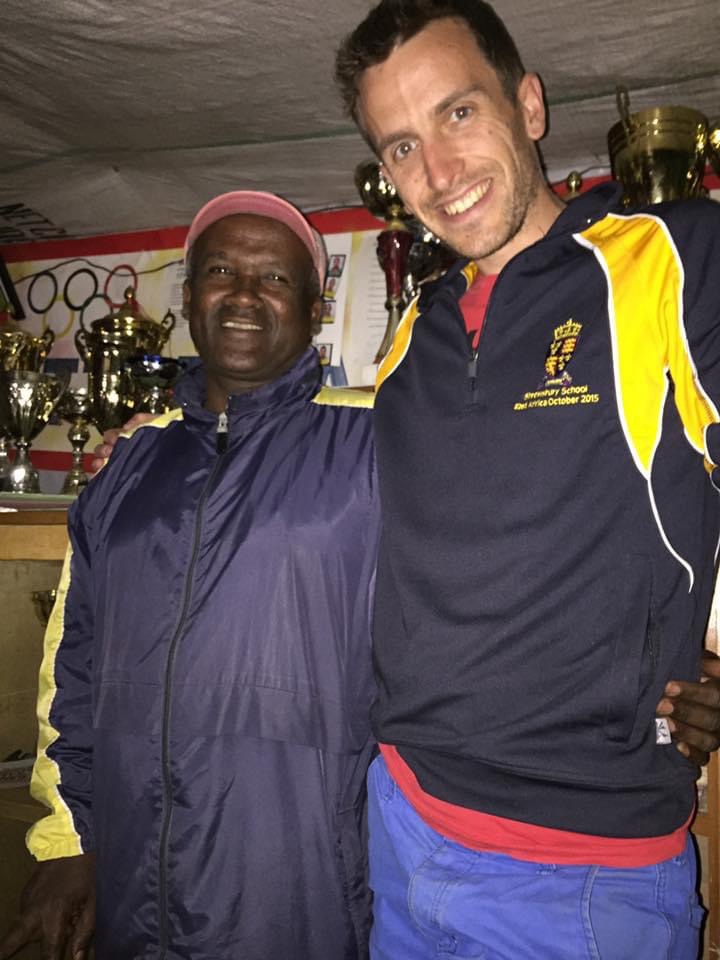
A humble, quietly spoken man with an infectious laugh and smile, anyone who has met ‘Coach’ will testify to the magnetic energy that he exudes and, whether joining in a session (not for the faint-hearted or, rather, faint-lunged given the 10,000ft altitude in Bekoji!) or observing from the sides, one quickly senses that Eshetu is a natural leader whose impact on this small town has been nothing short of extraordinary.
So what lessons can we learn from ‘Coach’ and how might we apply them to our own contexts?
Identify Talent and Realise the Potential
Firstly, it’s worth reminding ourselves that a significant part of our role as leaders is identifying talent, encouraging those individuals, and ensuring their potential is realised. Coach Eshetu’s first act of effective leadership was doing exactly that with the young Derartu Tulu and since then with countless other youngsters from the town of Bekoji. He has a knack for spotting talent and getting the very best out of young athletes, investing time, energy and encouragement in that process of developing others and helping them reach their potential.
So whether you are a teacher, Headteacher, business leader or coach, this should be a part of our mission to ensure we can get the very best out of those we teach, train, line manage, mentor or support. No matter how experienced- or inexperienced- they are, take time out to work with talent and help them grow.
Nothing Beats Hard Work
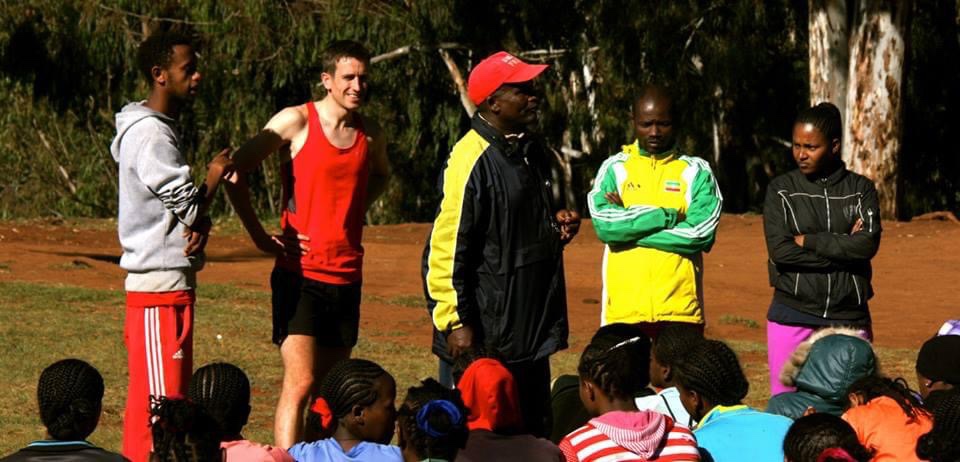
A big budget Eshetu did not have, nor does he still. Neither can he access world-class training facilities for his athletes. Instead, they train in the surrounding forests and on a lumpy, dirt track where athletes battle to avoid potholes, stones and the invading grass.
Of course, living at 10,000ft altitude and enjoying year-round clement weather helps to provide good conditions for training, but in Coach’s view, determination and dedication are key.
“Our runners are successful because they work hard,” he explained in an interview with CNN. “They work with the aim of reaching for success. This is what makes them different.”
It’s a reminder to us all; whatever our budget, make the most of what we have and remember, nothing beats hard work!
Innovate
My first experience of Bekoji running was an early morning training session in the eucalyptus forest on the periphery of the town. Close to 100 young athletes had gathered there (which is not unusual) and all waited patiently as the dawn sun cast long tree-thin shadows on the dusty ground. After a short warmup and drills (which in itself was exhausting) I was invited to join one of the lines of a dozen or so runners that had grouped together. “Just follow the guy in front” was Coach’s only instruction to me, and before I could ask any more questions, we were off.
What followed was a training session like nothing I’ve ever experienced before. Most runners train in a linear motion whether on tarmac or off-road, or perhaps doing laps of a running track. Here in the eucalyptus forest, countless lines of runners weaved in and out of the eucalyptus trees, up and down the slopes, changing directions, doing 180 degree turns and at times full circles around the base of trees (“Don’t touch trees!” Coach would exclaim when he could see in exhaustion I was trying to relieve the strain by grabbing the trunk to help get me round).
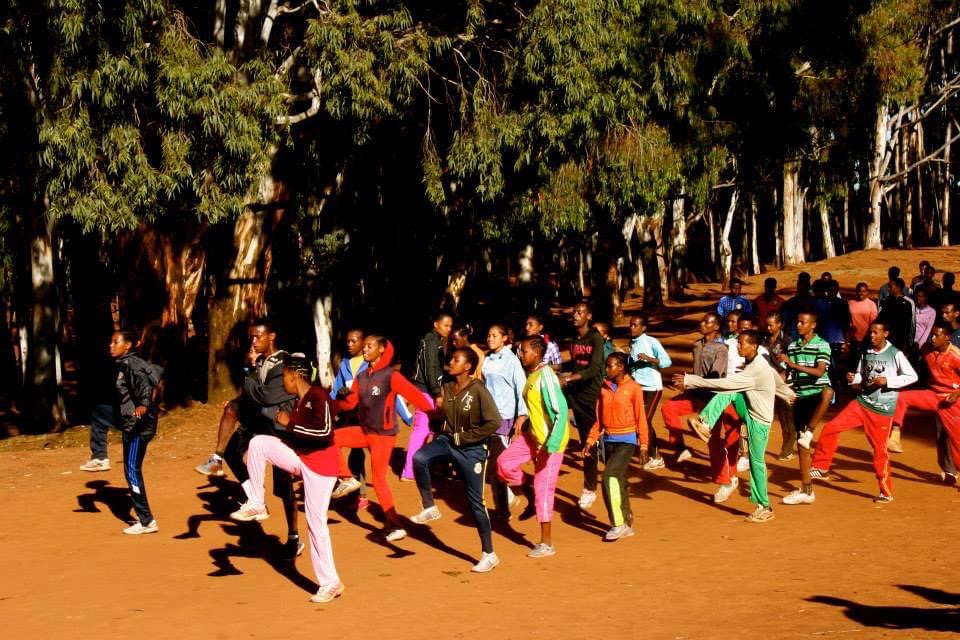
There was no set plan, no set route, and part of the challenge was reacting to the actions of the runner in front of you, speeding up when he sped up, slowing down when he slowed down, leaping perilously over a ravine when he did. Run. React. Run. React.
It’s lung-burstingly tough, but exhilarating, great fun, and I don’t think I’ve ever finished a session feeling such an overwhelming sense of achievement.
With no sporting facilities to speak of, Coach had to innovate. The eucalyptus forest became his training ground, the ‘tree’ session his ingenious means of developing unrivalled speed and strength in his athletes. With all those twists and turns, and the benefits to core strength and stability, it’s no wonder Kenenise Bekele went on to become an unstoppable force in cross-country running. After all those ‘tree’ runs, anything else was easy!
Innovation doesn’t have to come with financial cost. Innovation comes with creativity, imagination, and the boldness to do things differently. And sometimes, like the eucalyptus forest, it’s there staring us in the face.
Success Breeds Success
Running is often viewed as a solitary sport, even a lonely pastime. Certainly, it is an attractive sport for those who are comfortable in their own company and enjoy the pleasure of being alone in one’s own thoughts, uninterrupted by emails, phone calls and idle chatter.
However, in Bekoji, you will almost never see a solitary runner. They train together. Always. Every morning the group will meet, often well over a hundred athletes, all gathered together in the hope (and in most cases, fervent belief) that they will be the next Olympic champion from Bekoji. And why not?
Success, of course, breeds success, and in the likes of Detartu Tulu, the Dibaba sisters and the Bekele brothers (Keninise’s brother Tariku is also a runner and has an Olympic bronze medal to his name which is, you know, ok), the young athletes of Bekoji have had strong role models who have shown them what is possible with hard work. And this has bred belief, desire, and ambition. Day in day out, they turn up in their hundreds to train together, push each other harder, all under the encouraging tutelage of Coach.
Celebrating success and achievement is important, and strong role modelling instils an aspirant culture. Whilst those that have gone on to win Olympic medals have achieved individually, these successes are celebrated as collective achievements for the town. They are immensely proud of Tulu, Dibaba, Bekele et al and their successes have been inspirational and transformational for the town.
Western society has perhaps become much more individualistic, and our focus is often on ourselves. We could perhaps learn something from the Town of Runners and, whilst there too you will find youngsters focused on individual ambitions and aspirations, you will also find a community bound together in a culture of collective achievement and hard work. They won’t all make it- in fact few will- and they know that, but when one of them stands on the start line of an Olympic final you can bet that they’ll all be there gathered around a TV set somewhere in Bekoji cheering their lungs out.
As for Coach, he’s happy to stay in the shadows and will always deflect praise and shy away from any suggestion of his coaching greatness. Yet here is a man who came to this small town as a PE teacher with no knowledge of running, who transformed the fortunes of countless individuals within it, and created a culture and a community that is truly unique and special. A golden town, melded by the golden leadership of Coach Eshetu.
 Peter Middleton
What an inspirational piece of writing! Humbleness and a hunger to succeed are key here – the West can learn a tremendous amount from Africa – which they choose to ignore the majority if the time. The East Africans have always been amongst the top if not best runners in the world .
LikeLike